


Dreaming of crystal-clear water and lower energy costs in your pool in summer 2026? The right Hayward pool pump makes the difference between hassle-free pool operation and unnecessary problems. In this guide, you get expert tips on how to choose, install, and maintain a Hayward pump for maximum enjoyment.
We explore Hayward's most popular models, energy-efficient solutions, and the technology of the future. Through real-life examples, we show how pool owners save both time and money. Take the step toward a smarter pool with the help of our complete guide.
Hayward Pool Pumps: Overview & Benefits
Choosing the right Hayward pool pump is crucial for a clean and well-functioning pool. Hayward has long been a global leader in pool technology, known for its high quality and innovation. The company's products are used everywhere from private backyard pools to larger facilities, showing the brand's breadth and trustworthiness.
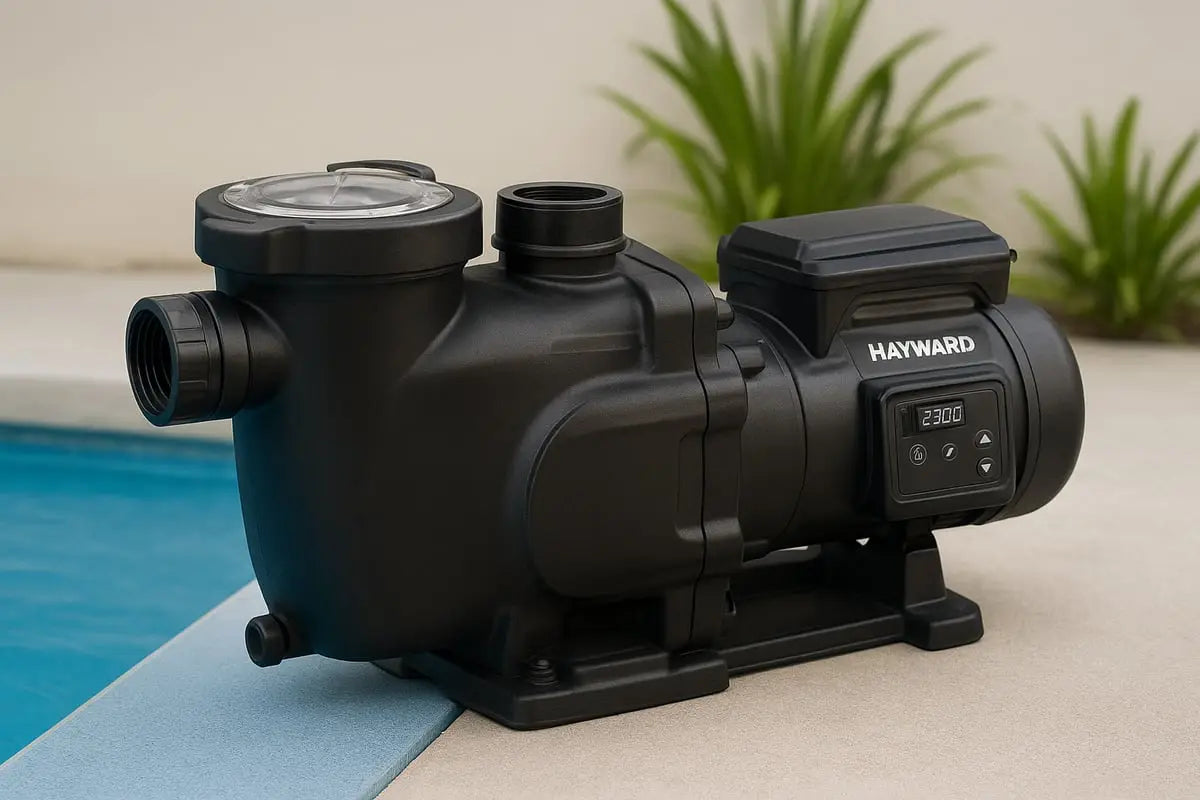
What is a Hayward pool pump?
A Hayward pool pump is the heart of the pool's purification system. Hayward offers several popular models, such as Powerline, Max Flo XL, TriStar, and Super Pump. Each model is designed to suit different pool sizes and uses. For example, the Powerline 0,75hk is a common choice for smaller pools, while the Max Flo XL is often used for medium-sized pools thanks to its quiet and efficient operation.
The differences between the models are mainly about flow capacity, motor power, and noise level. The Super Pump is known for its robust construction and long service life, while TriStar offers extra high capacity for larger pools. Hayward is one of the most installed brands in Swedish backyard pools, according to retailers.
Hayward has received several international certifications for energy efficiency and environmental responsibility. One example is that the company was awarded the 2024 ENERGY STAR Partner of the Year Award, confirming its commitment to sustainability and low energy consumption. You can read more about this recognition here:.
This means that a Hayward pool pump not only meets today's requirements, but also the new sustainability requirements introduced in 2026.
Benefits of choosing Hayward
Choosing a Hayward pool pump brings many clear benefits. First, the service life is long thanks to robust construction and high-quality materials. Many users report trouble-free operation for over a decade with proper maintenance.
Energy-efficient operation is one of Hayward's greatest strengths. Compared with older pumps, you can save up to 30 percent on electricity, which is clearly noticeable on the power bill. Spare parts and accessories are easy to find in Sweden, so you can quickly resolve any issues and minimise downtime.
Some key advantages:
- Compatibility with sand filters, salt chlorinators, and heat pumps.
- Quiet operation, which is especially appreciated in densely populated areas.
- User-friendly control panels for easy operation.
- Fast and smooth installation, even for beginners.
A concrete example is the Hayward Max Flo XL, which is popular thanks to its combination of efficiency and low noise level. Whether you have a small or large pool, there is always a Hayward pool pump that suits your needs and delivers reliable operation for many years.
How to Choose the Right Hayward Pool Pump in 2026
Choosing the right Hayward pool pump is crucial for energy-efficient, quiet, and trouble-free pool operation. Below are five steps that guide you through the process and help you match the right model to your pool.
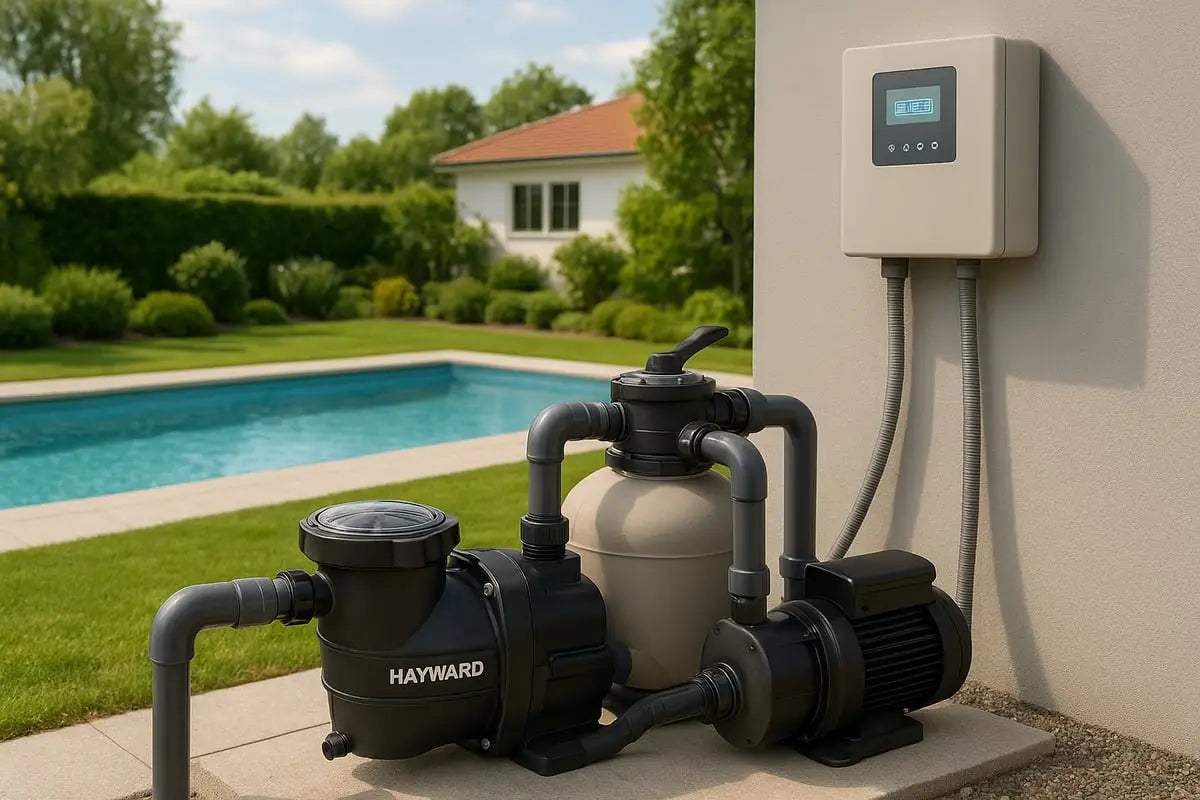
Step 1: Analyze the pool's size and water volume
The first step is to calculate your pool's total water volume. The pool's volume determines which Hayward pool pump you need to ensure proper circulation and filtration. A rule of thumb is that the entire pool volume should be circulated within 4–6 hours.
Example: If you have a pool of up to 30 m³, Powerline 0,75hk is often recommended. Statistics show that around 80% of Swedish backyard pools hold between 20–50 m³, making this model a common choice.
Do a simple volume calculation (length x width x average depth x 1.5 for irregular shapes) and note the result before moving on.
Step 2: Compare Hayward's models and performance
Once you know your pool volume, you can compare different Hayward models. Below is an overview of the most common options:
| Model | Power | Flow (m³/h) | Noise level | Rec. pool size |
|---|---|---|---|---|
| Powerline 0,75hk | 0,55 kW | 8–10 | Low | ≤30 m³ |
| Max Flo XL | 0,75–1,5 kW | 12–18 | Very low | 30–60 m³ |
| TriStar | 1,1–2,2 kW | 15–25 | Low | 50–80 m³ |
| Super Pump | 0,75–1,5 kW | 10–18 | Medium | 30–60 m³ |
Powerline is suited to simpler sand filter systems, while TriStar is ideal in combination with salt chlorinators and heat pumps. For medium-sized pools, Max Flo XL is both efficient and quiet.
Step 3: Energy consumption and environmental requirements
From 2026, stricter EU directives for energy efficiency on pool pumps apply. Here, it is wise to look at Hayward's variable-speed pumps (VSP), which automatically adjust the flow and can significantly reduce electricity consumption.
Example: TriStar VSP offers both quiet operation and energy savings, with the potential to reduce electricity consumption by up to 80% compared with older single-phase models. Always choose a Hayward pool pump that meets the new environmental requirements and provides a low noise level for the best comfort.
Step 4: Budget and total cost
The price of a Hayward pool pump varies depending on model and capacity. Powerline is the entry-level model and often costs from around 4000 kr, while advanced VSP models can be around 10 000–15 000 kr.
Keep in mind that a more expensive, energy-efficient model often pays back its extra cost within a few years thanks to a lower electricity bill. Also include installation costs, any spare parts, and regular servicing when setting your budget.
Make a cost comparison over time to see which solution gives the best overall economy.
Step 5: Availability and support
It is important to buy your Hayward pool pump from an established Swedish retailer. Then you get quick access to spare parts, support, and warranty service. Choose a supplier that offers both technical help and a wide range of genuine parts.
For an overview of models and spare parts, you can use the Pool Pump and Spare Parts Guide, which makes the choice easier and ensures compatibility with your system.
Always check that the retailer can offer a service agreement and has good reviews from other pool owners. This provides extra peace of mind and long-term operational reliability.
Installation of Hayward Pool Pump: Step by Step
Installing a Hayward pool pump is an investment in both water quality and energy efficiency. Proper installation creates the conditions for trouble-free operation and long service life. Here you get a clear step-by-step guide that helps you through the entire process, from preparation to first start-up.
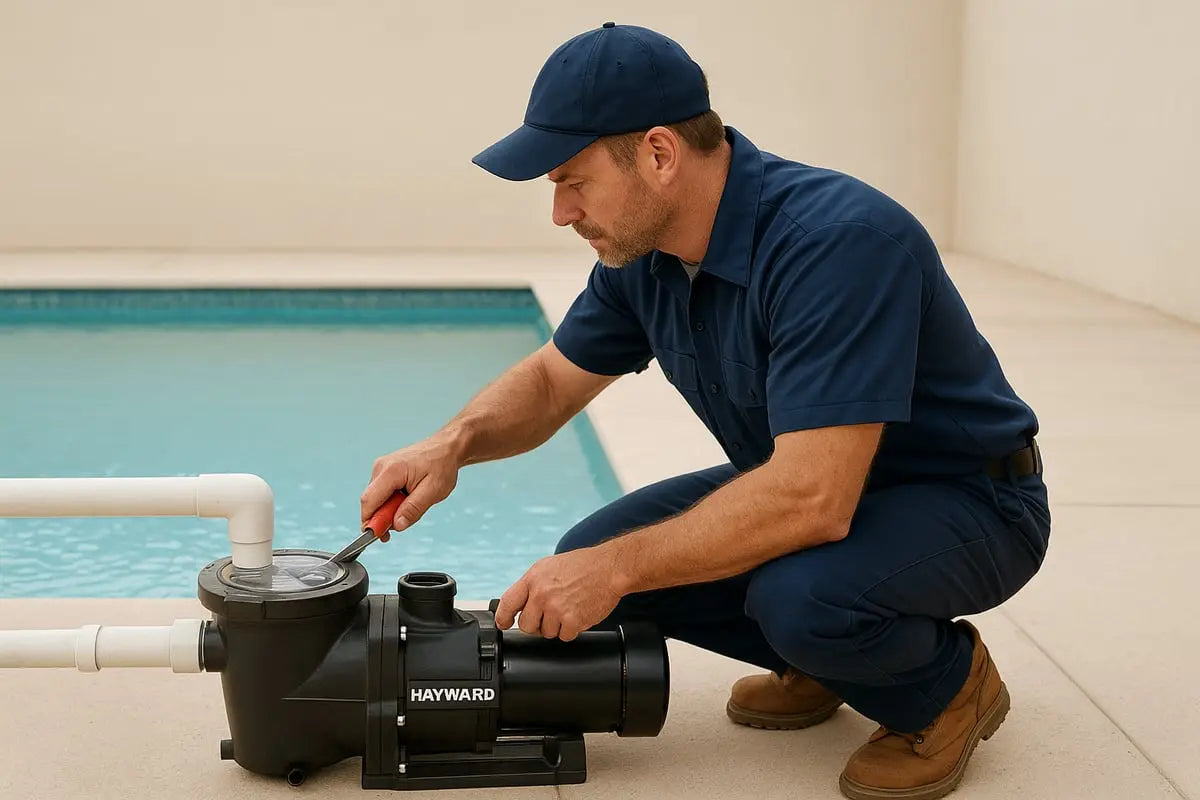
Preparation before installation
Before installing your Hayward pool pump, it is important to check a few basic things. First, make sure the electrical connection has a working residual current device and that the voltage matches the pump's requirements.
The placement of the pump is crucial for both service life and comfort. Choose a location protected from direct rain and sun, preferably on a vibration-dampening surface. Make sure there is enough space around the pump for servicing and ventilation.
Prepare all necessary connections for hoses or pipes. It is important to have the correct dimensions and seals to avoid leaks and pressure loss. With these preparations in place, you are ready for the next step in installing your Hayward pool pump.
Step 1: Remove the old pump (if applicable)
If you are replacing an old Hayward pool pump, always start by turning off the power at the main switch. Check that there is no water flow by closing the valves on the inlet and outlet.
Then disconnect all hoses or pipes carefully. At the electrical connection, always use insulated tools and label the cables for easier reassembly. A tip is to take pictures of the existing installation so you can follow the same wiring diagram when fitting the new pump.
Gather all the old parts and keep the work area clean. This minimises the risk of mistakes when you install your new Hayward pool pump.
Step 2: Install the new Hayward pump
Now it is time to place and install your new Hayward pool pump. Start by adjusting the height so that the inlet and outlet align with the pool system's pipework.
Secure the pump on a flat and stable surface with vibration-dampening material. This reduces both noise and wear. Then connect hoses or pipes carefully and make sure all fittings are properly tightened.
Before continuing, check that no materials or tools are left around the pump. Correct installation is the foundation for your Hayward pool pump to function optimally for many years.
Step 3: Electrical connection
When connecting a Hayward pool pump electrically, always follow both Hayward's manual and Swedish electrical safety standards. Check that the voltage and fuses are correctly sized.
Connect the power according to the labels you made during disassembly. Always use approved cable joints and protect the connections from moisture. After connecting, check that the pump starts correctly by switching on the power.
If you are unsure about any part of the electrical work, hire a qualified electrician. Electrical safety is crucial for your Hayward pool pump to be safe to use.
Step 4: Test run and adjustment
When the pump is installed and connected, it is time for a test run. Fill the system with water and bleed any air pockets by opening valves and checking the water flow.
Start the Hayward pool pump and observe pressure, noise level, and any vibrations. Check all connections carefully to make sure nothing is leaking. On variable-speed models, adjust the speed so the flow matches the pool's needs.
Finish by setting the timer or schedule if your pump has that function. A correctly adjusted Hayward pool pump extends service life and reduces energy consumption.
Tips for a safe and durable installation
For your Hayward pool pump to last a long time, it is important to follow a few basic recommendations:
- Always hire a professional for electrical work.
- Read the warranty terms carefully when self-installing.
- Check that all connections are tight before starting operation.
- Avoid running the pump dry.
- Document the installation with photos and notes.
If you want more practical guides on installation and maintenance, please read Install and Maintain Pool Equipment for expert tips and examples of common mistakes to avoid. With the right installation and care, you get the most out of your Hayward pool pump, whether it is for a new or existing pool.
Care, Maintenance & Troubleshooting of Hayward Pool Pump
Ensuring that your Hayward pool pump operates optimally requires regular care and attention to detail. With proper maintenance, you avoid downtime and significantly extend its service life.
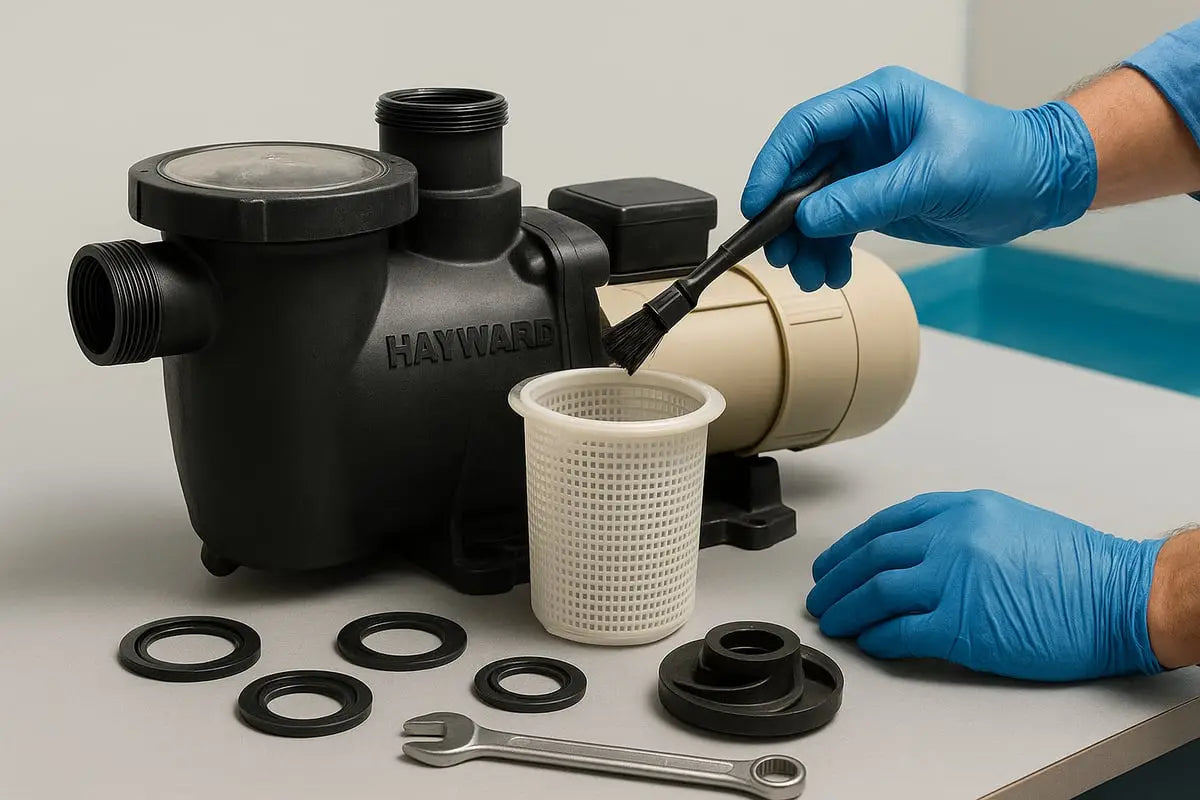
Regular maintenance
For your Hayward pool pump to perform year-round, careful maintenance is required. Clean the pre-filter and strainer every week or every other week, especially during peak season. Check that gaskets and O-rings are free from cracks and lubricate them if necessary with silicone grease.
If your model has moving parts that require lubrication, follow the manufacturer's recommendations. Always keep the area around the pump free from leaves and dirt to avoid blockages. Simple routines reduce the risk of downtime and provide quieter operation.
A checklist for regular maintenance:
- Clean the pre-filter and strainer
- Inspect and lubricate gaskets and O-rings
- Check hose connections and tightness
Following these steps gives your Hayward pool pump the best possible conditions.
Seasonal start-up & winter shutdown
When spring arrives, it is time to start the Hayward pool pump correctly. Fill the system with water, bleed the pump, and check that there are no leaks. Also make sure that all hoses and connections are properly secured.
Before winter, it is important to drain the water from the pump so no parts freeze and break. Bring the pump inside or cover it with insulating material if it must remain outdoors. Frost damage is one of the most common causes of costly repairs.
Tips for seasonal changes:
- Always start with a filled pump and bleed the system
- Drain the pump completely before winter
- Store or protect the pump from the cold
By following these recommendations, you reduce the risk of operational problems with your Hayward pool pump.
Troubleshooting: Common problems and solutions
Even the most reliable Hayward pool pump can sometimes have issues. If the pump does not start, first check the electrical connection and fuses. If the flow is poor, inspect the filter, pre-filter, and hoses for blockages.
Unusual noises may indicate air in the system or worn bearings. Leaks often occur at gaskets or hose connections. Fix small problems immediately to avoid bigger damage.
Quick troubleshooting guide:
- Pump does not start: check power and fuse
- Poor water flow: clean the filter and hoses
- Noise from the pump: bleed the system, check bearings
- Visible leaks: tighten or replace gaskets
With proper troubleshooting, you keep your Hayward pool pump in top condition throughout the season.
Spare parts and repair
After several years, some parts of the Hayward pool pump may need to be replaced. Common spare parts include the lid, gaskets, impeller, and O-rings. Having spare parts at home makes repairs quick and easy.
Here is an overview of the most common spare parts:
| Spare part | Function |
|---|---|
| Lid | Protects the pre-filter |
| Gasket | Prevents leaks |
| Impeller | Creates water flow |
| O-ring | Seals connections |
You can find a wide range of spare parts and accessories at Swedish retailers, for example via the Pool Pumps and Accessories Overview. If the pump requires extensive repairs or is nearing the end of its service life, it may be more economical to replace the entire unit.
Tips for long service life
To keep your Hayward pool pump going for over a decade, preventative care is required. Avoid running the pump dry, as this can quickly damage both bearings and seals. Clean the filter and strainer regularly and be sure to book annual servicing.
Many Swedish pool owners have achieved over 10 years of trouble-free operation by following these simple recommendations. Preventative maintenance is always cheaper than emergency repairs.
In summary, investing in the care of your Hayward pool pump is the key to both long service life and trouble-free pool operation.
Energy-Smart Solutions & the Pool Pumps of the Future
Choosing an energy-smart Hayward pool pump is crucial both for saving electricity and for meeting future environmental requirements. The market is rapidly moving toward solutions that combine efficiency, smart technology, and long-term sustainability.
Variable-speed pumps (VSP) and energy savings
Variable-speed pumps have revolutionized how we view the Hayward pool pump. By adapting the flow to the pool's needs, you can reduce energy consumption by up to 80 percent compared with older models.
One example is the Hayward TriStar VSP, which delivers both quiet operation and significant electricity savings. These models are ENERGY STAR certified, confirming their efficiency according to independent tests. Read more about the certification and energy efficiency at.
For Swedish pool owners, this means both lower electricity costs and a step toward a more environmentally friendly everyday life.
Smart control and automation
With a Hayward pool pump, you can take advantage of advanced control via apps and smart systems. Remote control and scheduling make it easy to optimise operation according to your needs.
Many pumps have features such as automatic alerts for operating faults and integration with the pool's other control systems. This provides extra peace of mind and lets you focus on swimming and relaxation.
Smart features help minimise energy waste and maximize comfort around the pool.
Environmental requirements and sustainability 2026
From 2026, new EU requirements on energy efficiency and noise levels apply to Hayward pool pumps and other brands. Modern pumps are built with recyclable materials and are designed to meet future environmental standards.
Recycling of old pumps is becoming more common, and many manufacturers offer collection of end-of-life models. The combination of pool pump and solar energy is also becoming more popular and helps lower the climate footprint.
By thinking sustainably today, you are prepared for upcoming regulations and environmental requirements.
Cost-effectiveness and ROI
Although a modern Hayward pool pump often means a higher initial investment, the payback period is short thanks to lower energy consumption. Many models pay for themselves within just a few years thanks to energy savings.
Common factors affecting the calculation:
- Electricity price and operating time
- Pool size and filtration needs
- Choice of control system and automation
By calculating the total cost, you can quickly see how smart technology creates long-term value.
Development trends 2026 and beyond
The pool pump of the future focuses on even quieter operation, minimal maintenance, and AI-based control. Predictive maintenance means the system alerts you before problems arise.
More models are being developed to be compatible with solar energy and other smart energy solutions. The pace of innovation is high, which benefits both the environment and your wallet.
Investing in a modern pool pump is therefore an investment in both comfort and future readiness.
Comparison: Hayward vs. Other Pool Pumps
Choosing the right pool pump is crucial for both water quality and operating economy. On the Swedish market, there are several well-known brands besides the Hayward pool pump, where Pahlen, Speck, and AstralPool are often mentioned as strong alternatives. These brands have long experience in pool technology and offer models in different price ranges and sizes.
A brief look at other popular pool pumps
Pahlen is a Swedish company known for robust, reliable pumps and components. Speck is appreciated for German engineering and long service life, while AstralPool offers a wide range with a focus on innovation and compatibility.
These brands compete with the Hayward pool pump in terms of performance, but may differ somewhat in price and availability of spare parts.
Comparison: Price, availability, energy consumption, support
Here is a simple overview of the leading options:
| Brand | Price level | Energy requirement | Spare parts in Sweden | Support network |
|---|---|---|---|---|
| Hayward | Medium-High | Low | Very good | Strong |
| Pahlen | High | Low | Good | Strong |
| Speck | Medium | Medium | Good | Medium |
| AstralPool | Medium | Medium | Varies | Medium |
For more details about different brands and their characteristics, see Pool Pump Brands and Comparisons.
Hayward pool pumps stand out through energy efficiency and easy support, which makes them popular among Swedish pool owners.
Hayward's strengths and weaknesses
Strengths:
- Long service life and low energy consumption.
- Wide dealer network and spare part availability.
- Quiet operation, which is in demand in residential areas.
Weaknesses:
- Somewhat higher purchase price than simpler models.
- Some advanced models may require more technical installation.
Hayward pool pumps often provide higher operational reliability and are especially well suited if you prioritize low running costs and easy service.
Examples from Swedish pool owners
Many Swedish pool owners especially appreciate that the Hayward pool pump is quiet and reliable. One customer says: "We switched to Hayward and have avoided spare-part problems; moreover, electricity consumption dropped immediately." Statistics from retailers show that Hayward accounts for a significant share of spare-part sales, indicating a large installed base and good access to support.
When is Hayward the best choice?
Hayward pool pumps are mainly recommended for pools where operational reliability, energy efficiency, and low noise are important factors. Both private backyard pools and smaller commercial facilities benefit greatly from Hayward's models, especially where modern purification systems or salt water are used.
Tips when switching from another brand to Hayward
When switching to a Hayward pool pump, it is important to check pipe and electrical connections, as dimensions and fittings may differ. Make sure your filter system is compatible. Preferably choose an authorized installer and check the warranty terms to ensure a smooth transition.
Frequently Asked Questions about Hayward Pool Pumps 2026
Choosing the right Hayward pool pump often raises many questions about service, energy consumption, model selection, and installation. Here you will find answers to the most common questions ahead of 2026.
How often should I service my Hayward pool pump?
It is recommended that you check your Hayward pool pump every month during the season. Full servicing should be carried out before and after each swimming season to ensure a long service life.
Which Hayward pool pump model is best for my pool?
The choice depends on the pool's volume, filter type, and usage pattern. Smaller pools often do fine with Powerline 0,75hk, while Max Flo XL and TriStar suit larger or more heavily used pools.
How much electricity does a Hayward pool pump use?
A Powerline 0,75hk consumes about 0,55 kW per hour. If you choose a variable-speed model, electricity consumption can be significantly lower during normal operation. New rules according to the EU Energy Efficiency Directive from 2025 mean that modern pumps are much more energy efficient.
How long does a Hayward pool pump last?
With proper care and regular servicing, a Hayward pool pump normally lasts 8 to 12 years. Good cleaning and prompt action when problems arise extend its service life.
What happens if my Hayward pool pump runs dry?
If the pump runs dry, there is a risk of overheating and damage to bearings and seals. It is important never to run the pump without water flow.
Can I install a Hayward pool pump myself?
You can replace and install your Hayward pool pump yourself, but any fixed electrical connection must be carried out by a qualified electrician according to Swedish law.
How do I find spare parts quickly in Sweden?
Spare parts for Hayward pool pumps are available from leading pool retailers and specialist stores. It is wise to always keep extra gaskets and a filter lid at home during the season.
Is the Hayward pool pump compatible with saltwater pools?
Most modern models are designed for both chlorine and saltwater. Always check the product information to ensure full compatibility with your pool type.
Find the right pool pump
Compare pool pumps and choose a solution that suits the pool's flow and filtration system.
See our pool pumps


