


Do you dream of transforming your garden into a relaxing oasis with a modern fibreglass pool? Then you have come to the right place.
This guide gives you everything you need to know to make the pool dream a reality in 2025. We cover benefits, planning, choosing a model, installation, maintenance, and the latest trends.
Let yourself be inspired by the possibilities, take advantage of expert tips, and discover how you can step by step create the perfect pool environment for your home.
Why Choose a Fibreglass Pool in 2025?
Choosing a fibreglass pool has become an increasingly popular solution for Swedish homes. More people are discovering the benefits of this material, especially when the focus is on quick installation, long durability, and easy care. So what makes a fibreglass pool the smartest choice in 2025?
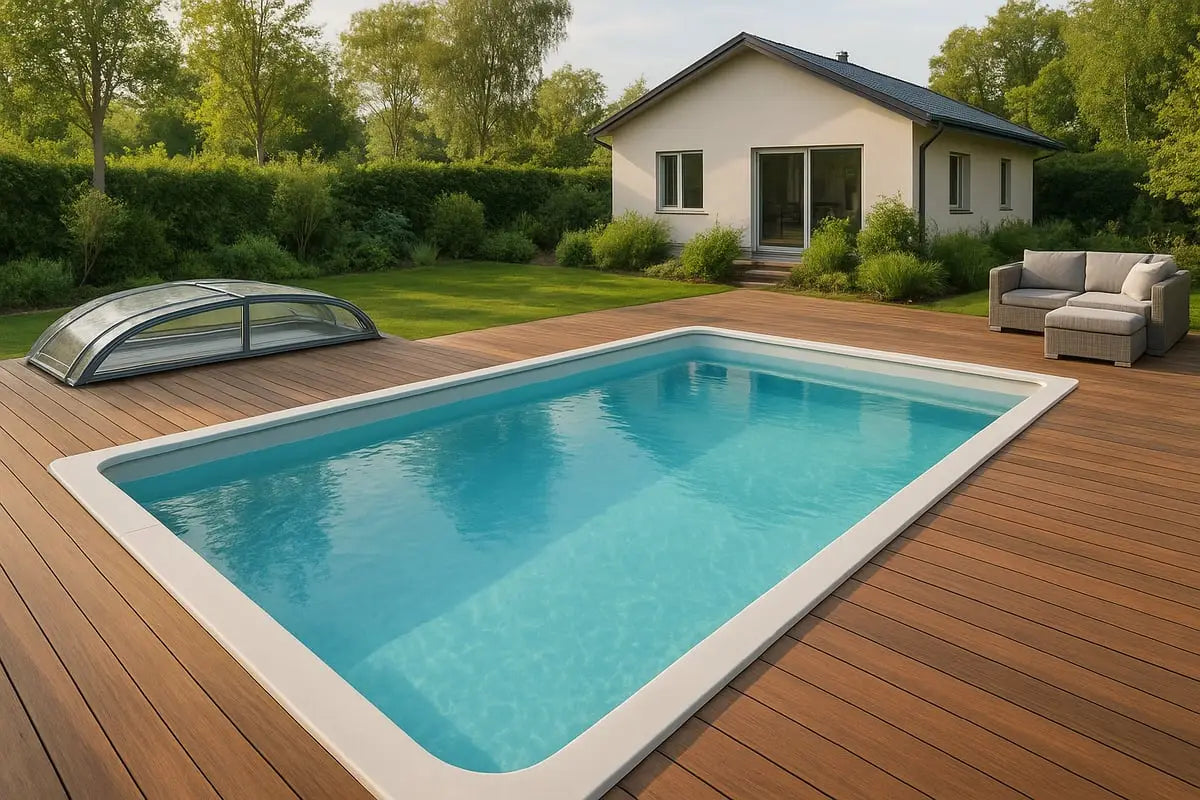
Fast and Smooth Installation
A major reason fibreglass pools are growing in popularity is the smooth installation process. Unlike concrete or liner pools, a fibreglass pool is often delivered as a finished “one piece” unit. This means construction time on site can be reduced to just a few days, minimising disruption in the garden.
The material is also lightweight and flexible, which simplifies transport and lifting. In just a couple of weeks, you can go from dream to finished pool. According to industry data, more and more people are choosing this solution to get the swimming season started quickly.
Long Service Life and Minimal Maintenance
Fibreglass pools are known for their robustness and long service life. The surface is smooth and non-porous, which prevents algae growth and makes it harder for dirt to stick. That means you spend less time on cleaning and chemicals, and more time enjoying the pool.
The material resists UV radiation, frost, and temperature changes — perfect for Swedish weather conditions. Many suppliers also offer long warranties on both the shell and the surface layer, giving you greater peace of mind as a pool owner. is described in detail by leading industry players.
Energy-Efficient Operation and Environmental Benefits
A fibreglass pool has naturally insulating properties that help reduce energy consumption. It retains heat better than many other pool materials, which reduces the need for heating and thus your operating costs.
Thanks to the tight construction, water losses through evaporation and leakage are also reduced. This makes a fibreglass pool an energy-efficient and environmentally conscious choice for the future. With the right accessories, such as a pool enclosure and heat pump, you can further optimise energy use.
Wide Selection and Climate Adaptation
The design possibilities with a fibreglass pool are nearly unlimited. You can choose from different shapes, sizes, and colours to create a pool that fits your garden perfectly. Whether you want a classic rectangular pool or a freeform design, there are options that meet both aesthetic and practical requirements.
A fibreglass pool is especially suitable for Nordic climates. It resists frost, withstands large temperature variations, and is not affected by moisture in the same way as other materials. Statistics also show that fibreglass pools account for a growing share of the pool market in Sweden, reflecting consumers' increasing confidence in this solution.
Planning and Preparation: Your Pool Journey Step by Step
Planning a fibreglass pool is the start of an exciting journey toward your own garden oasis. A well-thought-out process delivers the best results and helps you avoid unnecessary surprises. Here we go through, step by step, how to prepare for a successful pool project.

Step 1: Needs Analysis and Budget
The first step in your fibreglass pool journey is to analyse your needs. Ask yourself questions such as: Will the pool be used for family bathing, exercise, or relaxation? Different uses require different sizes, depths, and features.
Setting a realistic budget is crucial. Prices for a fibreglass pool vary depending on size, options, and scope of installation. Here is an example of the price range:
| Pool size | Starting price (kr) | Fully equipped (kr) |
|---|---|---|
| 3x6 m | 150 000 | 250 000 |
| 4x8 m | 200 000 | 300 000 |
| 4x11 m | 250 000 | 400 000 |
Don’t forget to include costs for groundworks, electricity, water, and any building permits. It is wise to read a to understand the full picture and avoid hidden expenses.
Tips:
- Make a list of desired options and prioritise them.
- Always allow a buffer for unforeseen costs.
- Contact several suppliers for quote comparisons.
A clear needs analysis and budget provide a solid foundation for your fibreglass pool project.
Step 2: Site Selection and Ground Conditions
Choosing the right location for your fibreglass pool affects both function and aesthetics. Analyse the plot’s conditions: Is there enough sunlight? How do wind and privacy affect the pool experience? Ground type and slope play a major role in installation.
Check the distance to the house, trees, electrical and water lines. A popular solution is to place the pool near the patio for easy access and social space. Also consider future maintenance, such as access for machinery during servicing.
Follow these steps:
- Study the plot map and ground conditions.
- Note any shading trees and shrubs.
- Check groundwater level and drainage.
A well-considered site selection ensures that your fibreglass pool becomes a natural part of the garden and provides long-lasting enjoyment.
Step 3: Permits and Regulations
Before starting the project, it is important to familiarize yourself with the applicable building regulations for fibreglass pools in Sweden in 2025. Many municipalities require a building permit if the pool is to be placed near the property boundary or if you want a pool enclosure and extensive groundworks.
Safety requirements have increased in recent years. This often means requirements for fencing, approved pool covers, or a pool enclosure to prevent accidents. Different municipalities may have different guidelines, so always contact your local building committee.
Statistics show that environmental requirements and safety regulations are becoming more common. Proper handling of permits and safety makes your fibreglass pool safe for the whole family.
Step 4: Timeline and Season
Planning the timeline is crucial for a smooth project. The best time to install a fibreglass pool is usually spring or autumn, when the ground is easier to work with and contractors have greater availability.
The time from order to swim-ready pool is usually between two and six weeks, depending on groundworks and delivery times. A detailed schedule reduces the risk of delays and extra costs.
Tips for scheduling:
- Book installation well in advance.
- Stay in contact with the supplier about delivery and installation times.
- Prepare the plot before delivery.
A clear timeline gives you control over the process and means you can enjoy your fibreglass pool as soon as possible.
Choosing the Right Fibreglass Pool: Size, Shape and Function
Choosing the right fibreglass pool requires careful analysis of the family’s needs, the plot’s conditions, and your design preferences. By understanding the sizes, shapes, and features available on the market, you can create a pool that suits both your lifestyle and your budget. Below we guide you through the key choices so that your fibreglass pool becomes the investment you dreamed of.
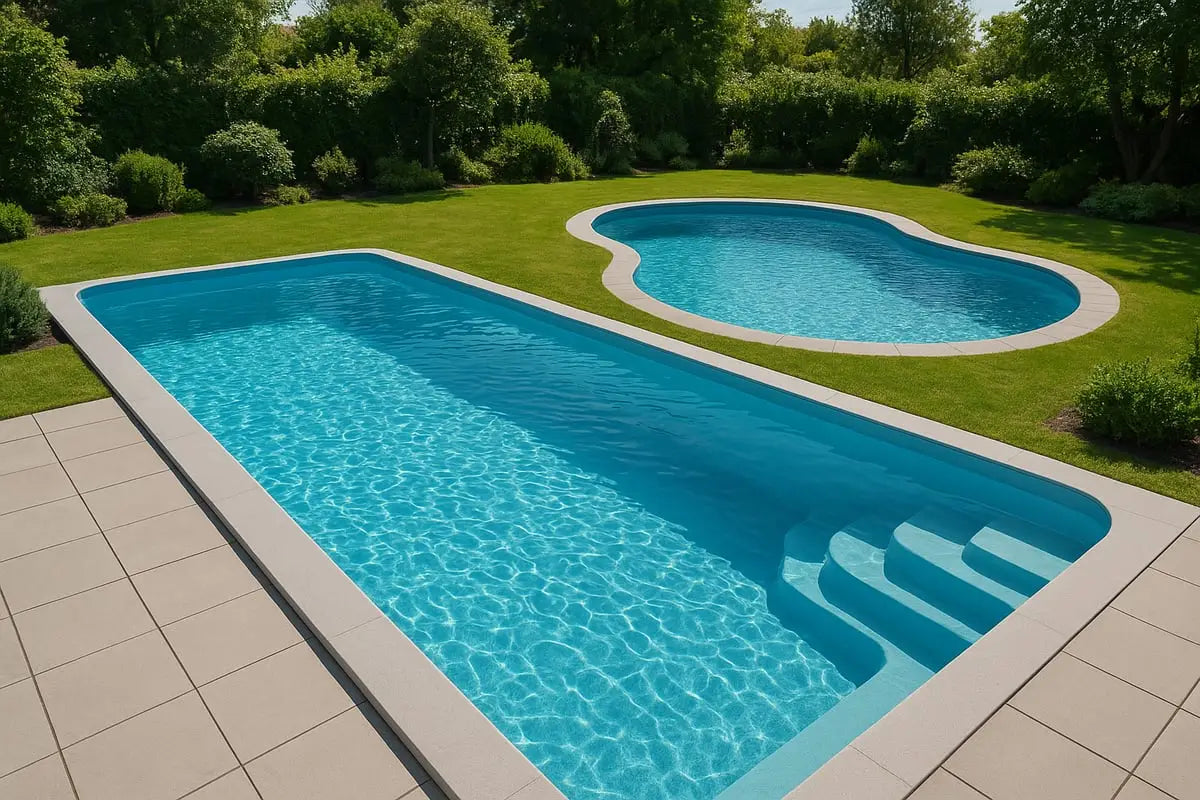
Pool size and depth – what suits your family?
When choosing the size of your fibreglass pool, it is important to start from how the pool will be used. Will it be a place for the whole family to swim and play, or are exercise swimming and relaxation your main priorities? Common fibreglass pool sizes in Sweden range from compact 3x6 metre models, perfect for smaller plots, to larger options such as 4x11 metre for those who want plenty of space.
Depth is also crucial. For families with children, a shallower area is often recommended, while those prioritising swimming training may choose a pool with greater depth. A fibreglass pool with varying depth provides both safety and flexibility. Also consider that the pool’s placement affects the feeling — a smaller pool near the patio can create an inviting and social space.
Shape and design
The shape of your fibreglass pool affects both appearance and function. Rectangular pools are popular for swim training and easy cleaning, while round or freeform pools create a more organic feel in the garden. Many models offer integrated steps, seating benches, and relaxation areas, increasing both comfort and ease of use.
Colour choice has a major impact on the pool’s expression. Classic blue enhances the feeling of crystal-clear water, while modern grey or anthracite tones give an exclusive and stylish impression. Some fibreglass pools are now also available with mosaic patterns for a luxurious look. The design possibilities mean you can tailor the pool to your personal taste and the plot’s conditions.
Extra features and options
A modern fibreglass pool can be equipped with a range of options that enhance both experience and function. Integrated LED lighting creates atmosphere in the evenings, while massage jets add extra comfort. For those who want to use the pool for exercise, a swim jet system is recommended, as it makes it possible to swim in place even in smaller pools.
Pool enclosures and pool covers are popular for increasing safety and extending the season. Automatic purification systems and smart app-based control are strong trends that simplify the maintenance of your fibreglass pool. Statistics show that demand for energy-smart and automated solutions is increasing rapidly on the Swedish market.
Price and warranties
The price of a fibreglass pool varies depending on size, shape, options, and supplier. Generally, the price range is between 140 000 and 400 000 kronor or more, including standard equipment. Exclusive models with many options can cost extra.
When comparing suppliers, the warranty period on both the shell and the surface layer is important. Many reputable providers offer warranties of 10–30 years, which provides long-term peace of mind. It is a good idea to choose a supplier with extensive experience and proven quality to ensure that your investment in a fibreglass pool lasts for many years to come.
Installing a Fibreglass Pool: How It Works
Installing a fibreglass pool is a project that requires careful planning, precision, and the right expertise. Here we go through the process step by step, so you get a clear picture of what awaits from the first shovel in the ground to the first swim.
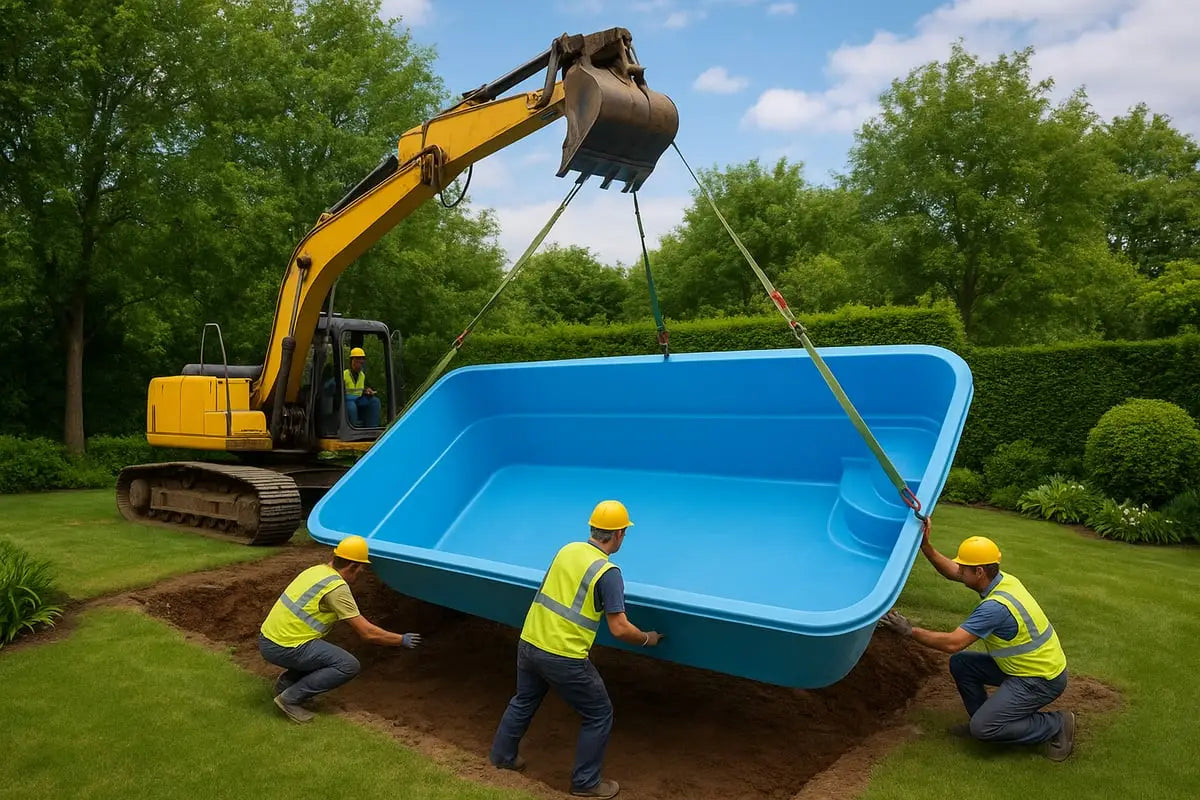
Groundworks and Preparation
The first step when installing a fibreglass pool is the groundworks. The plot is measured carefully to ensure the correct placement and level. Then the hole is excavated according to the pool’s exact dimensions, which often requires machinery to achieve a smooth and stable base.
The ground must be properly drained to avoid future problems with groundwater. A drainage layer of gravel or crushed stone is laid at the bottom and compacted firmly to create a stable base for your fibreglass pool. Here it is important to check the height so the pool ends up level with the surroundings.
If there are problems with high groundwater, additional drainage solutions may be required. Careful preparation reduces the risk of settlement or damage later on. For a detailed description of the installation process, please see this guide about.
Getting help from experienced installers is a smart choice, as proper groundwork is essential for your fibreglass pool to last long and function optimally.
Delivery and Lifting
When the groundworks are complete, it is time for delivery of your fibreglass pool. The pool is usually delivered as a complete, finished unit — so-called “one piece” — which makes transport smooth. A truck with a specially adapted crane transports the pool directly to your plot.
The lift is a critical moment where the pool is carefully placed into the prepared hole. An experienced crane operator ensures that the pool ends up exactly right, both in height and position. Thanks to the robust construction of a fibreglass pool, this usually happens without problems, and the whole process can often be completed in just one day.
After the pool is in place, a careful check of level and position is carried out. Any adjustments are made before the next step begins. The fast installation process is one of the major advantages of a fibreglass pool compared with other pool types.
Connections and Technology
Once the pool is in place, installation of the equipment begins. Electrical and plumbing work is carried out to connect the pump, filter, and any heat pump. It is important that all equipment is adapted to your specific fibreglass pool for the best performance and energy efficiency.
Lighting and any massage jets are installed at the same time. Automatic purification systems can be connected to make pool maintenance easier. The right technology and professional installation help ensure that your fibreglass pool has a long service life and low operating costs.
All connections are carefully checked before the pool is filled with water, to ensure that everything works as it should.
Filling and Start-Up
Now it is time to fill your fibreglass pool with water. Filling is done gradually, while the pool’s systems are started up to check that pumps, filters, and purification work correctly.
A technician goes through all functions and performs a test run. Any adjustments are made on site. When everything is ready, you receive a walkthrough of care and maintenance, so you can enjoy your fibreglass pool with confidence.
Professional installation provides not only a safe and durable pool, but also a warranty on both workmanship and materials.
Maintenance, Care and Service Life
Investing in a fibreglass pool means not only lovely swims but also a responsibility for long service life and bathing comfort. Regular care and proper maintenance are essential if you want to get the most out of your pool experience. With simple routines, you can keep your fibreglass pool in top condition for many years.
Daily and Weekly Care
To keep your fibreglass pool fresh, daily and weekly care is important. Clean the pool surfaces regularly and keep an eye on the water level, especially during warm periods when evaporation can happen quickly. Filters should be inspected and cleaned every week.
- Clean the pool surface with a net and brush
- Check and clean filters
- Check the water level
- Use a pool robot to make cleaning easier
There are many tools available to streamline maintenance, such as automatic pool robots and smart systems. If you want to read more about good routines and service, this guide about is recommended. With the right care, your fibreglass pool stays both inviting and safe.
Water Quality and Chemistry
Proper water chemistry is essential for the service life of your fibreglass pool. Check and balance pH, chlorine, and alkalinity at least once a week. Incorrect chemical use can negatively affect the warranty and lead to problems with water clarity.
According to industry statistics, the pool’s service life and bathing comfort increase with proper water balance. For those who want to simplify maintenance and reduce the need for chemicals, UV purification for pool water is a smart option. UV technology helps keep the water fresh and reduces the risk of algae growth.
Winter Closing and Seasonal Start-Up
When the swimming season is over, it is important to winterise your fibreglass pool properly. Start by cleaning the pool thoroughly and lowering the water level to the recommended level. Drain and protect pipes, pumps, and filters from frost.
Cover the pool with an approved pool cover to prevent dirt and damage during winter. In spring, it is easy to open the pool if you have followed these steps, and the water is often easier to restore to swim-ready condition.
Service Life and Warranty
A well-maintained fibreglass pool has a typical service life of 30 years or more. To ensure long-lasting durability, it is important to follow the supplier’s advice on care and maintenance.
The warranty on the pool’s shell and surface layer only applies if the recommended routines are followed. Regular maintenance and proper water chemistry are the foundation for your investment to last for many years to come. With careful care, you will enjoy your fibreglass pool far into the future.
Trends and Innovations for Fibreglass Pools in 2025
The pace of innovation is high when it comes to fibreglass pools, and in 2025 we see several exciting trends that are changing how we think about pool ownership. Everything from new materials to smart technology makes it easier, more sustainable, and more energy-efficient to invest in a fibreglass pool.
New Materials and Technologies
The development of materials for fibreglass pools has made major progress. Ceramic reinforcements and extra UV protection are now used, increasing the pool’s durability and reducing the risk of cracks. Many manufacturers are also focusing on environmentally friendly and recyclable components.
New technologies make it possible to adapt fibreglass pools even better to the Nordic climate. Reinforced shells resist frost, and smooth installation methods shorten construction time. With these innovations, your fibreglass pool becomes both safer and more durable.
Design Trends
The design of fibreglass pools is changing rapidly. Minimalist shapes with clean lines dominate, and more people are choosing pools with overflow or an infinity look for an exclusive feel. Hidden pool covers and integrated lighting contribute to a sleek overall impression.
Colour trends are moving toward grey, sand, and mosaic patterns. Relaxation zones, integrated seating benches, and steps in the pool are becoming increasingly common. Smart pools with app control give full control over functions such as lighting and water quality, making fibreglass pools an even more attractive choice.
Energy-Saving Solutions
Energy efficiency is a priority for every modern fibreglass pool. Insulated pool shells reduce heat loss, and efficient heat pumps keep the water warm at low cost. A pool enclosure for fibreglass pool also protects against dirt and reduces evaporation, which lowers energy consumption.
To maximise energy efficiency, many also choose an insulated pool heat pump that provides a stable temperature, even during cool nights. These solutions help keep operating costs down and extend the swimming season.
Sustainability and Future-Proofing
Sustainability is a given for those who choose a fibreglass pool in 2025. Long service life and a low environmental footprint are prioritised, and many pools are now built with recycled or environmentally friendly materials. Automated systems for cleaning and water balance reduce chemical use.
By investing in technology and materials that are future-proof, you ensure that your fibreglass pool remains a valuable asset for many years. It pays to think long term when it comes to both finances and the environment.
Explore our fibreglass pools
Compare fibreglass pools and find a model that suits your garden.
See our fibreglass pools


