


Have you ever wondered why the pool water does not feel truly fresh or looks cloudy despite regular maintenance? A high pH level is a common challenge and can quickly create problems in both pools and hot tubs. In this guide, you will get a complete overview of how to use ph minus correctly in 2026, with clear steps, dosing, common mistakes, and important safety tips. Want to avoid irritation, save money, and enjoy crystal-clear water? Follow our guide and take control of your pool chemistry today.
What is pH Minus and why is it needed?
Understanding why ph minus is central for pool and hot tub owners begins with knowing the role pH plays in water quality. Let us go through the basics, the product, when you need to use it, the benefits, and the most common questions.
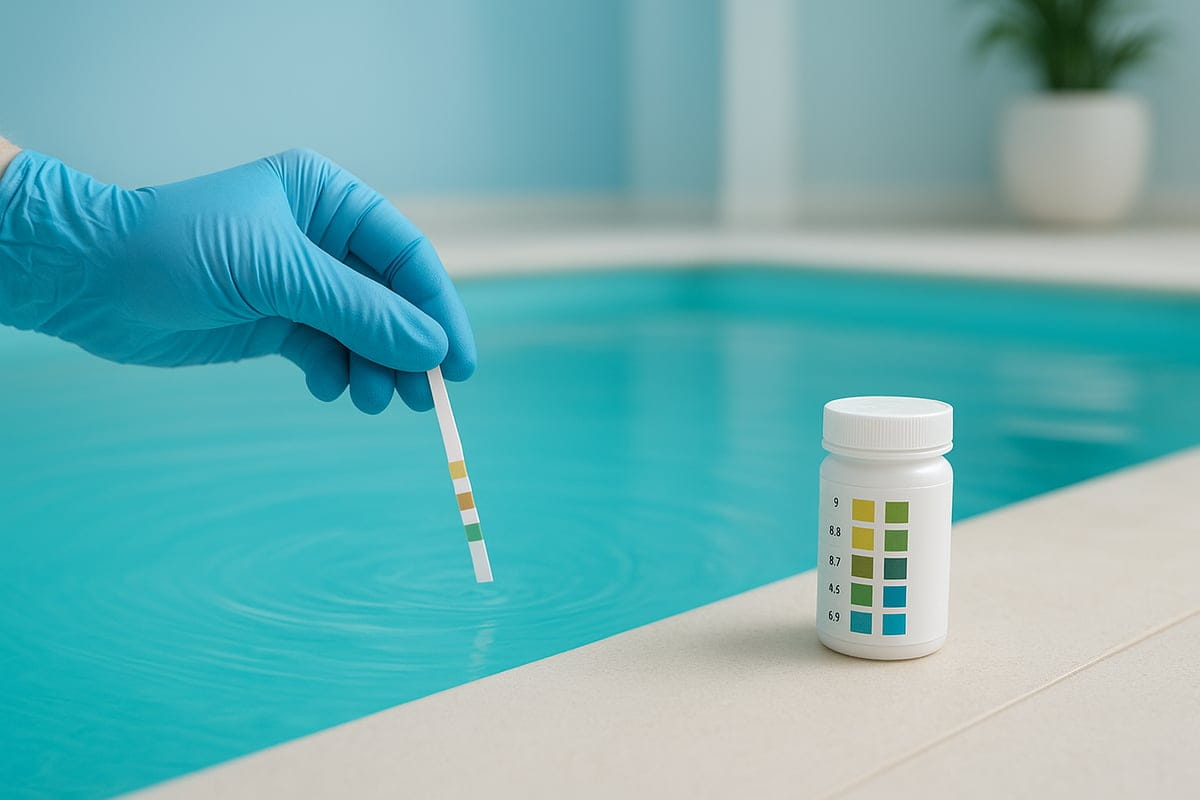
Basics of pH in pools and hot tubs
The pH value indicates how acidic or alkaline the water is and is crucial for both comfort and water quality. In pools and hot tubs, pH should be between 7.0 and 7.4. If pH rises above this range, it can cause skin and eye irritation, reduce chlorine’s disinfecting effect, and lead to calcium deposits.
Common symptoms of too high a pH are cloudy water, limescale deposits, and stronger chlorine odor. According to industry statistics, 8 out of 10 pool owners experience pH-related problems every year. For more details on how pH affects chlorine’s effectiveness, see.
What is pH Minus?
ph minus is a chemical product that lowers the pH value in pool and hot tub water. The product comes as granules or in liquid form and usually contains sodium bisulfate or sulfuric acid as the active ingredient.
The difference compared with other pH-lowering agents, such as hydrochloric acid, is that ph minus is easier and safer to dose for home use. When handling ph minus, it is important to wear protective gloves and keep the product out of reach of children.
When and why should you use pH Minus?
High pH levels often occur with hard water, high temperatures, or after adding other chemicals. ph minus is used to restore balance and thereby protect both swimmers and pool equipment.
Typical situations where ph minus is needed are after refilling with new water, heavy rainfall, or when many people have been swimming intensely. Statistics show that the correct pH can reduce chemical consumption by up to 30 percent, which saves both time and money.
Benefits of maintaining the correct pH level
Keeping pH within the optimal range always provides several benefits:
- Better comfort for the skin and eyes of swimmers.
- The pool liner and metal equipment last longer.
- Chlorine and other disinfectants work more effectively.
- The risk of algae growth and cloudy water decreases.
- You save money on chemicals and maintenance.
In summary, a stable pH level is the foundation of healthy, clear pool water.
Common questions about pH Minus
- Is ph minus dangerous? When handled correctly, it is safe, but always use protective equipment.
- Can ph minus be used in hot tubs? Yes, but follow the dosing instructions carefully.
- How quickly does ph minus work? The effect is usually noticeable within 30–45 minutes after adding it.
How pH Minus works – Chemical background and effect
Understanding how ph minus works is crucial for achieving the right water balance. By knowing the chemical background, you can use the product both safely and effectively.
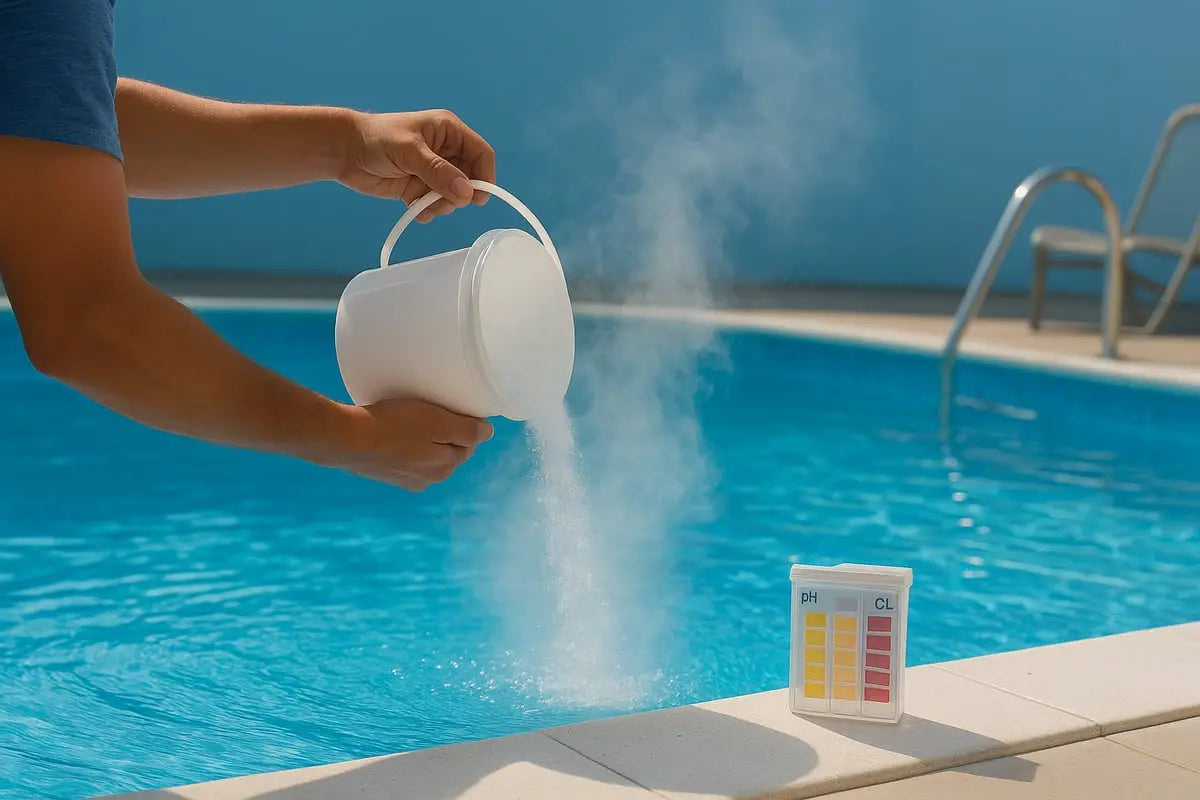
Chemical process when pH Minus is added
When ph minus is added to the pool, a chemical reaction occurs in which sodium bisulfate or sulfuric acid reacts with the water’s alkaline components. This releases hydrogen ions and lowers the pH value at the molecular level. The difference between granules and liquid ph minus lies mainly in the dissolution rate and handling.
Granules are usually dissolved in a bucket before being poured into the pool, while the liquid variant can be dosed directly with automatic equipment. Reaction time varies depending on water volume and circulation, but in a standard-sized pool it takes about 30–45 minutes before the pH stabilizes. For more detailed chemistry around pH adjustment, you can read more about.
Understanding this process is important to avoid overdosing and ensure a smooth and effective reduction of the pH level in your pool.
Factors affecting the effectiveness of pH reduction
Several factors affect how quickly and effectively ph minus works in pool water. Water temperature plays a major role, since warmer water speeds up the reaction, while colder water can make the process take longer. Good circulation is essential for ph minus to mix evenly throughout the pool.
The pool’s size and water quality also affect the result. In a small pool, you often see a faster effect, while larger pools require more time and careful distribution of the chemical. If the pool is very dirty or contains a lot of limescale, the effect of ph minus may be reduced.
By taking these factors into account, you reduce the risk of uneven pH adjustment and achieve more stable water.
Risks of incorrect use
If ph minus is used incorrectly, there is a risk of over-lowering, which means the pH drops too much. This can cause corrosion on metal, damage to the liner, and irritation for swimmers. A common mistake is adding too much ph minus at once, which leads to the so-called “roller coaster effect” where the pH swings sharply up and down.
Statistics show that 25 percent of beginners dose ph minus too quickly, which often requires additional corrections. To avoid these problems, you should always dose in stages and measure the pH level between each addition.
Care and patience are the keys to safe, balanced pool water.
Differences between different pH Minus products
There are several variants of ph minus on the market, mainly granules and liquid solutions. Granules are best for manual dosing, especially in smaller pools, while liquid ph minus is ideal for automatic dosing systems and larger pools.
Here is a brief comparison:
| Product | Benefits | Recommended use |
|---|---|---|
| Granules | Easy to dose, stores well | Smaller pools, manual handling |
| Liquid | Fast action, suitable for automation | Large pools, automatic systems |
The choice of product should be adapted to the type of pool and how often you want to monitor and adjust the pH level. With the right ph minus product, pH adjustment becomes both easier and more precise.
Step by step: How to use pH Minus correctly in 2026
Using ph minus correctly is essential for maintaining a balanced and safe pool environment. With this step-by-step guide, you get clear instructions for each stage, so you can confidently adjust the pH level to optimal ranges. Follow each step carefully for the best results and long-term protection of both water quality and pool equipment.
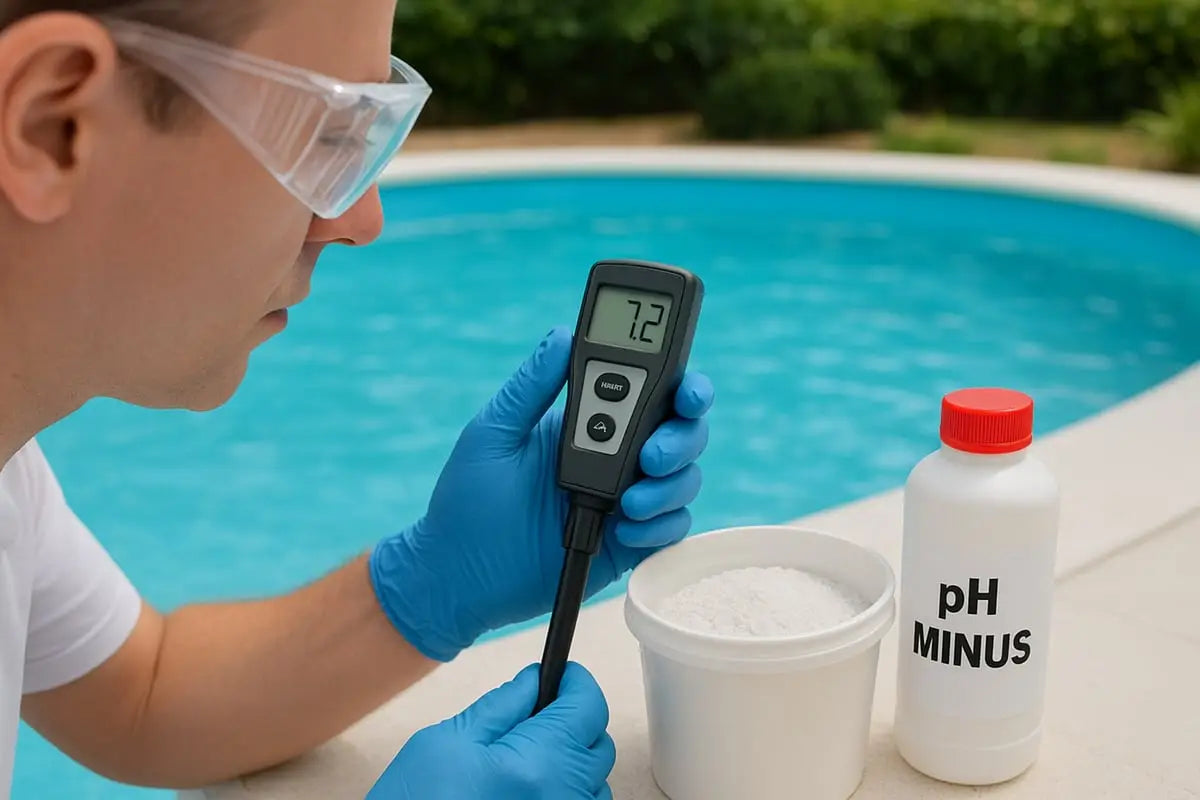
Step 1: Measure the pH level accurately
First, you need to measure the pH level in the pool or hot tub with high precision. Use test strips, digital meters, or Autocheck to ensure accurate results. Always test the water in the morning, after rain, or after intense swimming to get a true picture.
Common measurement mistakes include dirty test strips, old reagents, or improper sampling. It is therefore wise to consider investing in a digital pool water tester to reduce the risk of reading errors.
Do not forget to rinse the measuring vessel thoroughly and always follow the manufacturer’s instructions to ensure that ph minus is dosed based on correct readings.
Step 2: Calculate the correct dose
Once you know the current pH value and the pool volume, you can calculate how much ph minus is required. A common guideline is that 100 grams of ph minus lowers the pH by 0.1 units in 10,000 liters of water.
It is important to calculate the dosage carefully and preferably divide it into several rounds rather than adding everything at once. This reduces the risk of the pH dropping too much.
| Pool volume (liters) | Reduction (0.1 pH) | ph minus (grams) |
|---|---|---|
| 5 000 | 0.1 | 50 |
| 10 000 | 0.1 | 100 |
| 20 000 | 0.1 | 200 |
Always note the amount of ph minus you plan to add for future reference.
Step 3: Dissolve pH Minus correctly
Before adding ph minus to the pool, granules should always be dissolved in a bucket of warm water. Carefully pour in the correct amount of ph minus and stir until everything is fully dissolved.
Liquid ph minus can be dosed directly according to the manufacturer’s instructions, but here too it is wise to dilute with water to avoid concentrated chemicals that can damage the pool surface.
Always avoid adding ph minus directly onto the pool liner or near metal objects. Proper dissolution protects the pool materials and provides more even distribution.
Step 4: Add the solution correctly
When ph minus is dissolved, pour the solution slowly into the skimmer or along the pool edge. It is a good idea to distribute it over several spots around the pool to ensure even mixing.
Be careful to avoid contact with metal parts and pool equipment, since ph minus can cause corrosion if it lands directly on metal surfaces.
Start the pool’s circulation system and let it run for at least 30 to 45 minutes after addition so that ph minus mixes properly throughout the entire water volume.
Step 5: Check the pH level again
After 30 to 45 minutes of circulation, it is time to measure the pH level again. If the value is still too high, you can add additional small amounts of ph minus, but always do it gradually.
If the pH has dropped too much, you need to raise the level with a pH plus product. It is important not to rush the process, but to let the chemicals work fully before adding more.
Always document the readings and the amount of ph minus added to make future adjustments easier.
Step 6: Repeat and document
Continue measuring, dosing, and adjusting until the pH level is stable between 7.0 and 7.4. It is a good idea to create a routine for checking the pH regularly, especially after heavy rainfall or many swimmers.
Documenting each step and dose in a digital pool log or app makes it easy to follow up and spot patterns. This helps you use ph minus in a more efficient and economical way.
By following these steps, you minimise the risk of mistakes and ensure a long lifespan for the pool.
Tips for safer and more effective pH adjustment
- Never lower the pH by more than 0.2 to 0.3 units at a time.
- Always use protective gloves and safety goggles when handling ph minus.
- Store chemicals in a cool, dry place and out of reach of children and pets.
- Label opened packages with the date and store them according to the manufacturer’s instructions.
- Read the safety data sheet and labeling for ph minus products.
By following these safety and handling tips, you can use ph minus safely and effectively, while protecting both yourself and the environment.
Common mistakes and how to avoid them
Using ph minus seems simple, but small mistakes can have major consequences. It is therefore important to know the most common pitfalls and how to avoid them. By understanding these mistakes, you can easily avoid unnecessary problems and maintain the best possible water quality.
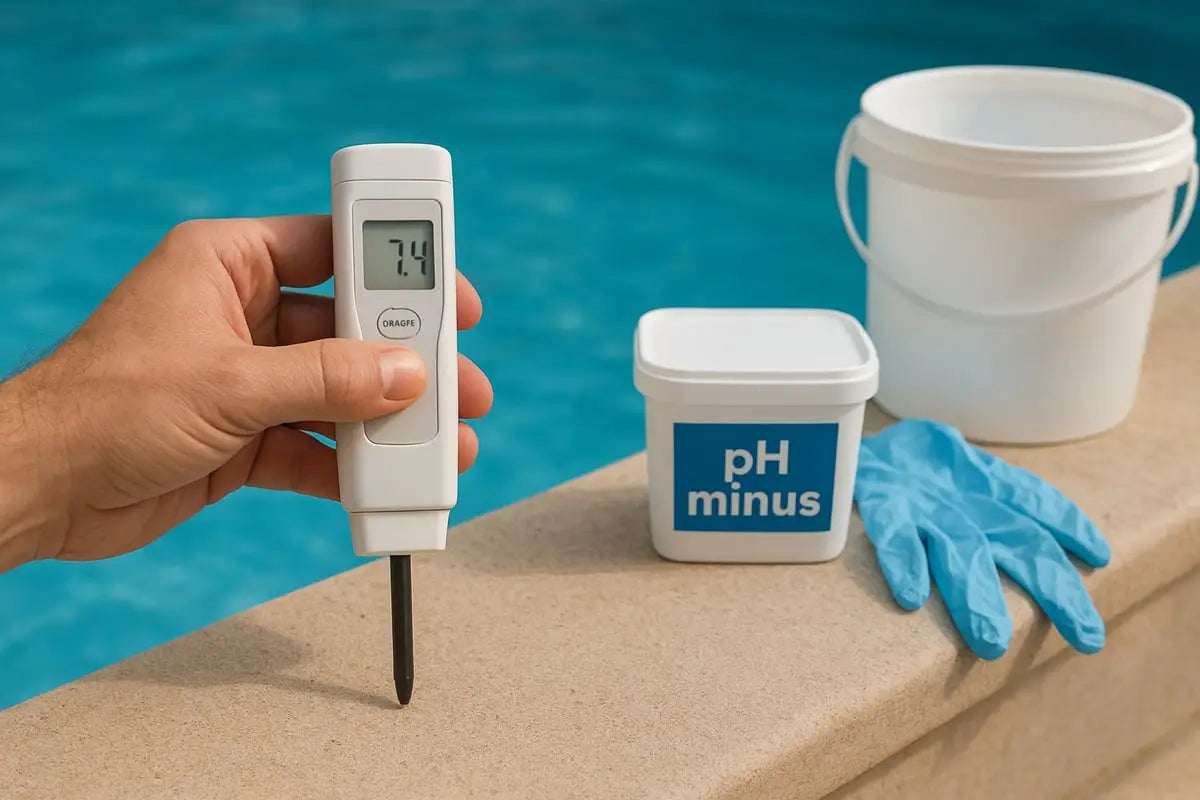
Overdosing and its consequences
One of the most common mistakes is overdosing ph minus. If you add too much at once, the pH can fall below the recommended level. This often leads to corrosion of metal, damage to the liner, and a shortened lifespan for pool equipment.
Typical signs of overdosing are discoloration, metal stains, and discomfort for swimmers. To avoid this, ph minus should always be added in stages and the amount calculated carefully.
- Always measure the water before each dose.
- Follow the product’s dosing chart.
- If you are unsure, start with a smaller amount.
For more detailed instructions on dosing and risks, you can read.
Incorrect measurement and interpretation
Incorrect measurement is another cause of problems when using ph minus. Dirty test strips, old reagents, or careless reading can give misleading values. It is important to check that the measuring equipment is clean and that you follow the instructions carefully.
Digital meters can provide more accurate results than simple test strips, but these also need to be calibrated regularly. If you get different results, repeat the measurement and preferably use two different methods to confirm.
- Replace old test strips often.
- Calibrate digital meters according to the instructions.
- Measure at the same time each time for comparable results.
Accurate measurement reduces the risk of incorrect use of ph minus and keeps your pool in top condition.
Adding it in the wrong place or at the wrong time
Adding ph minus in the wrong place or at the wrong time can cause local damage in the pool. If you pour the product directly onto the liner or near metal inlets, you risk stains and discoloration. It is also important not to add ph minus when the pool is in heavy use.
Always follow the manufacturer’s instructions and preferably dissolve ph minus in a bucket of water before adding it. Spread the solution along the pool edge or through the skimmer for even distribution.
- Do not pour it directly onto the bottom.
- Add it when the circulation pump is running.
- Wait until there are no swimmers in the pool.
The correct method ensures that ph minus works optimally and the pool remains attractive and undamaged.
Not waiting between doses
Many people want to quickly fix high pH and therefore add all the ph minus at once. This often leads to a “roller coaster” effect where the pH swings uncontrollably. The chemicals need time to mix and react in the water.
After each dose, you should wait at least 30–45 minutes before measuring again. If further adjustment is needed, do it in small steps and document each action. It is a good idea to use a timer to keep track of the time between doses.
- Be patient and follow the process.
- Document dosage and results.
- Always let the water circulate properly.
By waiting between doses, you ensure that ph minus delivers a stable and safe result.
Safety, storage, and environmental considerations when using pH Minus
Working with ph minus requires a good understanding of both safety and the environment. By following the correct routines, you reduce the risks to yourself, your family, and the environment. Below you will find practical advice on safe handling, proper storage, and modern alternatives for a safer pool environment.
Safe handling of pH Minus
Safety is always the most important thing when handling ph minus. Always use protective gloves and safety goggles to avoid splashes in the eyes or on the skin. In case of accidents, rinse immediately with plenty of water and contact medical care if needed.
Always read the safety data sheet before you begin. Clearly label all containers. If a child or pet ingests ph minus, call the Poison Information Center immediately.
For further guidance on protective equipment and proper handling, see Pool Chemistry Safety and Protective Equipment where you will find practical tips and products.
Remember that proper protection reduces the risk of accidents and makes pool care safer for everyone.
Storage and shelf life
Store ph minus in a dry, cool place and always out of reach of children and pets. Moisture can cause the granules to clump and lose effectiveness, while heat can shorten the shelf life of liquid products.
Mark the opening date on the package. Granules often last for several years if stored correctly, while liquid ph minus should be used within 1-2 seasons.
Keep the chemicals in the original packaging with clear labeling. Make sure the lid is always tightly closed to avoid spills or odors.
Good storage prevents accidents and keeps ph minus effective for longer.
Environmental impact and responsibility
Ph minus is effective but should be handled responsibly with regard to the environment. Spills or improper handling can negatively affect soil and water, especially if larger amounts end up outside the pool.
Always follow local waste disposal regulations. Take empty packaging and leftover chemicals to a recycling center or approved collection point, never to household waste.
Be careful when dosing so that you do not use more ph minus than necessary. A careful routine reduces both environmental impact and chemical waste.
With proper handling, you protect both your pool and the nature around it.
Alternatives and complements to pH Minus
Today there are several alternatives and complements to manual dosing of ph minus. Automatic dosing systems measure and add chemicals as needed, which reduces the risk of errors and saves time.
For some pool owners, alternative chemicals such as hydrochloric acid or carbon dioxide may also be relevant, but these require special knowledge and equipment.
When the pool is used frequently or you want minimal maintenance, investing in automation can be worthwhile. Feel free to discuss with a professional to find the right solution for your pool.
By choosing the right method, you get a simpler and more controlled pH balance.
Common questions and answers about pH Minus in 2026
Handling ph minus and maintaining the correct pH level can raise many questions among pool owners. Here we answer the most common concerns so that you can use ph minus in your pool or hot tub with confidence.
How often should I adjust the pH value?
To ensure optimal water quality, you should check and, if necessary, adjust the pH at least once a week, especially if you use ph minus. During heavy swimming use, heavy rainfall, or after refilling, more frequent checks are recommended.
Creating a routine around measurement makes a big difference for the pool’s health and reduces the need for quick fixes with ph minus.
Can I use pH Minus in all pool types?
Yes, ph minus is suitable for most pool types, including liner, tile, fibreglass, and hot tubs. The important thing is that you follow the dosing instructions and adjust the amount based on the pool’s material and volume.
For some sensitive materials, it may be wise to dissolve ph minus in water before adding it to avoid stains or damage.
What happens if the pH becomes too low?
If ph minus is used in too large a quantity and the pH falls below 7.0, it can lead to corrosion of metal, irritation of the eyes and skin, and damage to the pool liner and equipment.
Therefore, it is recommended to lower the pH gradually and always measure after each dose so you avoid the pH becoming too low because of ph minus.
Is pH Minus dangerous to health and the environment?
When handled correctly, ph minus poses only small risks to both health and the environment. However, it is important to use protective gloves and avoid inhaling dust or fumes.
Always keep ph minus out of reach of children and pets. If an accident occurs, always follow the advice on the safety data sheet and contact healthcare services if needed.
How do I know which product to choose?
The choice between granules and liquid ph minus depends on your pool type and whether you dose manually or automatically. For manual dosing, granules are often recommended, while liquid ph minus is better suited to automatic systems.
If you want easier handling, an automatic pH dosing system pool can be a smart option, especially for larger pools or frequent use.
Can I swim immediately after adding pH Minus?
No, it is best to wait at least 30 to 45 minutes after adding ph minus before anyone swims. Circulate the water properly and check the pH again before swimming.
If you have added larger amounts of ph minus or if the pool is small, it may sometimes be wise to wait even longer to ensure everyone’s safety.
Which other chemicals affect pH?
Several chemicals can affect the pH level in the water. Chlorine, algaecides, and certain flocculants can both raise and lower pH, which may mean you need to adjust with ph minus more often.
Do you have a salt chlorinator? Then it is especially important to keep an eye on pH, since these systems often raise the pH value and require regular addition of ph minus. Read more about how salt chlorinator affects pH and get tips for balanced pool care.
Recommended products and equipment for pH adjustment
Choosing the right products and equipment for pH adjustment is crucial for simple and safe pool care. There are several types of ph minus to choose from, and the choice of test equipment can make a big difference to the result. Below you will find an overview of the most common options on the market and tips for finding the right solution for your specific pool or hot tub.
Popular pH Minus products on the market in 2026
Liquid ph minus is common in automatic systems and provides smoother regulation. Granules are suitable for smaller pools or hot tubs, while the liquid variant is ideal for larger water volumes or where automatic dosing is available. Both alternatives have a similar effect, but are handled somewhat differently.
Most brands offer clear instructions, making it easy to avoid mistakes. Safety is important – always choose products that are clearly labeled and intended for pool use. For a more in-depth overview of different products and pool care in general, recommended.
Important accessories for accurate measurement and dosing
To ensure the correct pH level and effective dosing of ph minus, reliable measuring instruments are needed. Test strips are easy to use for quick checks, but digital meters provide higher precision. Autocheck systems and test kits with calibration fluid are good investments for those who want full control.
Protective equipment such as gloves and safety goggles are essential when handling ph minus. A sturdy plastic or metal bucket is used to dissolve the granules before they are added to the water. Having these accessories at home reduces the risk of mistakes and increases safety.
Automatic systems for pH regulation
Automatic dosing systems have become increasingly common for keeping pH stable without daily manual effort. These systems dose liquid ph minus directly based on continuous measurements, reducing the risk of over- or under-dosing.
Many modern pool controls integrate pH regulation with salt chlorinators or other water treatment. This saves you time and gives better control over water quality. Although the initial investment is higher, operational reliability and ease of use are major advantages.
Price comparison and buying tips
The price of ph minus varies depending on format and package size. Granules usually cost between 40–70 kr/kg, while liquid ph minus is priced at 25–45 kr/liter. Larger packages give a better price per kilo or liter, especially if you have a large pool or use automatic dosing.
| Product | Price range | Benefits |
|---|---|---|
| Granules | 40–70 kr/kg | Easy to store, precise |
| Liquid | 25–45 kr/liter | Suitable for automatic systems |
Keep in mind to compare suppliers, check shelf life, and always choose products suited to your pool type for the best results.
Find pool chemicals for your pool
Explore our range of pool chemicals for the ongoing maintenance of pool water.
See our pool chemicals


