


Dreaming of a concrete pool in the garden for summer 2026? Now is the perfect time to start planning your own oasis.
This guide takes you step by step from the first idea to a finished concrete pool on your property. You’ll gain insight into everything from benefits and planning to the construction process, material choices, costs, maintenance, and the hottest trends.
We show you how to bring the pool dream to life, build confidence with expert advice, and inspire you to take the first step toward a refreshing pool life at home.
Why choose a concrete pool? Pros and cons
Choosing a concrete pool means investing in a robust, long-term solution for your garden. But why is a concrete pool so popular, and what pros and cons should you weigh before deciding? Below, we go through the most important aspects.
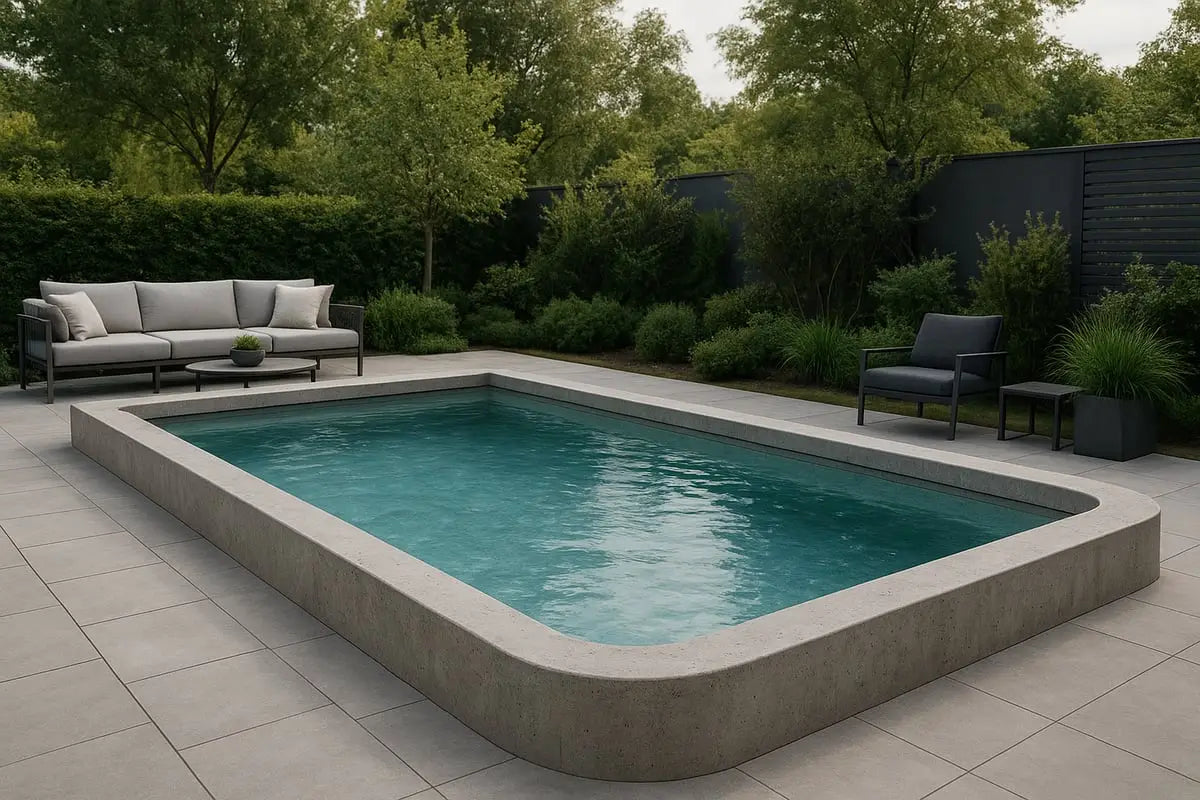
Durability and lifespan
A concrete pool is known for its impressive durability. With proper maintenance, a concrete pool can easily last over 50 years. It withstands the demands of the Swedish climate, and the risk of frost damage is minimal. Many concrete pools in Scandinavia have been in use for decades and show barely any signs of wear.
If we compare lifespans, a concrete pool has a clear advantage over both liner pools and fibreglass pools, which often require major renovations or material replacements after 10–20 years. According to statistics, concrete pools have the lowest total cost over time thanks to their long life cycle.
| Pool type | Estimated lifespan | Maintenance requirement |
|---|---|---|
| Concrete pool | 50+ years | Low |
| Liner pool | 10–20 years | Medium |
| glasfiberpool | 20–30 years | Medium |
Customisable design
A concrete pool gives you the freedom to create almost any shape or size. Whether you dream of a classic rectangle, an infinity pool, or a pool with a beach entry, anything is possible with a concrete pool. You can integrate stairs, seating benches, and other special features directly into the structure.
This makes a concrete pool ideal if you want a unique look or need to adapt the pool to a difficult plot. For example, pools that blend into the landscape or have designed edges for a spa feel are very popular.
Costs and investment
Building a concrete pool involves a higher initial cost compared with prefabricated pool modules. The price varies depending on size and options, but expect 300 000–1 000 000 SEK. However, a concrete pool has a major advantage in the form of low long-term maintenance costs and a significant increase in property value.
When selling the house, a concrete pool can be a strong competitive advantage and contribute to a higher final price. One tip is to plan the budget carefully and compare quotes from different contractors before starting the project.
Disadvantages to consider
There are some challenges with concrete pools that are important to know about. Construction time is usually longer than for prefabricated pools, and the process requires professional contractors as well as proper groundworks. If the right materials and techniques are not used, there is a risk of cracking and other damage.
Choosing certified suppliers and carefully following construction instructions reduces the risk of problems. Read more about the pros and cons of concrete pools for a more in-depth review of these aspects.
Environment and energy efficiency
A concrete pool can easily be combined with modern energy solutions, such as solar heating and efficient insulation. If you choose the right materials and recyclable components, the environmental impact is significantly reduced. A concrete pool also has low heat loss when properly insulated, which lowers operating costs over time.
By investing in energy-smart accessories, a concrete pool becomes both durable and economical, while also contributing to a better environment.
Planning: Step by step to your concrete pool
Building a concrete pool is a major project that requires careful planning from start to finish. With the right preparation, you create the conditions for a pool that suits your needs and lasts for many years. Here we guide you step by step through the planning process.
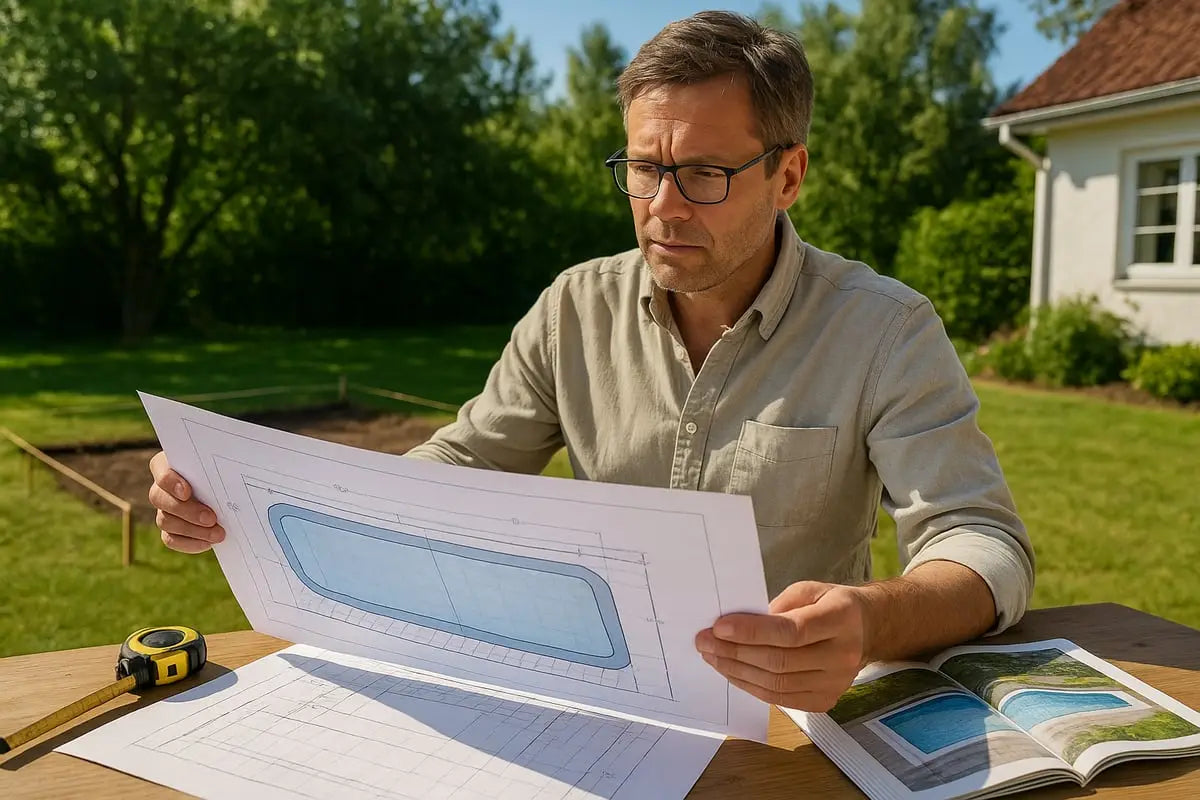
1. Needs analysis and vision
The first step is to identify the purpose of your concrete pool. Do you want a place for play, exercise, or relaxation? A family with small children may prioritise safety and shallower water, while someone focused on training will want length and depth for swimming.
Find inspiration on platforms such as Pinterest, Instagram, or pool magazines to gather ideas about design, function, and style. Consider whether you want a classic rectangular concrete pool, or if you dream of a more unique shape.
Ask questions such as: Will the pool be used year-round? Do you need to integrate a spa area or lighting? A clear vision from the start makes it easier to make the right decisions later in the process.
2. Site selection and ground conditions
The next step is to choose the best location for your concrete pool. Look at sun and shade conditions, proximity to the house, visibility from neighbours, and wind protection. A sunny location provides a longer swimming season and reduces the energy needed for heating.
Examine the soil type on the property: soil, clay, or rock affects both the construction process and the cost. Also check whether you need planning permission and whether consent from neighbours is required. Municipal rules can differ, so contact the building department early in the planning process.
Adapting the placement to the property’s conditions minimises the risk of problems during construction and gives the best possible result for your concrete pool.
3. Pool design and size
Once you have chosen the location, it is time to decide the pool’s size and shape. A concrete pool offers great flexibility, so you can choose between standard dimensions or a fully custom design.
Think through the depth — should the pool be child-friendly or suitable for diving? Also consider options such as stairs, seating benches, or integrated relaxation areas. Adapt the pool to the layout of the plot and your needs to create a harmonious outdoor environment.
A clear plan for design and function helps you avoid costly changes later and ensures that your concrete pool becomes exactly as you envisioned.
4. Budget and financing
Building a concrete pool is a major investment, so it is important to establish a realistic budget. Expect costs for groundworks, materials, technology, and accessories. Do not forget any unexpected expenses that may arise during construction.
There are several financing options, such as loans or instalment payments. The ROT tax deduction can reduce labour costs if you hire a professional. For a detailed review of costs and budgeting, you can read more at Cost of building a pool.
Having a clear budget from the start gives you better control over the project and minimises the risk of surprises as your concrete pool takes shape.
5. Choosing a contractor and supplier
The final step in planning is to choose the right contractor and supplier. Compare several quotes and review references carefully. Check that the company has the right certifications and insurance, and that you receive everything in writing in clear agreements.
A detailed schedule and clear communication make collaboration easier. Choose a company with experience in concrete pools to ensure quality and peace of mind throughout the construction process.
A well-considered selection process increases the chances that your pool project will be successful, both in the short and long term.
The construction process: From foundation to finished pool
Building a concrete pool is a project that requires careful planning and precision at every step. Here we guide you through the entire process, from the groundworks to the first swim. With the right knowledge and method, you can ensure your concrete pool is both durable and beautiful.
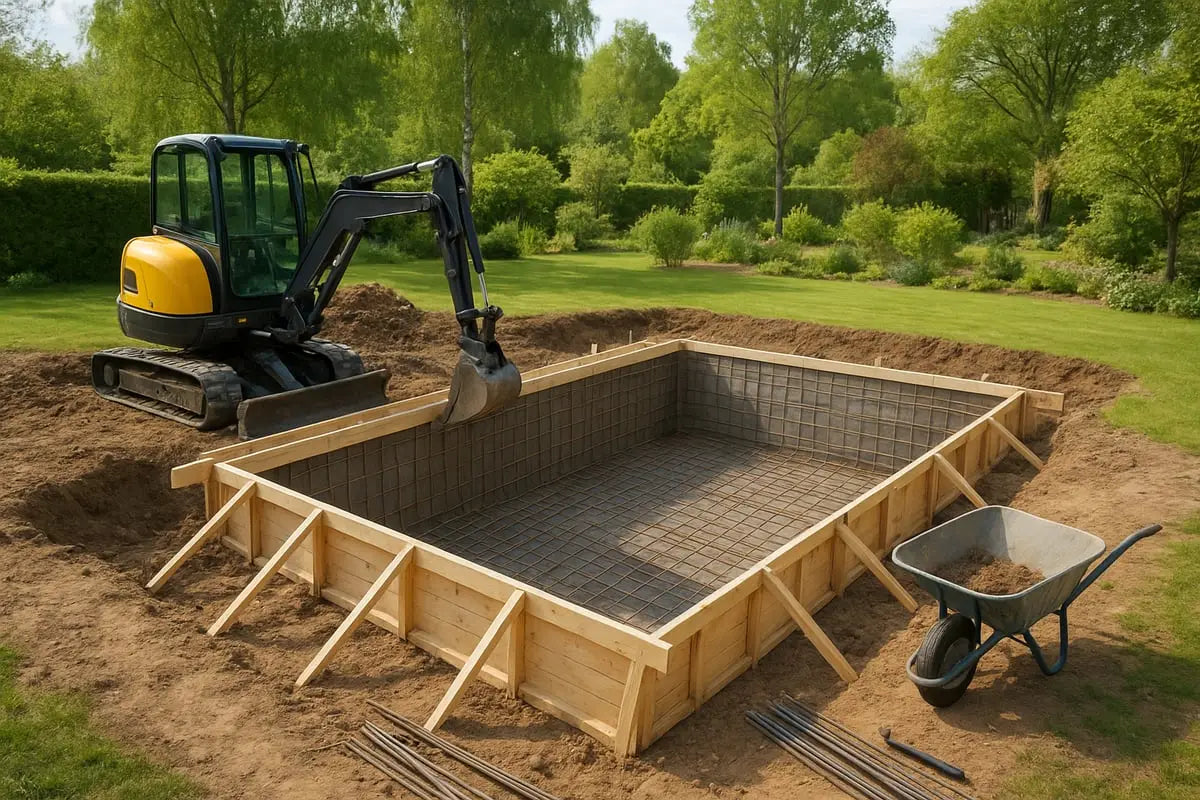
Groundworks and foundation
For your concrete pool to remain stable for many years, thorough groundworks are required. Excavation is the first step, where soil is removed to the correct level and the pool’s shape is carefully marked out. It is important to assess the ground’s load-bearing capacity and provide proper drainage to avoid future settlement and frost damage.
After excavation, drainage pipes and ground insulation are installed. The insulation reduces heat loss and protects against frost. Always check the slope so water is directed away from the pool. Pitfalls here are insufficient drainage or careless insulation, which can lead to moisture damage.
For those who want to delve deeper, is recommended and describes each stage in detail.
Important steps in the groundworks:
| Step | Purpose | Tip |
|---|---|---|
| Excavation | Create the correct depth and shape | Use the right machinery |
| Drainage | Prevent moisture damage and settlement | Check the slope of the ground |
| Insulation | Protect against cold and frost | Choose high-quality insulation |
Laying the foundation correctly is crucial for your concrete pool to withstand Swedish winters and retain its shape over time.
Casting the pool structure
Once the groundworks are complete, the shape of the pool structure is built. For a concrete pool, heavy reinforcement is used, placed according to the drawings to provide maximum strength. The reinforcement is tied together and forms the pool walls and floor. A stable formwork is important to avoid deformation when the concrete is poured.
The concrete is poured in stages. First the base slab is cast, then the walls. The concrete quality must be adapted for pools, often C35/45, to ensure watertightness and strength. Curing time is critical: the concrete must be kept moist and protected from rapid temperature changes during curing.
Common mistakes are incorrect reinforcement or insufficient vibration of the concrete, which can lead to cracks. Always check that the formwork and reinforcement are correct before pouring. A well-cast concrete pool provides a structure that can withstand both mechanical stress and climate impact.
Waterproofing and surface finish
Once the structure of the concrete pool is complete, it must be waterproofed. Concrete itself is dense, but for extra security a pool plaster or membrane is often used. This protects the structure and makes maintenance easier.
The surface finish is decisive for the pool’s appearance and lifespan. Common choices are tiles or mosaic, which create an exclusive feel and are easy to keep clean. Alternatively, pool paint or special pool membranes can be used for a smooth, durable surface.
Popular surface finishes in Swedish concrete pools include blue mosaic for a classic look or light grey tiles for a modern feel. Keep in mind that the surface finish also affects water quality and maintenance needs. Tiles and mosaic have a long lifespan and are easy to repair if damaged.
Proper waterproofing and surface finish give your concrete pool a beautiful appearance and minimise the risk of future problems.
Installation of technology and accessories
Technology is the heart of every concrete pool. An efficient circulation system with pump and filter keeps the water clean. A heat pump is installed to provide a comfortable swimming temperature for most of the year. LED lighting and pool covers are popular options that increase safety and comfort.
Common accessories in concrete pools are built-in stairs, seating benches, and a jet stream for swim training. Statistics show that more people are choosing automatic purification systems and smart controls to simplify maintenance between 2023 and 2026.
During installation, it is important to follow the manufacturer’s instructions and ensure that all electrical work is correctly installed and protected against moisture. A professional electrician and plumbing installer are always recommended for concrete pools.
Examples of common options:
- Jet stream for counter-current swimming
- Built-in lighting
- Automatic pool monitoring
- Pool cover with remote control
With the right technology and accessories, you get a concrete pool that is both easy to maintain and tailored to your needs.
Filling and start-up
When everything is installed, it is time to fill your concrete pool with water. Before filling, check the tightness and function of all systems. It is important to fill the pool gradually while monitoring pressure and any leaks.
During start-up, the water chemistry is adjusted carefully. pH, chlorine, and alkalinity must be balanced from the beginning to avoid discolouration and deposits. Always follow the supplier’s recommendations to ensure optimal water quality.
The first swim in your new concrete pool is a memorable moment. Check that all safety features work, such as the pool cover and emergency stop. Enjoy the result of your work and the new quality of life a concrete pool brings to your garden.
Material choices and technology: What is required for a modern concrete pool?
Choosing the right materials and technology is crucial for a durable and functional concrete pool. Here we guide you through the most important choices, from concrete and reinforcement to smart automation solutions. A modern concrete pool requires not only robust construction but also smart technologies for comfort and energy efficiency.
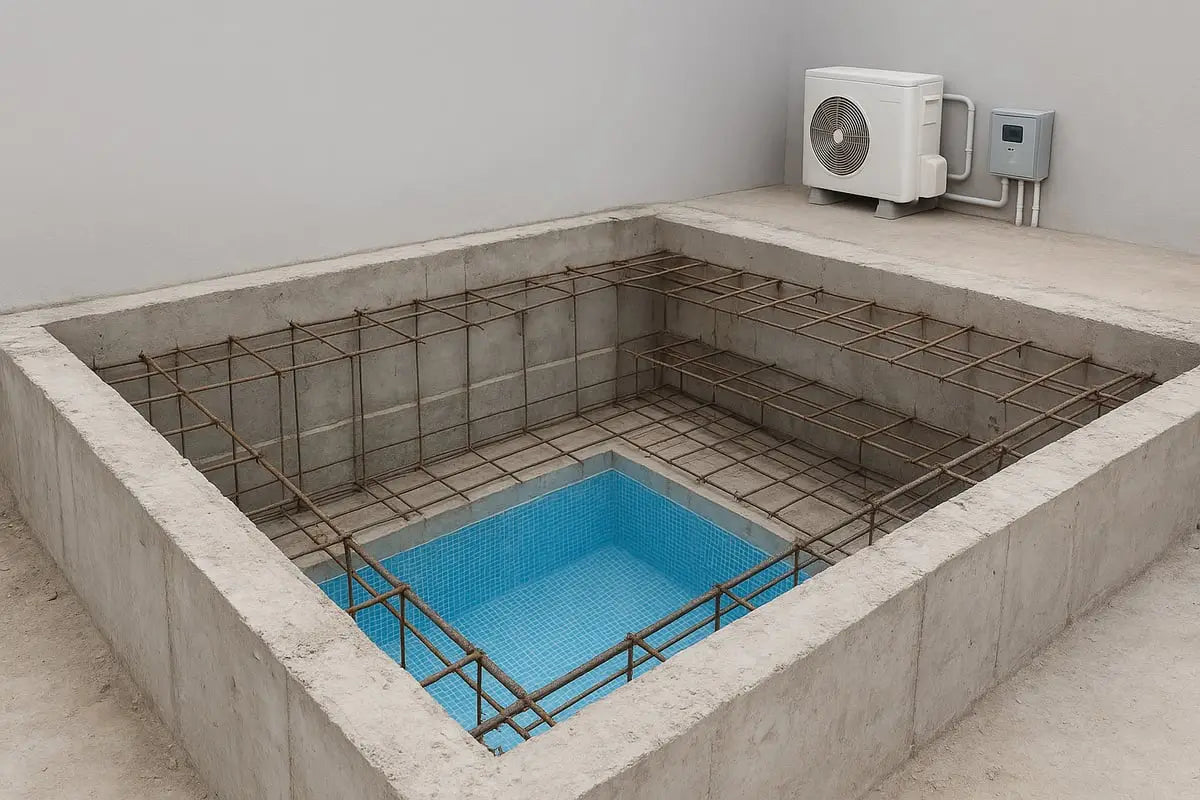
Concrete and reinforcement
The foundation of a concrete pool is always the concrete. It is essential to use the correct concrete class, usually C35/45, to ensure strength and watertightness. To prevent corrosion, the reinforcement must be rust-protected and correctly positioned. The difference between an in-situ cast and prefabricated pool structure lies mainly in flexibility and the construction process. An in-situ cast concrete pool gives greater freedom in design and shape, while prefabricated elements can reduce construction time. Read more about to understand how the right material choices affect the pool’s lifespan.
Surface finish and liner
The surface finish of a concrete pool determines both appearance and maintenance. Common choices are tiles, mosaic, pool paint, or liner. Each material has its advantages:
| Surface finish | Price level | Maintenance | Lifespan |
|---|---|---|---|
| Tiles | High | Low | 30+ years |
| Mosaic | High | Low | 30+ years |
| Pool paint | Medium | Medium | 8–12 years |
| Liner | Low | Medium | 8–15 years |
New trends, such as 3D liners and special mosaic, make it easy to adapt a concrete pool to your style. Keep in mind that the choice of surface finish affects how much time and money you need to spend on future maintenance.
Insulation and energy efficiency
A well-insulated concrete pool means lower operating costs and a longer swimming season. Ground insulation and insulated pool walls minimise heat loss, especially in Sweden’s climate. Many choose to combine insulation with a heat pump and solar panels for maximum energy efficiency. Statistics show that an insulated concrete pool can reduce energy consumption by up to 30 percent compared with non-insulated versions. By investing in the right insulation, you get a concrete pool that is both climate-smart and economical in the long run.
Pool technology and automation
Technology in a concrete pool has developed rapidly in recent years. Smart control systems make it possible to remotely control heating, lighting, and purification via mobile phone. UV and salt chlorinators simplify water care and reduce the need for chemicals. Automated pool maintenance, such as pool robots and dosing systems, makes upkeep easier. A modern concrete pool can be equipped with technology that both saves time and provides a cleaner, more inviting swimming environment all year round.
Maintenance, care, and lifespan
Investing in a concrete pool means long-lasting enjoyment and function, but proper maintenance is essential to maximise lifespan and minimise operating costs. With simple routines and smart tools, you keep your concrete pool both clean and safe, year after year.
Daily and weekly care
To keep your concrete pool in top condition, regular care is required. Clean the pool surfaces and bottom with a net or pool robot at least once a week. Check and adjust the water chemistry, especially pH, chlorine, and alkalinity, to avoid algae growth and corrosion.
Feel free to use automatic dosing systems, which simplify pool care and help maintain stable water quality. Pool robots are a smart investment that saves time and ensures your concrete pool is always inviting.
If you want to create a clear routine, Pool maintenance schedule and care is recommended for a complete overview of daily and weekly tasks. With the right routines, you reduce the risk of problems and extend the pool’s lifespan.
Seasonal maintenance
Before winter, it is important to properly winterise your concrete pool. Lower the water level, drain water from the pipes and equipment, and cover the pool with a sturdy cover. In spring, carry out a thorough inspection of the surface finish, joints, and equipment before refilling and starting up.
Be alert for cracks or discolouration, especially after frost periods. Small damage should be repaired immediately to avoid larger repairs. A well-executed spring opening means your concrete pool will quickly be ready for the swimming season.
Common problems, such as small cracks or limescale deposits, can be dealt with using the right products and measures. Preventive maintenance reduces the risk of costly damage and significantly extends the pool’s lifespan.
Lifespan and warranty
A concrete pool generally has a lifespan of over 50 years with proper care. Factors that affect it include concrete quality, reinforcement, and regular maintenance. Professionally carried out installations and ongoing inspections ensure long durability.
Many suppliers offer warranties on both the structure and surface finish, often between 10 and 15 years. Statistics show that the average age of concrete pools in Sweden often exceeds 40 years, especially when owners follow the recommended care routines.
Investing time in maintenance is the key to keeping your concrete pool a safe and beautiful meeting place for many decades.
Costs for operation and maintenance
The operating cost of a concrete pool varies, but is usually between 8 000 and 15 000 kronor per year. This includes electricity for the pump and heater, chemicals, and minor repairs. Compared with other pool types, maintenance costs are often lower in the long term thanks to the robust construction.
| Pool type | Annual operating cost (SEK) | Lifespan (years) |
|---|---|---|
| Concrete pool | 8 000–15 000 | 50+ |
| Liner pool | 10 000–17 000 | 15–20 |
| glasfiberpool | 9 000–16 000 | 25–30 |
To minimise costs, choose energy-efficient equipment and invest in insulation. A well-maintained concrete pool means lower long-term expenses and higher value for your property.
Design, inspiration, and the concrete pools of the future
Creating a concrete pool is about more than just function — it is a chance to shape a unique oasis in your garden. With the right design and modern solutions, you can achieve both style and comfort that lasts for many years. Here we explore the hottest trends, inspiring material choices, and the sustainable opportunities of the future for those who want to take their concrete pool to the next level.
Popular design trends 2026
During 2026, we see several exciting trends for concrete pools in Swedish homes. Infinity pools with a floating waterline and beach entry create an exclusive feel and extend the pool area toward nature. Natural shapes are inspiring more and more people, where the pool blends into the garden with soft lines and integrated stone stairs.
Spa and wellness solutions are integrated directly into the concrete pool, for example with massage zones, waterfalls, or bubble zones. Many also choose to combine the pool with a separate relaxation area for yoga or an outdoor gym. If you want more inspiration for your dream pool, Inspiration for your dream pool is recommended, where you will find modern ideas and trend insights for concrete pools.
Colour choices and material combinations
The colour palette for concrete pools is evolving rapidly. Grey, anthracite, and various shades of natural stone are especially popular and create a timeless impression. Combining concrete with wooden details, stone-paved edges, or glass railings creates an exclusive and harmonious whole.
The style varies between Scandinavian minimalism with clean lines and Mediterranean-inspired pool environments with warm tones and mosaic. A concrete pool can therefore be adapted to both modern and classic tastes, making it a flexible choice regardless of the garden’s character.
Lighting and atmosphere
The right lighting is crucial for creating the right mood around your concrete pool. LED lamps, fibre optics, and the option to change colours let you vary the atmosphere for evening swims, parties, or relaxation. Statistics show that demand for smart lighting solutions is increasing sharply ahead of 2026.
By placing lighting both in and around the concrete pool, you get an effective play of light that lifts the entire outdoor environment. Many also choose dimmable systems so the light can be adapted to the occasion and purpose.
Pool environment and outdoor room
A concrete pool often becomes the heart of a well-planned outdoor space. Pool decks in wood or composite, outdoor kitchens, and comfortable lounge furniture are popular features that extend the season and make the pool area a natural gathering place.
Also consider greenery and vegetation around the concrete pool, which creates a framing effect and provides privacy. Pool enclosure and sliding covers make swimming possible year-round and turn the concrete pool into an investment that brings enjoyment whatever the weather.
Sustainability and environmental choices
Sustainability is becoming increasingly important when choosing a concrete pool. Eco-friendly materials, such as recycled concrete and energy-efficient pool pumps, reduce environmental impact. Water-saving technology and efficient purification systems contribute to a more resource-conscious operation.
The concrete pool of the future is characterised by climate-smart solutions and material recycling. By thinking long term, you get a concrete pool that is both beautiful and responsible — for you and the environment.
Price, budget, and financing: What does a concrete pool cost in 2026?
Investing in a concrete pool is a major commitment, but it can also improve your quality of life and increase the value of your property. To make the right decision, you need to understand the cost picture, compare options, plan financing, and avoid common mistakes. Below, you get a clear overview of what a concrete pool actually costs and how you can maximise your investment.
Cost breakdown and example budget
The cost of a concrete pool is determined by several factors such as size, ground conditions, technology, and options. For a standard pool measuring 4x8 meter, the budget may look like this:
| Cost item | Approximate cost (SEK) |
|---|---|
| Groundworks | 80 000 |
| Pool structure (concrete) | 150 000 |
| Technology & filter | 60 000 |
| Accessories | 50 000 |
| Labour cost | 120 000 |
| Total | 460 000 |
A concrete pool can be customised to your wishes, which affects the final price. Sustainability is becoming increasingly important; read more about to see how you can make an environmentally conscious choice already at the budgeting stage.
Price comparison with other pool types
A concrete pool is often more expensive to purchase compared with a liner pool or glasfiberpool, but has a longer lifespan and can provide lower maintenance costs over time. A liner pool usually costs 200,000 to 400,000 SEK, while a glasfiberpool is approximately 300,000 to 600,000 SEK.
A concrete pool offers greater freedom in design and can increase property value more than simpler pool types. In the long run, the investment can pay off in terms of both lifespan and operating costs.
Financing options and deductions
There are several ways to finance a concrete pool. Common options are bank loans, instalment plans through the supplier, or using the ROT tax deduction for labour costs. The ROT deduction can provide up to 30 percent off the labour portion, which often amounts to tens of thousands of kronor.
Keep in mind to compare interest rates and terms between different banks and suppliers. Thoughtful financing allows you to build your concrete pool without risking your finances.
Common pitfalls and unexpected costs
Many underestimate the costs linked to ground conditions. Bedrock or heavy clay can require extra work and raise the price of your concrete pool. Permits, planning permission, and unforeseen ground problems can also affect the budget.
To avoid budget overruns, it is important to have a buffer and a clear agreement with the contractor. Make sure you receive written quotes and itemised costs from the start.
Increase in property value
According to Swedish estate agents, a concrete pool can increase the value of your property by between 5 and 15 percent. Especially if the pool is well built and integrated with the outdoor environment. When selling, a concrete pool often becomes a strong argument for potential buyers.
However, it is important that the pool is properly sized for the plot and that it is of a high standard, so the investment truly pays off in the long run.
Find the pool for your garden
Explore our pool models and compare sizes, materials, and designs.
See our pools


