


What happens if your pool starts to tilt or gets damage to the bottom? Often, it is the choice of base material that determines the pool's durability. This guide takes you step by step through everything you need to know about sand under a pool for 2025.
Here you will learn what benefits the right base provides, how to choose materials, avoid common mistakes, and maintain your pool. With expert tips and clear instructions, you can create a safe installation and extend the pool's lifespan. Read on and follow the guide to ensure a stable result.
Why is sand under a pool important?
Choosing the right sand under a pool is a crucial factor in helping your pool last a long time and remain safe. Many pool owners underestimate the importance of a well-prepared base, which can lead to costly problems. In this section, we go through why sand under a pool is the best choice, what risks there are with an incorrect base, and how sand compares with other options.
Benefits of sand as a base
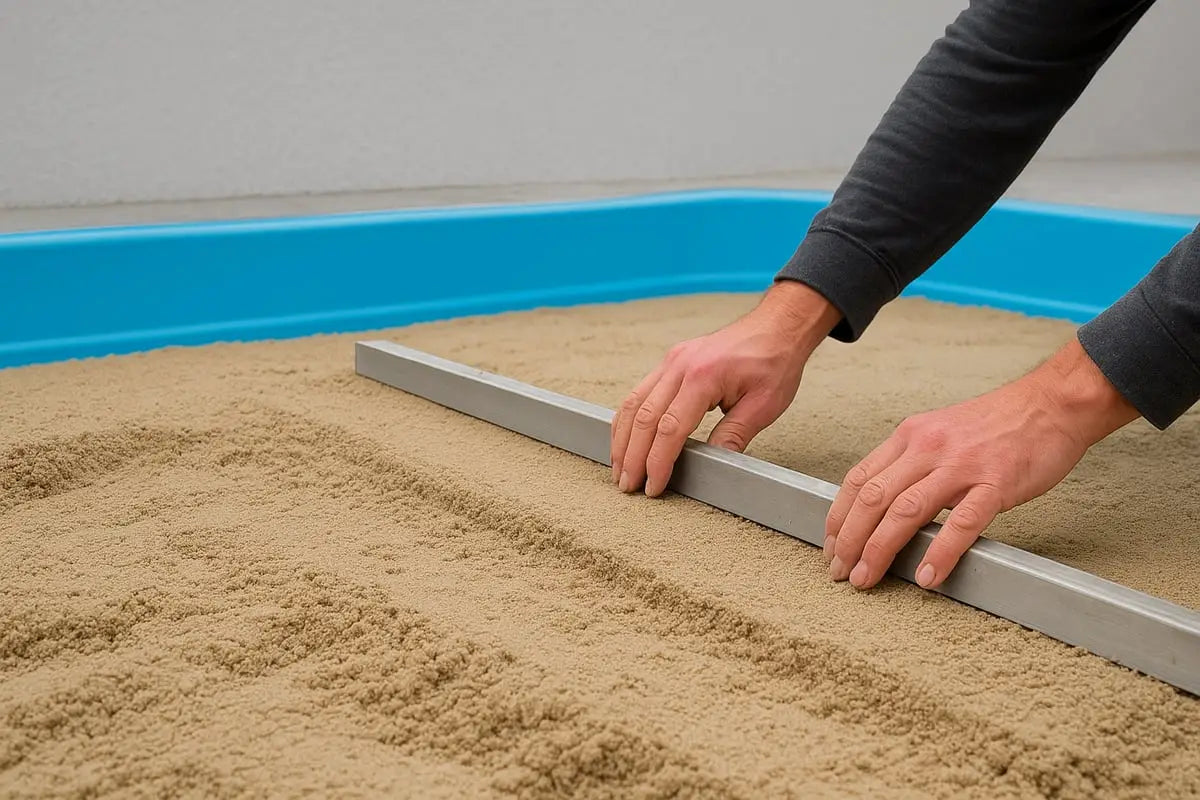
Sand under a pool offers several significant benefits that directly affect the pool's lifespan and function. First, the sand helps distribute the load evenly across the entire pool surface. This reduces the risk of point pressure and protects both the pool liner and the bottom from damage.
Another important feature is sand's natural drainage ability. With a correctly laid layer of sand under a pool, you reduce the risk of water collecting beneath the structure. This helps counteract ground movement and frost damage, which is especially important in Sweden's varied climate.
Sand under a pool is also flexible and can easily be adjusted during installation. If you discover unevenness or settling, the sand can be reshaped easily to restore a smooth surface. This makes sand a cost-effective option compared with, for example, concrete, which requires considerably more work and resources.
To sum up:
- Even load distribution protects the pool
- Natural drainage prevents water problems
- Flexible and easy to adjust when needed
- Cost-effective and easy to obtain
By using the right sand under a pool, you maximize both safety and comfort for everyone using the pool.
Risks of an incorrect base
Choosing the wrong base or laying sand under a pool incorrectly can have serious consequences. An uneven sand bed often causes the pool bottom to become wavy or crooked, increasing the risk of leaks and damage to the liner. If the sand layer is too thin or unevenly distributed, ground movement can create settling, which in turn shortens the pool's lifespan.
Statistics from the Swedish Pool Industry Association show that a full 60% of pool damage in Sweden originates from poor foundations. This underscores the importance of laying sand under a pool correctly and following recommended guidelines.
Common problems with an incorrect base include:
- Uneven pool bottom and increased risk of holes in the liner
- Shortened lifespan and the need for early repairs
- Poor drainage that can cause water accumulation and frost damage
To avoid these risks, it is crucial to always check the thickness and distribution of the sand and ensure that the sand under the pool meets quality requirements.
Comparison with other base materials
When comparing sand under a pool with other materials such as concrete, gravel, and foam, it is clear that sand has unique advantages. Concrete is very stable but requires more work and is harder to adjust if settling occurs. Gravel offers good drainage but can be too coarse and cause damage to the liner. Foam provides a soft surface but is considerably more expensive and is mainly used for smaller pools or where extra comfort is desired.
Table: Comparison of common pool base materials
| Base material | Drainage | Price level | Adjustability | Recommended pool types |
|---|---|---|---|---|
| Sand | Very good | Low | High | Steel wall, above-ground, liner pools |
| Concrete | Poor | High | Low | Built-in concrete pools |
| Gravel | Good | Medium | Medium | Smaller pools, some liner pools |
| Foam | Medium | High | High | Children's pools, premium projects |
Sand under a pool is especially recommended for steel wall pools and above-ground pools, where flexibility and easy adjustment are crucial. For a deeper review of the pros and cons for different pool types, you can read more in this.
In summary, sand under a pool is often the best choice for private individuals who want a stable, safe, and affordable solution.
Which sand should you use under a pool?
Choosing the right sand under a pool is essential for creating a stable and durable foundation. Different sand types and quality requirements affect both installation and the pool's lifespan. In this section, we go through the available options, how to calculate the amount of sand, and the most common mistakes pool owners make.
Types of sand for pool bases
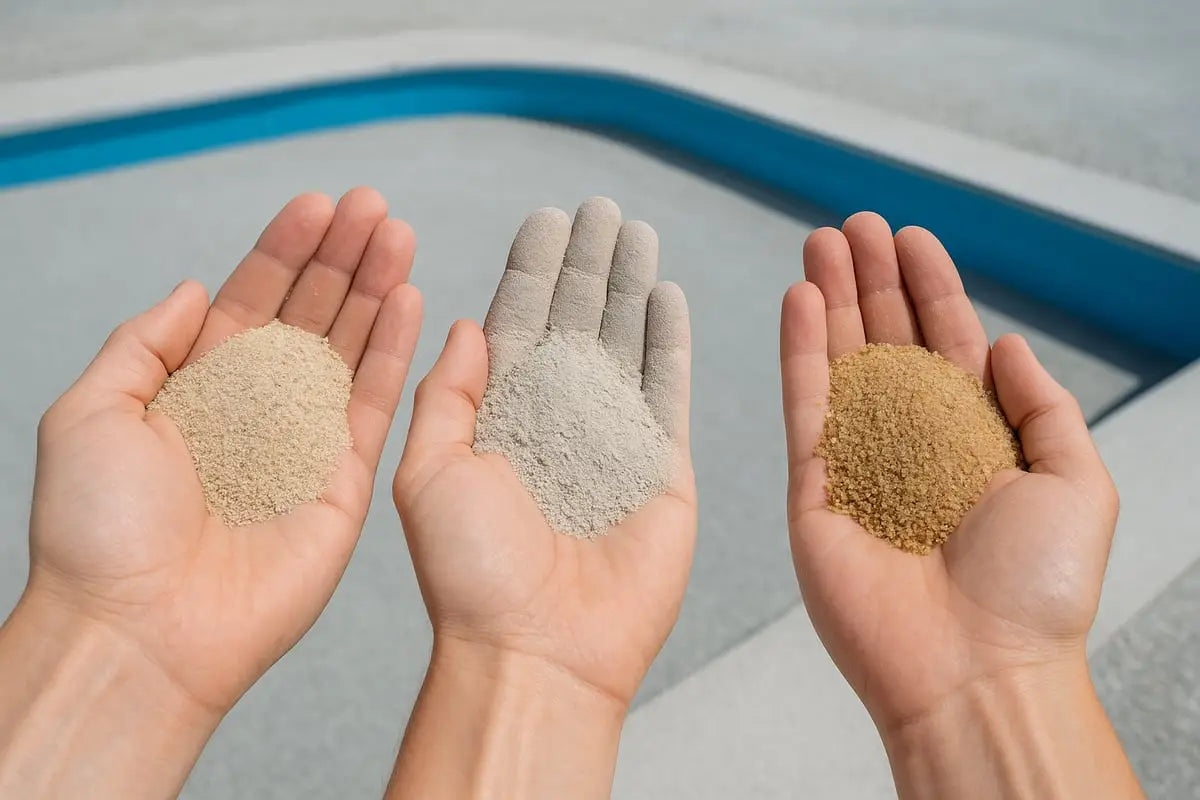
There are several types of sand to choose from when it comes to sand under a pool. The most common options are filter sand, stone dust, and sandbox sand. Filter sand is often the first choice thanks to its even grain size and high purity. It is free from clay and larger particles, which minimises the risk of damage to the pool liner.
Stone dust is an option with very small particles. It provides a firm surface but can become too compact and difficult to level. Sandbox sand is softer and easy to work with, but the quality varies and some variants may contain too much clay or grains that are too coarse. For best results, the sand should have a grain size of 0.2–0.8 mm and be well screened.
It is important to buy sand from a reliable supplier. Many builders' merchants and specialists offer sand adapted for pool installation. For more guidance on which type of sand is best suited to your pool, you can read this.
How much sand is needed?
Calculating the correct amount of sand under a pool is crucial for creating a level and stable foundation. A common rule of thumb is to use a sand bed of 5–10 cm under the entire pool area. To calculate the amount of sand, multiply the pool's area by the desired thickness of the sand layer.
For example, a 4x8 meter pool with a 10 cm sand bed requires about 3.2 cubic meters of sand. With an average density of 1.5 tons per cubic meter, that corresponds to approximately 4.8 tons of sand. For smaller pools or a thinner sand bed, the amount may decrease to 2–3 tons. It is always better to have a little extra sand so you can make adjustments and fill in uneven areas.
Remember that sand under a pool must be distributed evenly. If the sand layer is too thin, the ground can push through, and if it is too thick, you risk settling. Use a spirit level and straightedge to ensure an even level across the entire surface.
Common mistakes when choosing sand
One of the most common mistakes when installing sand under a pool is choosing sand that is too coarse or too fine. Coarse grains can damage the pool liner, while sand that is too fine becomes too compact and difficult to work with. Contaminated sand containing clay, stones, or organic material increases the risk of punctures and mold growth.
Another problem is underestimating the importance of purity. Only sand that is free from clay and larger particles provides a durable result. Always check the quality of the sand before you begin installation.
To avoid future problems, you should:
- Always choose screened sand with the correct grain size
- Avoid cheap alternatives with unknown quality
- Ensure the sand is dry and easy to spread
By carefully choosing and checking the sand under a pool, you reduce the risk of damage and increase the pool's lifespan.
Step by step: How to lay sand under the pool
Laying sand under a pool is a process that requires precision and the right method. A correctly prepared base is crucial for the pool's stability and lifespan. Here is a detailed step-by-step guide that helps you create the best possible foundation before pool installation.
Prepare the ground
The first step when you are going to lay sand under a pool is to carefully measure and mark the area where the pool will stand. Use string or spray paint to clearly define the space. Remove all vegetation, including grass, roots, and stones, to prevent future unevenness.
Check the ground's load-bearing capacity and slope. The ground should be as level as possible before you lay sand under a pool. If necessary, you can dig away higher sections or fill in lower areas. A properly prepared surface reduces the risk of settling and damage. For more detailed guidance, please see this Guide to building a pool.
If the ground slopes, consider using extra sand under the pool on the lower side to compensate. Remember that a stable base is the foundation of a durable pool.
Laying the sand bed
When the surface is prepared, start laying sand under the pool in an even layer. The recommended thickness for the sand bed is between 5 and 10 cm depending on pool type and ground conditions.
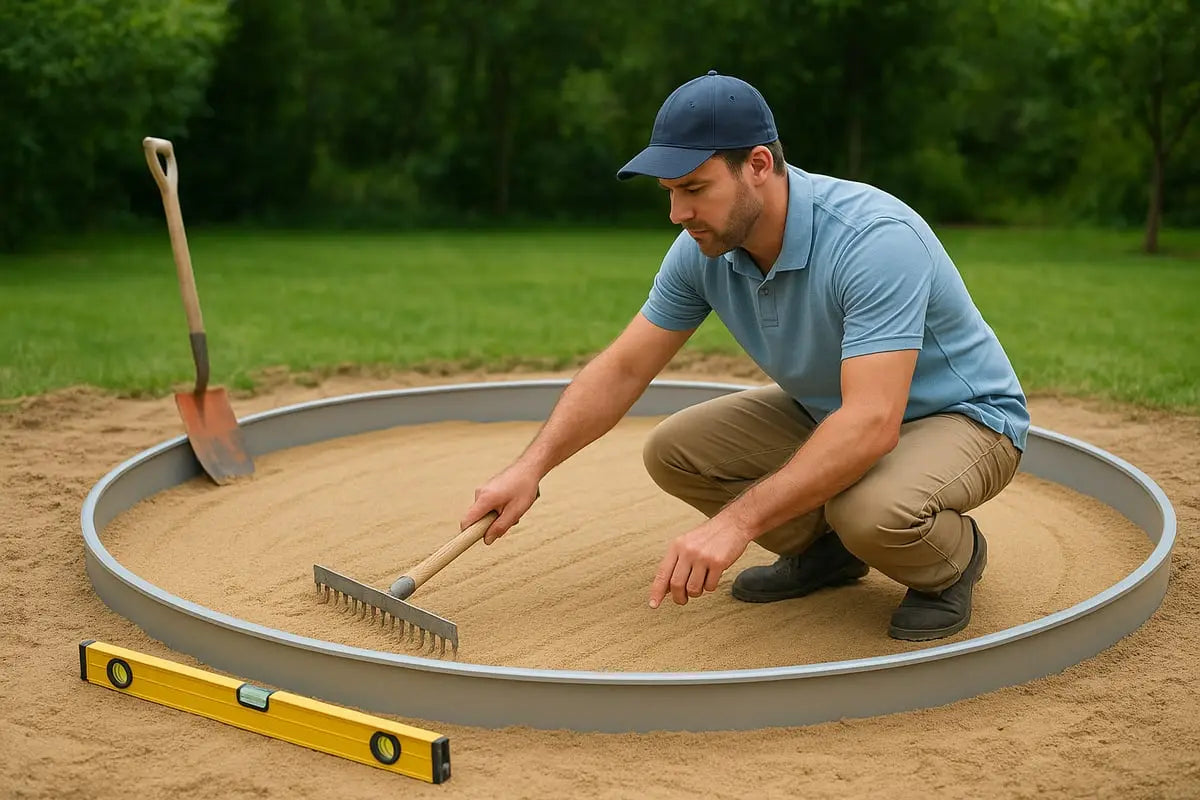
Spread the sand with a rake and check that the layer is even across the entire surface. Distribute the sand under the pool carefully so that no piles or hollows form. Even distribution is crucial to avoid future settling.
Use a vibrating plate or hand tamper to compact the sand. This step ensures the sand bed becomes stable and reduces the risk of the pool sinking or shifting.
Checking and adjusting
After compaction, it is time to check that the sand under the pool lies completely level. Use a long spirit level and a straightedge to ensure the surface is both smooth and horizontal.
If you find uneven areas, add more sand under the pool and smooth it out again. It is important that the surface is completely even before moving on to the next step. Careful checking now saves time and problems later.
Double-check that the entire area is stable and free from dips. This gives the pool the best possible start and reduces the risk of future damage.
Placing a protective mat (optional step)
Laying a protective mat on top of the sand under the pool is an optional but recommended step. The protective mat acts as a barrier between the sand and the pool liner, reducing the risk of punctures from small stones or sharp grains of sand.
Common materials for protective mats are geotextile fabric or special pool mats. Roll the mat out over the entire sand bed and make sure it covers the whole surface. Smooth out any wrinkles and make sure no part of the sand under the pool is left unprotected.
The protective mat also simplifies future maintenance and can extend the lifespan of the pool bottom.
Common questions during installation
How do you handle a sloping plot? If the ground slopes significantly, you may need to increase the thickness of the sand under the pool on the lower side and make sure everything is compacted properly. Always check with a spirit level.
Can sand under a pool be used on all types of ground? No, it is important that the ground is firm and not made up of loose soil or clay, as the sand bed may sink. The best results are achieved on compacted soil or gravel.
Checklist for a correctly executed sand bed:
- The area is carefully measured and marked.
- All vegetation and stones have been removed.
- Even layer of sand under the pool, compacted and checked.
- Any protective mat is in place.
- The pool area is level and stable.
By following these steps, you create a stable foundation with sand under the pool, giving the best possible conditions for long-lasting and trouble-free pool use.
Maintenance and problems with sand under a pool
Laying sand under a pool is only the beginning of a durable pool experience. Without proper maintenance, even the best base can quickly cause problems. Regular inspection and preventive measures are essential to avoid unwanted damage and ensure that your sand under the pool continues to provide stability and protection.
Common problems and solutions
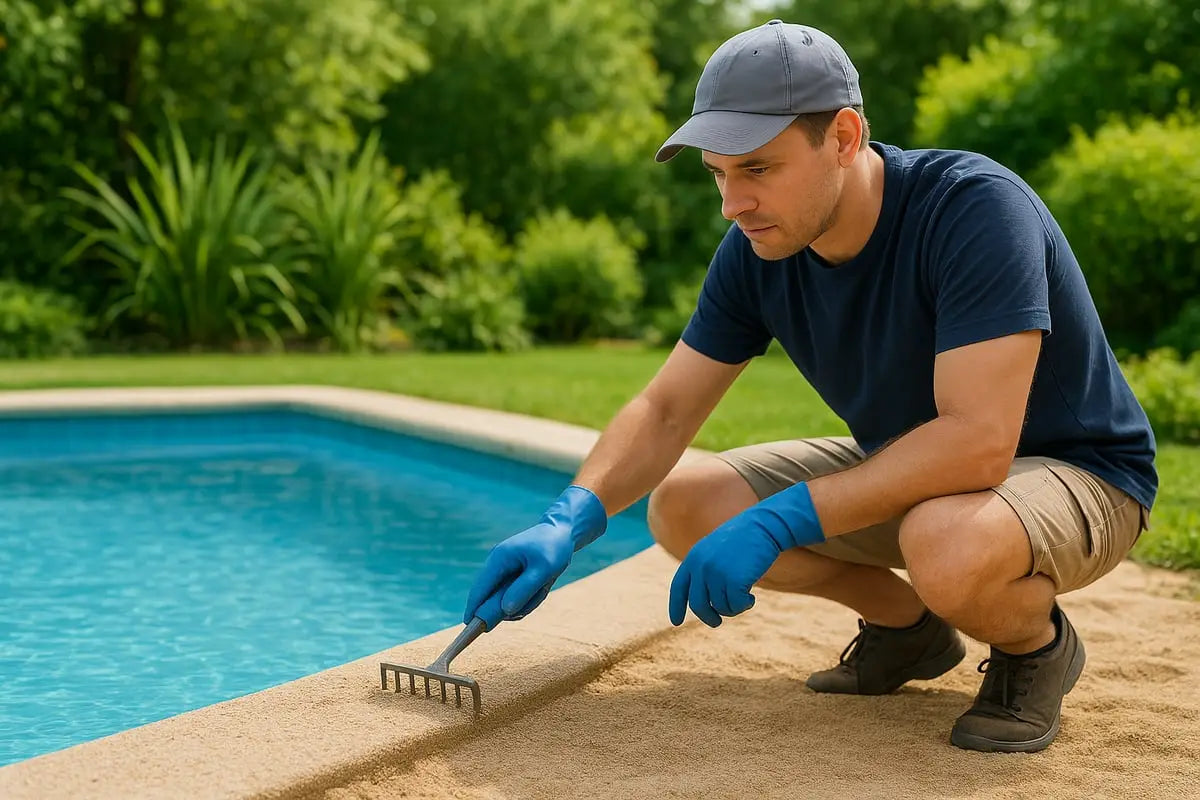
Despite careful work, sand under a pool can be affected by various problems over time. Some of the most common challenges include:
- Settling in the sand bed: When the sand sinks or shifts, unevenness can occur on the pool bottom. The solution is to identify the area, add new sand, and re-compact the surface.
- Weeds and roots: Vegetation that grows up through the sand can damage the pool liner. Use a ground cover beneath the sand and regularly inspect the area around the pool.
- Water accumulation: Poor drainage can cause water to collect under the pool, increasing the risk of settling and frost damage. Make sure the area is properly drained and consider installing drainage pipes if needed.
Recognizing these problems in time is crucial. With the right measures, you minimise the risk of major damage to your sand under the pool and extend the pool's lifespan.
Maintenance tips
To ensure that sand under a pool provides optimal protection, ongoing maintenance is required. Here are some effective tips:
- Check the pool bottom at least once per season to detect unevenness or settling.
- If you notice that the sand has sunk, add the correct type of sand and compact gently.
- Replace the sand completely if it has become contaminated or if weeds have penetrated it.
- Prevent problems with pests and weeds by using a protective mat or ground cover beneath the sand layer.
For more advice on ongoing care and repairs, you can read more about Pool service and maintenance tips. Regular maintenance of sand under a pool not only reduces the risk of costly repairs, but also creates a safer and more comfortable bathing environment.
Expert insights and statistics
Swedish pool professionals emphasize the importance of never underestimating the significance of sand under a pool. According to the experts, a well-maintained sand bed is the foundation of a long-lasting and trouble-free pool. Statistics also show that pool owners who follow the recommended maintenance reduce the risk of damage by a full 40 percent.
Investing time in maintaining the sand under a pool therefore pays off in the long run. By following these recommendations, you can safely enjoy your pool season after season.
Common mistakes and how to avoid them
Creating a durable and stable pool environment requires careful planning, especially when it comes to sand under a pool. However, many pool owners make mistakes that can lead to problems later on. Below are the most common mistakes and clear solutions for avoiding them.
Incorrect thickness of the sand bed
One of the biggest pitfalls when using sand under a pool is laying a sand bed that is too thin or too thick. A bed that is too thin provides insufficient protection against ground movement, while a bed that is too thick can make the base unstable.
Consequences:
- Uneven pool bottom
- Increased risk of settling and leaks
How to avoid the mistake:
- Follow the recommendation: 5–10 cm thickness
- Check with a straightedge and spirit level
- Check the thickness in several places
The right thickness ensures that the sand under the pool provides a stable and even foundation.
Poor compaction and uneven distribution
If the sand is not compacted properly or is distributed unevenly, the pool's stability deteriorates. This often leads to problems with shape and durability.
Common causes:
- Sand laid too quickly
- Lack of the right tools
Tips for the right methods:
- Use a vibrating plate or hand tamper
- Spread the sand in thin layers
- Check regularly with a spirit level
Want to read more about typical mistakes during pool installation? Please see.
Wrong choice of sand type
Choosing the wrong sand for sand under a pool can cause damage to the liner and bottom. Coarse sand can create holes and scratches, while sand that is too fine can become too compact and drain poorly.
Industry recommendations:
- Choose sand with a grain size of 0.2–0.8 mm
- Avoid sand with clay and organic material
- Use clean filter sand or stone dust
The right sand type extends lifespan and reduces the risk of damage to the pool.
Missed drainage
Another common mistake when installing sand under a pool is not planning for drainage. This increases the risk of water accumulation and frost damage.
Problems that can arise:
- Standing water under the pool
- Freezing and damage in winter
Practical solutions:
- Lay a draining layer beneath the sand
- Make sure the area slopes away from the pool
- Install drainage pipes if needed
By thinking about drainage from the start, you avoid long-term problems with sand under a pool.
Expert advice and future trends for sand under a pool 2025
The development of sand under a pool is moving quickly, and heading into 2025 we see several exciting trends. More and more pool owners are demanding durable, efficient, and long-lasting solutions. Choosing the right base is crucial for the pool's lifespan and function.
New materials and techniques
Innovation around sand under a pool has accelerated. New improved sand varieties are being developed to provide greater stability, better drainage, and easier installation. Some products combine sand with binders, reducing the risk of settling and damage to the pool liner.
The pool industry is also investing in faster installation techniques. For example, modern compaction tools and digital measuring instruments are used to ensure an even sand bed. This reduces the risk of unevenness and increases the durability of your sand under a pool.
For pool owners who want extra peace of mind, there are new protective mats and underlays that can be combined with sand. These solutions provide additional protection against roots and ground movement, and are especially suitable for larger pool projects where stability requirements are high.
Eco-friendly alternatives
Sustainability is an important topic for 2025. More people are choosing eco-friendly alternatives for sand under a pool, such as recycled sand or organic base materials. These products are often manufactured with a lower climate impact and contribute to a greener pool installation.
Table: Examples of eco-friendly materials
| Material type | Benefits | Durability |
|---|---|---|
| Recycled sand | Lower CO2 footprint | High |
| Organic stone dust | Natural, non-toxic | Very high |
| Bio-based foam | Lightweight, easy to recycle | Medium |
By choosing the right sand under a pool, you can contribute to a more sustainable future. Many suppliers now offer certified eco-friendly materials adapted to Swedish conditions.
Tips from experienced pool builders
Experienced pool builders emphasize the importance of precision and choosing the right materials for sand under a pool. Common questions from customers concern which type of sand works best, how thick the sand bed should be, and how to avoid future problems.
Some expert tips:
- Always choose sand with the correct grain size and high purity.
- Compact the sand carefully before the pool is placed.
- Use a protective mat if needed for extra safety.
- Follow the manufacturer's recommendations for your specific pool type.
Do you want personal advice on sand under a pool and avoiding common mistakes? Then you can contact Expert advice from pool experts for help from experienced professionals.
Future-proof your pool installation
Industry forecasts indicate that sand under a pool will continue to be a popular and cost-effective choice even after 2025. New materials and installation techniques make it easier to adapt the solution to both environmental requirements and pool type.
To future-proof your pool installation:
- Choose certified materials and request documentation from the supplier.
- Always follow the latest industry guidelines for sand under a pool.
- Plan for regular maintenance and inspection of the sand bed.
With the right preparation and choice of materials, your pool will stand stable for many years to come. Trends show that both sustainability and innovation are becoming increasingly important for Swedish pool owners.
Find the pool for your garden
Explore our pool models and compare sizes, materials, and finishes.
See our pools


