


Interest in pool types is growing rapidly among Swedish homeowners and holiday home owners ahead of 2026. Choosing the right pool type is crucial to avoid unexpected costs and ensure long-lasting enjoyment.
This guide helps you understand the key options on the market, so you can make an informed choice based on your needs, budget, and upcoming trends.
We present the seven most in-demand pool types for Swedish homes and holiday properties. Whether you dream of wellness, family swimming, or modern design, you'll find the solution here.
Pool Types in Sweden: Overview and Development
Interest in pool types in Sweden has grown explosively in recent years, and the market shows no signs of slowing down. More and more households, both in major cities and rural areas, are choosing to invest in pools for relaxation, exercise, or social activities.
According to Industry statistics for pools and hot tubs, the number of installed pools in Sweden has increased sharply since 2020, with particularly strong growth in the premium segment. In 2023, over 10,000 new pools were sold, and the trend points to continued growth towards 2026. This also reflects the development in the rest of the Nordics, where pool types are adapted to both climate and consumer demands.
Climate and legislation play a decisive role in which pool types are chosen. In Sweden, there are often requirements for energy efficiency and safety, such as pool covers and non-slip materials. Stricter regulations regarding water quality and chemicals also affect the choice between, for example, natural pools and traditional in-ground pools.
There are three main categories of pool types: in-ground pools, above-ground pools, and special pools such as swimming ponds and thermopools. In-ground pools offer long lifespan and design freedom, while above-ground pools are affordable and quick to install. Special pools have grown in popularity thanks to their focus on environment and health.
Material development has been rapid. Polypropylene (PP) is popular for its durability and flexibility, while fiberglass pools attract with quick installation and smooth surfaces. Concrete pools offer maximum customization and an exclusive feel. Steel and thermopools combine stability with energy-smart features, making them attractive for energy-efficient homes.
Table: Comparison of common materials
| Material | Durability | Customization | Price level | Maintenance |
|---|---|---|---|---|
| PP | High | High | High | Low |
| Fiberglass | High | Medium | Medium | Low |
| Concrete | Very high | Very high | High | Medium |
| Steel | High | Medium | Medium | Medium |
| Thermoblock | High | High | Medium | Low |
Common uses for different pool types include family swimming, wellness, lap swimming, and exclusive garden design. Many choose a pool to create a private oasis, while others focus on exercise opportunities or child-friendly solutions.
The industry is seeing more and more energy-smart innovations. Automated purification systems, solar heating, and LED lighting are now standard with many suppliers. Environmentally friendly pool types, such as natural pools and swimming ponds, attract environmentally conscious households who want to avoid chemicals and reduce their climate impact.
Leading suppliers and industry organizations report that demand for flexible, customized, and cost-efficient pool types is increasing. Future pool owners prioritize low operating costs, easy maintenance, and aesthetic integration into the outdoor environment.
Overall, the Swedish pool landscape is changing rapidly. Whether you are looking for a classic in-ground pool, a modern thermopool, or a natural swimming pond, there are pool types to meet different needs, budgets, and future trends.
7 Pool Types You Should Know About in 2026
Choosing the right pool types is crucial to creating a long-term and valuable addition to your property. Below is an in-depth review of the seven most in-demand pool types for 2026, focusing on material, design, installation, price, and areas of use. Whether you are looking for premium solutions, flexibility, energy efficiency, or natural alternatives, you will find guidance here to the right pool types for your needs.
1. PP Pool (Polypropylene Pool)
PP pools have become one of the most sought-after pool types among Swedish homeowners and holiday home owners. The material polypropylene is known for its exceptional durability, hygiene, and flexibility in design. A PP pool can be customized to the unique conditions of your plot and your design preferences, making it an attractive choice for those seeking exclusivity and innovation among pool types.

ThermoPP technology means that the pool's walls are insulated, providing energy-efficient properties and contributing to lower heating costs. This is especially important in the Swedish climate, where energy-smart pool types are in high demand.
There are many design options: choose between classic skimmer, overflow, or infinity solutions to create exactly the look you want. The surface of a PP pool is smooth and non-porous, making it easy to clean and preventing algae growth, a feature that sets it apart from other pool types.
The lifespan is very long, often over 30 years, and maintenance needs are minimal. PP pools often come with a long warranty and installation is quick, often under a week after groundwork. The downside is a higher initial cost compared to simpler pool types, but the investment pays off in the form of low operating costs and durability.
PP pools are especially suitable for those seeking the premium segment, are interested in design, or want an energy-conscious solution. They are often seen in modern villas and exclusive holiday homes.
If you want to know more about the benefits of this pool type, feel free to read more in this PP pool for Swedish villas.
2. Fiberglass Pool
Fiberglass pools are one of the most established pool types on the Swedish market. The construction takes place in a factory where the pool is cast in one piece, resulting in an extremely smooth and hygienic surface. This reduces the risk of algae attacks and makes fiberglass pools pool types that are easy to maintain and keep clean.

Installation is quick, often in just a few days, as the pool is delivered as a finished form. There are many different shapes and sizes, making it easy to find a variant that fits both larger and smaller plots. Fiberglass pools have good resistance to frost, which is an important factor for pool types in the Nordics.
In terms of price, fiberglass pools are in the mid to premium segment, depending on size and options. Advantages include fast delivery, minimal maintenance, and long lifespan. The disadvantages are that customization of shape and depth is limited to what the manufacturer offers, and there is a risk of cracks with ground movement, although this is rare with correct installation.
Fiberglass pools are popular among families with children, in newly built houses, and in residential areas where quick installation and low maintenance are highly valued. These pool types are suitable for both relaxation and play.
3. Concrete Pool
The concrete pool is the archetype of exclusive and customizable pool types. Here, the pool is built on site, providing complete design freedom in terms of shape, size, and depth. Concrete is an extremely durable material that withstands both Nordic climates and intensive use, making this pool type ideal for larger pool projects or public facilities.
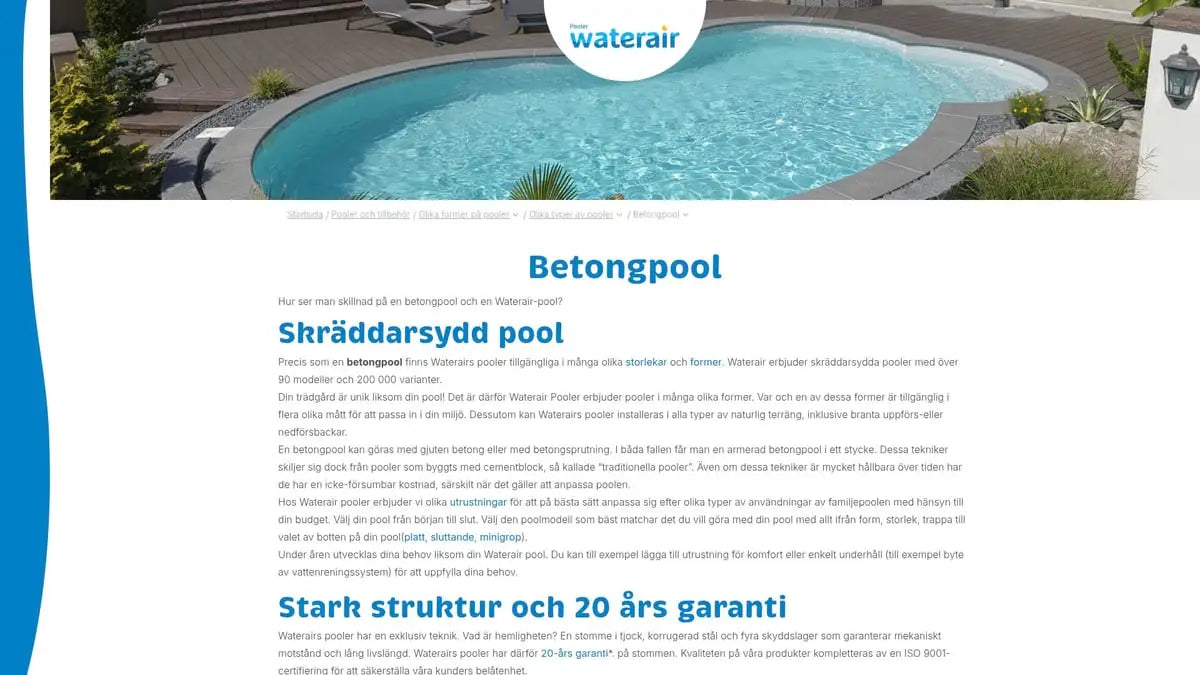
The surface can be clad with tiles, mosaic, or liner, allowing for creativity and unique design. However, the construction process is more time-consuming than for other pool types, often several weeks to months, and the cost is higher. But for those who want a pool that truly blends into the surroundings and is built for long-term use, the concrete pool is hard to beat.
The advantages of concrete pools are their robustness, exclusive feel, and unlimited customization possibilities. The disadvantages are longer construction time, higher maintenance, and a larger initial investment.
Concrete pools are best suited for architect-designed homes, luxury villas, and public baths where pool types with maximum flexibility and durability are in demand.
Comparison Table: Concrete Pool vs Fiberglass Pool
| Feature | Concrete Pool | Fiberglass Pool |
|---|---|---|
| Customization | Maximum | Limited |
| Construction Time | Long | Short |
| Price | High | Medium-High |
| Maintenance | Medium-High | Low |
| Durability | Very high | High |
4. Steel Pool
Steel pools are among the pool types that combine stable construction with affordability. The construction is based on galvanized steel panels that are assembled on site and fitted with a liner on the inside. This solution has been present in Swedish gardens since the 1980s and is popular thanks to its flexibility and relatively quick installation.
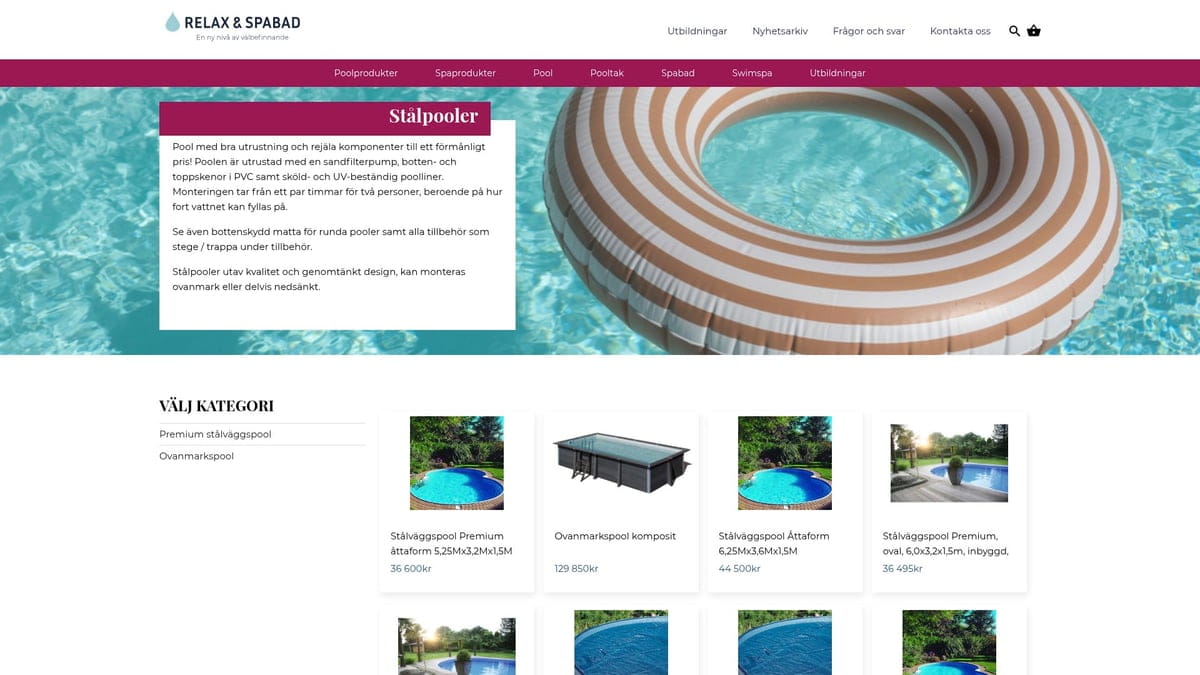
Steel pools can be placed fully or partially in-ground, making them suitable for sloping plots where other pool types may be more difficult to install. The price is lower than for concrete and PP pools, but somewhat higher than for above-ground pools. The lifespan is long, but the liner needs to be replaced after about 10-15 years.
The advantages are stable construction, attractive price tag, and long usage time. However, steel is sensitive to rust if the surface is damaged, and liner replacements mean some future costs.
Steel pools are especially popular among larger families, budget-conscious households, and those who want flexible pool types adapted to the conditions of their plot.
5. Above-Ground Pool
The above-ground pool is the most accessible of all pool types and requires neither extensive groundwork nor building permits. The pool is placed directly on the ground and comes in materials such as steel, plastic, or wood. Many models are portable and can be used seasonally, making them ideal for summer cottages or temporary solutions.
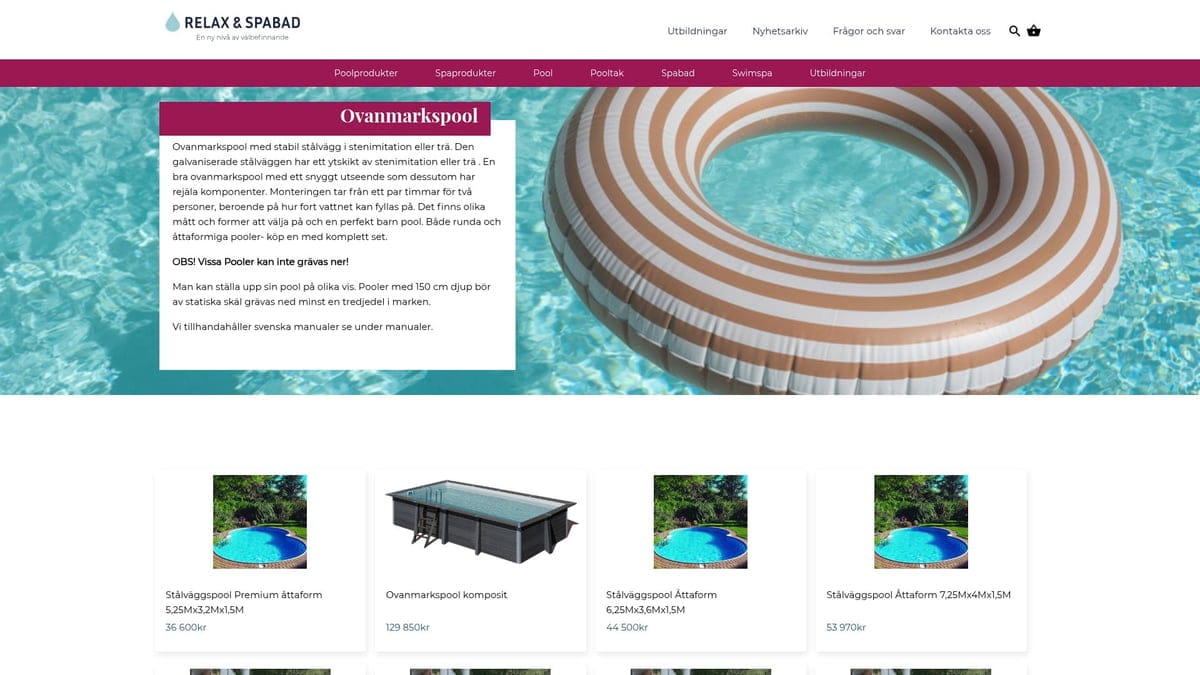
In terms of price, above-ground pools are the most economical choice among pool types, and installation often takes just a day. They are easy to assemble, disassemble, and store during the winter months.
The advantages are low cost, quick installation, and minimal permit requirements. The disadvantages are shorter lifespan, simpler design, and sensitivity to weather and wind. These pool types are best suited for families with children, rental properties, or for those who want to try pool ownership without major investments.
Quick Facts: Above-Ground Pool
- No groundwork needed
- Low total cost
- Easy to move and disassemble
6. Natural Pool/Swimming Pond
Natural pools and swimming ponds are pool types that combine swimming enjoyment with ecological sustainability. Here, purification takes place biologically, completely without chemicals, thanks to plant zones and natural filters. The design is often inspired by natural lakes, with stones, plants, and soft shapes.
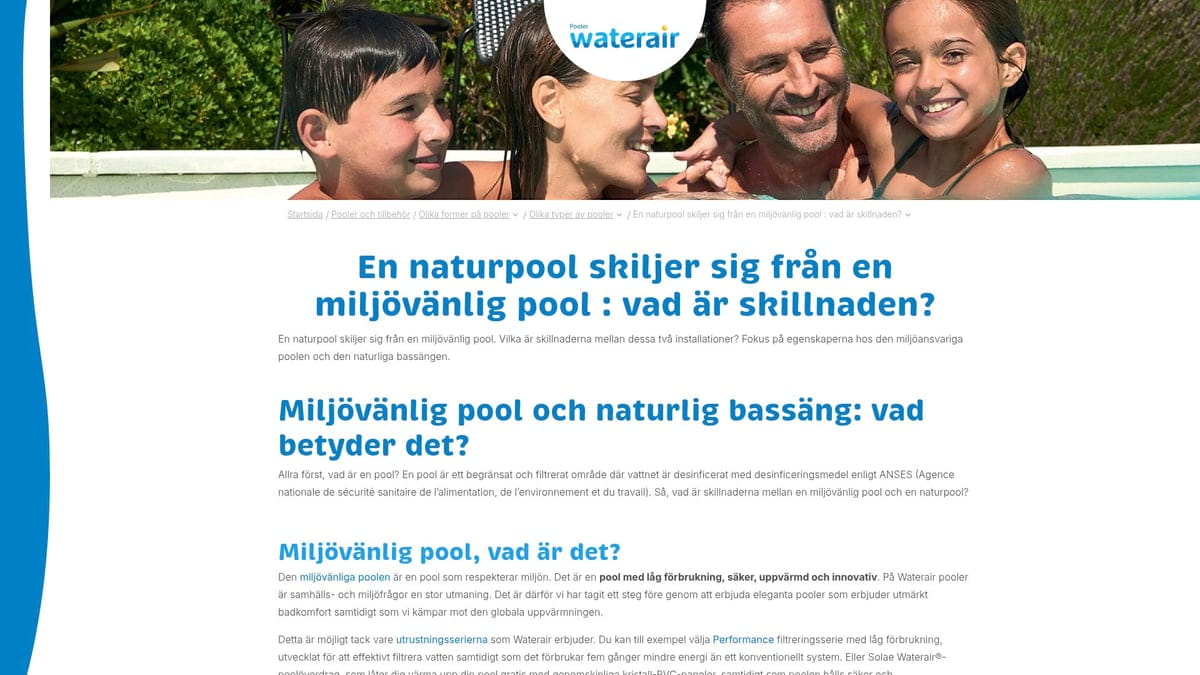
The natural aesthetics are a major advantage and attract garden lovers and environmentally conscious households. The price level ranges from medium to high, depending on size and complexity. Natural pools require somewhat more space than traditional pool types and planning is more extensive.
The advantages are low environmental impact, the possibility of year-round swimming, and a unique garden environment. Disadvantages are that some algae growth may occur and that maintenance requires special knowledge of biological balance.
Natural pools are best suited for those who want to combine a pool and water garden and are looking for pool types that harmonize with nature.
7. Thermopool
Thermopools are pool types built with insulating blocks, often called thermoblocks, which provide very good energy efficiency. This construction keeps the heat in the water longer and significantly extends the swimming season, which is especially appreciated in the Swedish climate.
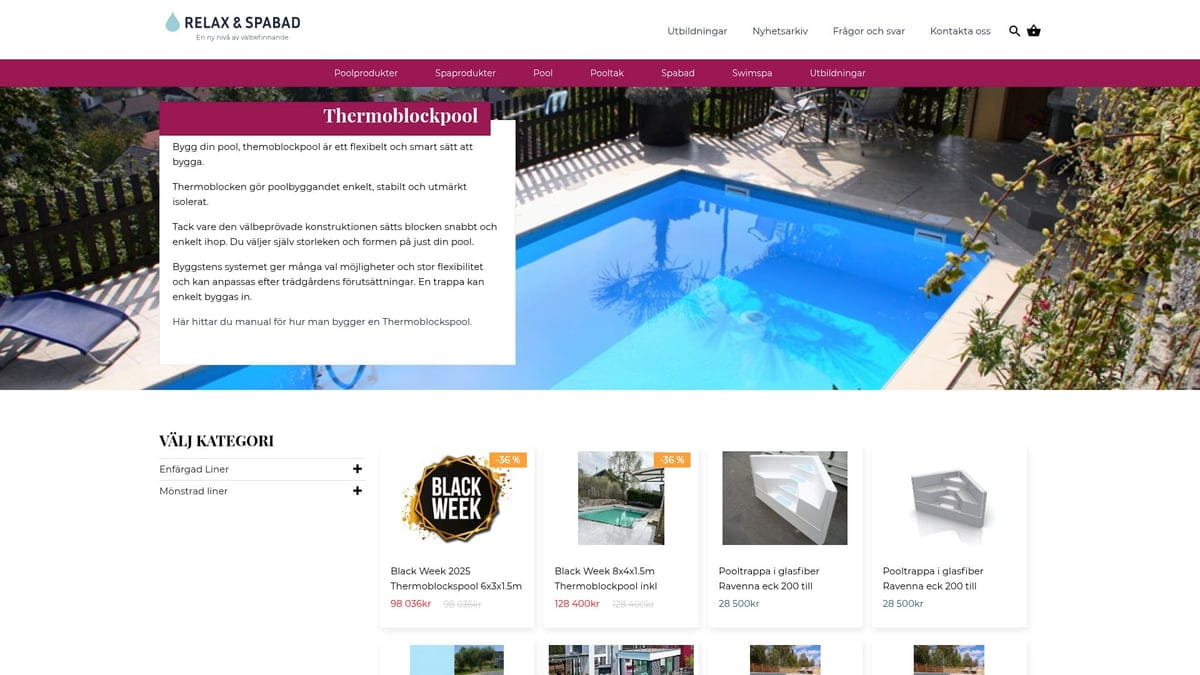
Thermopools can be customized in shape and size and clad with liner or tiles. The price is in the mid to premium segment, depending on block type and labor. The construction time is shorter than for concrete pools but longer than for fiberglass pools.
The advantages are stability, good insulation, and the possibility of flexible design. The disadvantages are that some groundwork is required and that the construction time is longer than for pre-formed pool types.
Thermopools are suitable for homeowners who prioritize energy-smart solutions and want to invest in long-term sustainable pool types.
Thermopool – comparison with PP pool
| Feature | Thermopool | PP Pool |
|---|---|---|
| Insulation | Very high | Very high |
| Construction Time | Medium | Short |
| Customization | Flexible | Very flexible |
| Price | Medium-High | High |
How to Choose the Right Pool Type for Your Needs
Choosing between different pool types requires a careful needs analysis. First, consider how the pool will be used. Is it for play and swimming for the whole family, relaxation and wellness, or perhaps exercise? Your preferences guide the choice of pool types and help you avoid unnecessary compromises.
The size of your plot often sets the framework for possible pool types. If you have a small garden, a compact model is often suitable, while larger plots give you room to think freely. Also consider ground conditions and whether the pool should be in-ground, partially in-ground, or above ground.
Different user profiles have different needs. Families with children prioritize safety, low maintenance, and long lifespan. The wellness enthusiast may be looking for a pool with massage features or a counter-current system. The design lover wants a pool that blends into the architecture and enhances the garden's appearance. Whatever your profile, there are pool types that fit.
Energy consumption and environmental impact are central issues today. Choose insulated solutions and energy-efficient systems to minimize operating costs and climate footprint. An example is Thermopool – energy-smart alternative, which, thanks to its insulating blocks, provides lower energy consumption over time.
Always compare the long-term costs of different pool types. This applies not only to purchase but also to installation, operation, and maintenance in the long run. See the table below for a simplified overview:
| Pool Type | Installation Cost | Operating Cost | Maintenance |
|---|---|---|---|
| Above-Ground Pool | Low | Low | Simple |
| Fiberglass Pool | Medium | Medium | Low |
| Concrete Pool | High | Medium | High |
| Thermopool | Medium-High | Low | Low |
Always ask these questions to the supplier before you decide:
- What warranty is included and what does it cover?
- What does service and support look like after purchase?
- What is required for ongoing maintenance?
- Are there references from other customers?
- Can the pool be customized to my needs?
Feel free to listen to experienced pool owners and experts. They can provide valuable tips on what works in practice and which pool types are best suited to the Swedish climate. A well-considered investment provides many years of joy and security.
Pool Trends & Innovations 2026
The pool industry is changing rapidly and 2026 is expected to be a year of groundbreaking innovations in pool types. Demand for smart, energy-efficient, and easy-to-maintain solutions is steadily increasing among both homeowners and holiday home owners.
Automation is a clear trend. More and more pool types can now be equipped with app-controlled systems for water quality, temperature, and lighting. Smart sensors make it easy to monitor the pool remotely and minimize manual maintenance.
Sustainability is in focus. Solar heating, salt chlorinators, and recyclable materials are becoming increasingly common choices for new installations. Many new pool types are designed to minimize energy consumption and extend the swimming season without compromising on comfort.
Design development is clear. Infinity edges, LED lighting, and integrated patios give the pool an exclusive feel. Safety solutions such as pool covers, alarms, and non-slip materials are now standard for modern pool types.
According to Market report for swimming pools, the market is expected to grow rapidly, with an increased focus on energy-smart and maintenance-free systems. Statistics show that more Swedes are prioritizing sustainable and smart pool types for the future.
In summary, pool ownership is becoming more convenient, safe, and environmentally adapted. The pool types of the future combine technology, design, and sustainability in a way that meets both today's and tomorrow's needs.
