


Dreaming of creating your own pool paradise at home for summer 2026? More and more people in Sweden are choosing to build a pool, both for relaxation and to improve quality of life. But proper planning is essential for a successful, hassle-free result.
This guide helps you build a pool step by step, from the first idea to the finished installation. You will gain insight into pool types, planning, the build process, technology, accessories, finances, and smart tips for long-term pool enjoyment.
With the right knowledge, your pool project will be safe and enjoyable. Let us show you how to make the dream a reality and avoid common mistakes.
Planning the Pool Project: Step by Step
Building a pool is a major project that requires careful planning. A successful pool journey starts with understanding the key steps and avoiding common pitfalls. Here we guide you through the entire process to create the best possible conditions for your pool build.
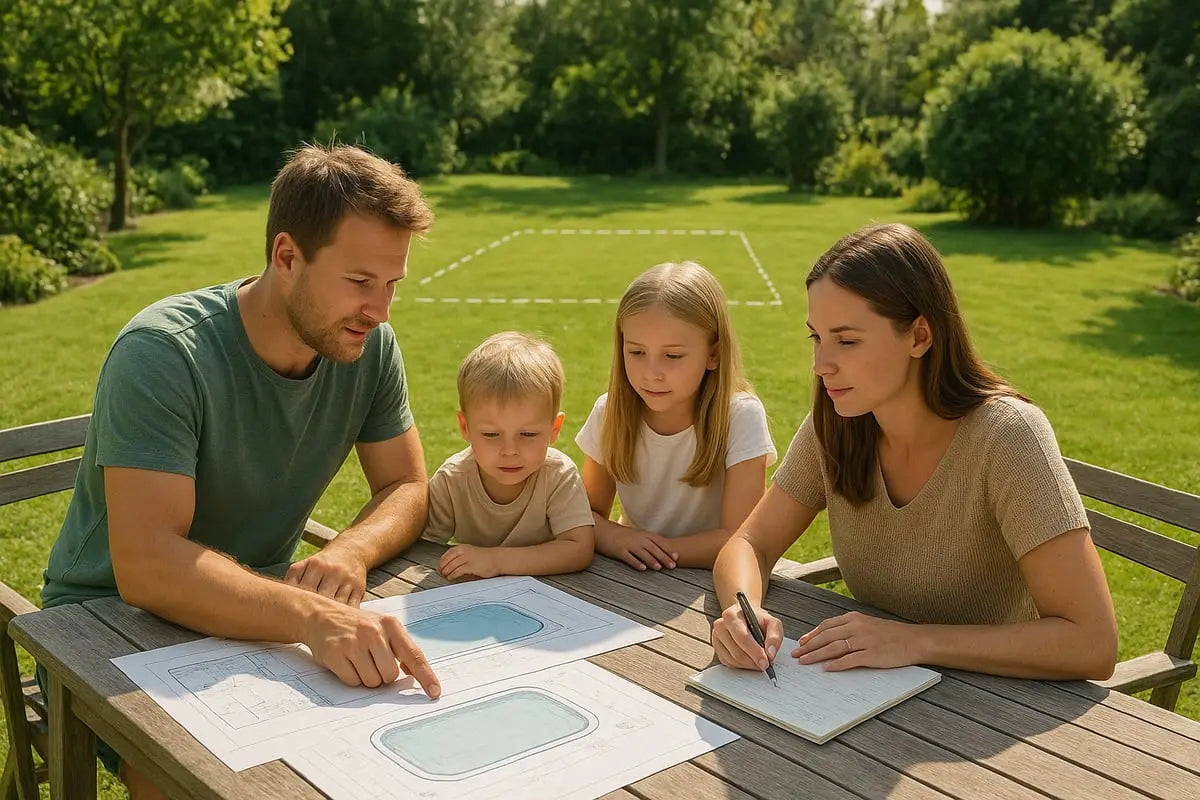
Identify needs and wishes
Before you start building a pool, it is important to define the pool's purpose. Will it be used for exercise, play, or relaxation? The purpose affects both design and placement. A family pool often requires larger areas for play, while a wellness pool can be smaller and more focused on relaxation and spa features.
Examples of pool environments:
- Family pool with a shallow area for children and a play zone
- Wellness pool with an integrated bubble zone and stairs
- Design pool that forms a stylish part of the garden architecture
Statistics show that 7 out of 10 pool owners believe proper planning reduces unexpected costs and problems. Defining your wishes early makes it easier to build a pool that suits your everyday life and lifestyle.
Site analysis and permits
A thorough analysis of the property is essential when you are going to build a pool. Check ground conditions, sun exposure, wind protection, and distance to the house and neighbours. These factors affect both comfort and operating costs in the long term.
Building permits and notifications are often necessary for pool projects. From 2026, new rules from the Swedish National Board of Housing, Building and Planning apply. Read more at Boverkets new building regulations 2025 to ensure your project meets all requirements.
Common mistakes when placing a pool include underestimating the distance to trees, which can cause problems with leaves and roots, or building the pool too close to the house so that ground moisture becomes an issue.
Budget and cost estimate
Building a pool is a significant investment, with the price varying depending on pool type and scope. Prices for pool projects often range from 150 000 to over 600 000 kronor.
Here is an overview of common cost items:
| Cost item | Price range (kr) |
|---|---|
| Pool shell | 60 000–250 000 |
| Groundwork | 40 000–120 000 |
| Electrical & plumbing | 20 000–70 000 |
| Restoration | 10 000–50 000 |
| Options & technology | 20 000–150 000 |
Do not forget hidden costs such as:
- Additional groundwork on rocky or wet soil
- Upgrading electrical or water systems
- Restoring the garden and terrace
Set a realistic budget for building a pool and allow for unexpected expenses. Explore financing options and the possibility of ROT tax deduction for certain parts of the work.
Timeline and season
Building a pool takes time and requires good advance planning. The best construction periods in Sweden are spring and autumn, when the ground is workable and the weather is stable. A typical timeline from the first spade in the ground to the first swim is between 6 and 12 weeks.
Common causes of delays are delivery problems, unforeseen ground conditions, or waiting for a building permit. By planning well in advance and working with experienced suppliers, you can reduce the risk of delays and make the process smoother when you are building a pool.
Choosing a contractor: Build yourself or hire professionals?
When planning to build a pool, you need to decide whether you want to do the work yourself, hire separate contractors, or choose a turnkey contract. Each option has its pros and cons.
- Turnkey contract: One partner is responsible for the entire project, secure but often more expensive.
- Split contract: You procure different parts separately, offering some cost savings but requiring more coordination.
- DIY (do it yourself): Lowest cost but high risk of mistakes and delays.
Statistics show that 60 percent choose professional help for all or part of their pool project. Always ask the contractor these questions:
- Do you have references from similar projects?
- What warranties are offered on work and materials?
- How are unexpected costs or delays handled?
Building a pool with the right support and planning gives the best possible result and long-term enjoyment.
Choose the Right Pool Type and Material
Choosing the right pool type and material is crucial for a successful pool project. When you are going to build a pool, these choices affect cost, maintenance, and how much enjoyment you will get from your pool for many years to come. With the right knowledge, you avoid common pitfalls and ensure that your investment delivers maximum value.
Pool types: in-ground pool, above-ground pool, mini pool, infinity pool, etc.
When planning to build a pool, it is important to understand the difference between the most common pool types on the Swedish market. In-ground pools are buried and blend elegantly into the garden. They are popular for their durability and premium feel. Above-ground pools are easier to install and usually cost less, but they do not blend into the surroundings as naturally.
Mini pools are suitable for smaller plots or for those who want a compact spa. Infinity pools create a luxurious feel where the water surface merges with the surroundings, but they often require more advanced technology and a higher budget.
Advantages and disadvantages:
| Pool type | Advantages | Disadvantages |
|---|---|---|
| In-ground pool | Durable, aesthetically pleasing | Expensive, requires groundwork |
| Above-ground pool | Affordable, quick installation | Shorter lifespan |
| Mini pool | Compact, energy-efficient | Limited swimming area |
| Infinity pool | Luxury design | Higher cost, technology |
Statistics show that 80% of all new installations in 2025 are in-ground pools. This is because they deliver the best long-term value when you want to build a pool for the family's needs and the property's value.
Material choices: PP, fibreglass, thermopool, concrete, steel, wood
Material choice plays a major role in lifespan, maintenance, and energy consumption when you are building a pool. PP (polypropylene) is popular for its durability, flexibility, and low maintenance requirements. Fibreglass pools are quick to install, have a smooth surface, and are very watertight, but require transport of the entire pool shell. Thermopool combines insulated blocks with concrete, providing excellent energy performance and stability.
Concrete pools are extremely flexible in shape, but involve higher costs and longer build times. Steel pools are affordable but require protection against corrosion. Wooden pools are mainly used for above-ground solutions and require ongoing maintenance.
Material comparison:
| Material | Lifespan | Maintenance | Insulation | Energy requirements |
|---|---|---|---|---|
| PP | 30+ years | Low | Very good | Low |
| Fibreglass | 25+ years | Very low | Good | Low |
| Thermopool | 40+ years | Low | Best | Very low |
| Concrete | 50+ years | Medium | Varies | Medium |
| Steel | 20+ years | Medium | Good | Medium |
| Wood | 10-15 years | High | Weak | High |
PP pools are especially sought after for premium projects thanks to their lifespan and design possibilities. One example of this is PP pools for premium projects, which combine advanced technology with aesthetic appeal. When you want to build a pool with a focus on both durability and minimal maintenance, PP and thermopool are excellent choices.
Pool size and shape
The size of the pool directly affects the cost of building a pool, but also how the pool is used and the property's future value. A larger pool offers more swimming space and room for play, but costs more to buy and operate. Smaller pools can be more energy-efficient and require less maintenance.
The shape has both aesthetic and practical significance. Rectangular pools are the most popular in Sweden - a full 70% choose this shape to maximise swimming space. Round, oval, or custom-designed pools are often used where the plot has specific conditions or where design is central.
Tips when building a pool:
- Adapt the size to the family's needs and the plot's conditions.
- Consider future use, such as children growing up or wanting room for lap swimming.
- A well-thought-out shape can increase property value and reduce operating costs.
Pool depth and safety
The depth of your pool determines how it can be used. For family bathing, 1,2–1,5 meter is recommended. For lap swimming, 1,5–1,8 meter is suitable, while diving requires a depth of at least 2,5 meter. Safety is always central when you are building a pool, especially if children are nearby.
Swedish laws in 2026 require pool covers, fences, or alarms for fixed pools. This reduces the risk of accidents and is a requirement for building a pool in many places. Common shortcomings are fences that are too low or a lack of protection when the pool is not in use.
How to avoid safety mistakes:
- Install an approved pool cover or slatted cover.
- Make sure the fence is at least 1,2 meter high and has a self-closing gate.
- Use an alarm that warns if someone falls into the water.
With a focus on the right depth and safety, your pool environment will be safe and pleasant for the whole family.
The Build Process: From Groundwork to a Finished Pool
Building a pool is a journey that requires precision and planning at every stage. Each step, from the first spade in the ground to the final stone on the terrace, affects both function and lifespan. Below is a detailed guide showing how to move safely and methodically through the entire build process.
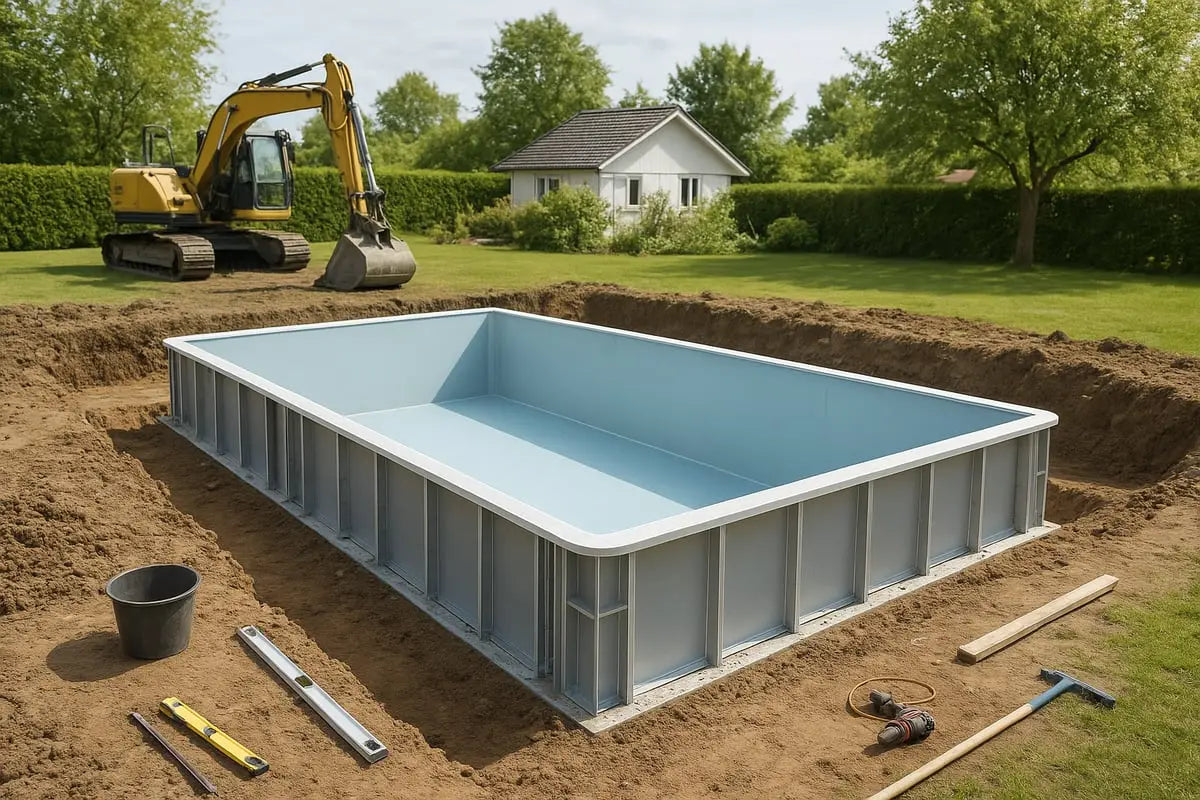
Groundwork and foundation
Groundwork is crucial when you are building a pool. Here the ground is excavated, drainage and foundation work are carried out to create a stable base. Soil type and groundwater level often determine both scope and cost. Clay soil, for example, requires extra drainage, while sandy soil is often easier to work with.
A typical process includes:
- Excavation to the correct depth and shape
- Laying drainage pipes and crushed stone
- Compacting the base carefully
The cost of groundwork varies greatly, but expect 30 000–100 000 kr depending on the conditions. The time required is often 1–2 weeks. Well-executed groundwork reduces the risk of subsidence and moisture damage, which is crucial for long-term pool enjoyment when you are building a pool.
Assembly of pool shell and technology
When the foundation is complete, it is time to assemble the pool shell. Whether you choose PP, thermoblocks, or fibreglass, the shell must be placed exactly according to the drawings. Pipework for water and electricity must be carried out professionally, and the technical room planned for easy access.
At this stage, the following are installed:
- Pool shell (e.g. in PP or thermoblocks)
- Pipes for circulation and filtration
- Electrical systems for lighting, heat pump, and pool robot
Hiring a supplier that offers complete solutions, such as Pooltime® – premium pools, can simplify the process and ensure quality throughout the project. Do not forget to check that all materials are on site before assembly begins. Careful work at this stage makes it easier and safer to build a pool.
Insulation and energy efficiency
Insulation is one of the most important investments when you are building a pool in the Swedish climate. Proper insulation under and around the pool reduces heat loss and lowers heating costs by up to 40 percent. Materials such as thermoblocks and insulating ground boards are especially effective.
Compare different insulation solutions:
| Material | Insulation performance | Lifespan | Cost |
|---|---|---|---|
| Thermoblock | Very high | 30+ years | High |
| Ground boards | High | 20+ years | Medium |
| Concrete without | Low | 40+ years | Low |
Statistics show that the energy costs of building a pool can vary by more than 10 000 kr per year depending on the level of insulation. Thoughtful insulation is therefore an investment that quickly pays for itself.
Installing liner, tiles, or another surface
The pool surface affects appearance, feel, and maintenance needs. Liner is the most common choice when building a pool in Sweden thanks to its flexibility and easy care. Tiles and mosaic provide a premium feel but require a higher investment and more maintenance.
Benefits of different surfaces:
- Liner: Affordable, easy to replace, many colours
- Tiles/mosaic: Long lifespan, stylish, requires professional installation
- PP/fibreglass: Integrated surface, durable, minimal maintenance
When choosing mosaic, it is worth investing in the highest-quality materials to avoid future problems. Regardless of material, careful installation and sealing are essential to build a pool that lasts a long time.
Filling, testing, and fine-tuning
When the pool is fully assembled, the entire system is filled and tested. The water is filled slowly to avoid pressure damage, and all connections and penetrations are carefully checked. Then the heat pump, filter, and purification system are tested.
Fine-tuning checklist:
- Check tightness throughout the entire system
- Ensure correct circulation and purification
- Test lighting and pool robot
Before taking your first swim in your new pool, it is important that all technology is working optimally. Building a pool with proper fine-tuning gives both better water quality and a longer lifespan for the equipment.
Restoring the site and pool area
The final step when you are building a pool is to restore the site and create a pleasant environment around the pool. A terrace, paving, or deck provides both function and aesthetics. Choose non-slip materials and plan for seating and greenery.
Tips for the pool area:
- Build a terrace in pressure-treated wood or composite
- Create paths and surfaces with stone or slabs
- Plant shrubs and trees for wind protection and privacy
This is when the pool dream becomes reality. With proper planning, careful execution, and professional help when needed, you can build a pool that will bring joy for many years to come.
Pool Technology and Equipment: Heating, Filtration, and Accessories
When you are building a pool, the choice of technology and equipment is crucial for both comfort and operating economy. With the right solutions, you get a pool that is easy to maintain, energy-efficient, and safe for the whole family. Below we guide you through the most important technical choices for a successful pool build project.
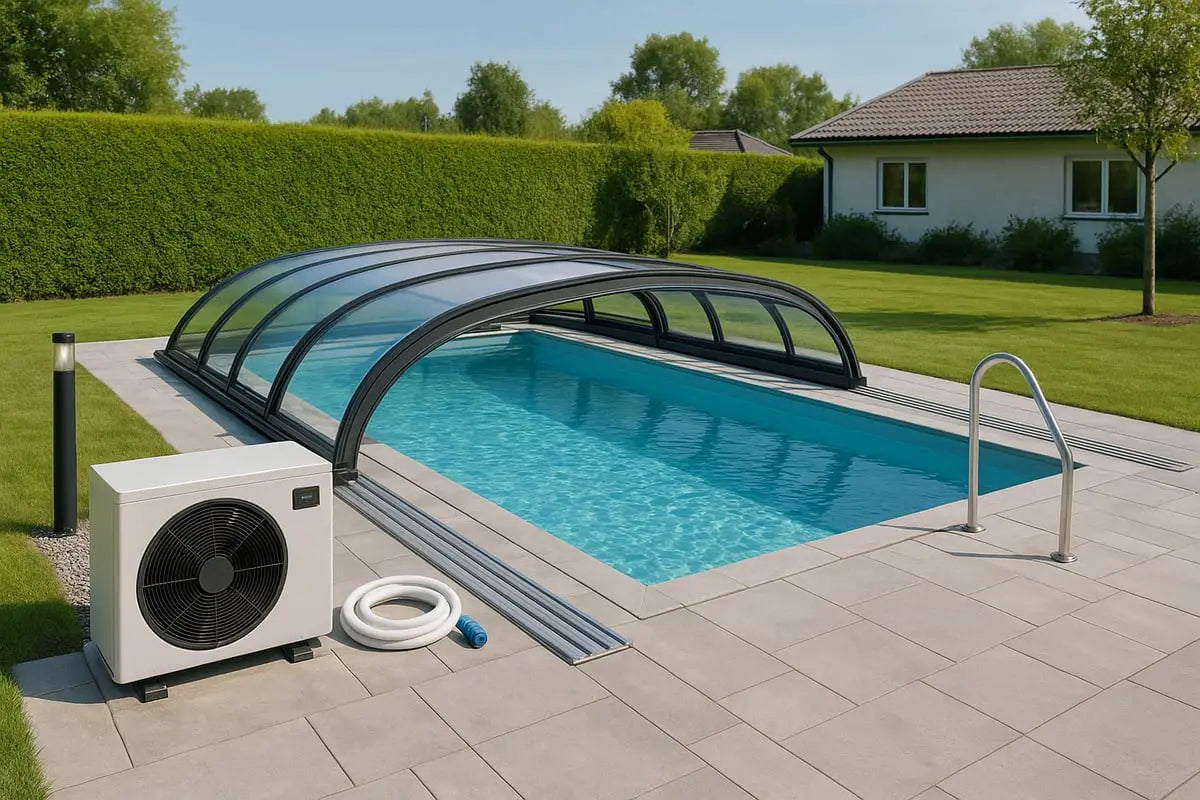
Heating: heat pump, electric heater, solar collectors
Building a pool in Sweden requires an efficient heating solution to extend the bathing season. A heat pump is currently the most popular choice and is used in about 85% of all pools. It provides low energy consumption and a stable temperature, making it possible to enjoy the pool from early spring to late autumn.
Electric heaters are easy to install but have higher operating costs, making them better for smaller pools or as a supplement. Solar collectors are environmentally friendly and are best suited when you want to build a pool with a focus on sustainability, but they depend on the weather and work best on sunny days.
| Heating solution | Investment | Operating cost | Environment | Suitable for |
|---|---|---|---|---|
| Heat pump | Medium | Low | Good | Most pools |
| Electric heater | Low | High | OK | Smaller pools |
| Solar collectors | Medium | Very low | Best | Environmental focus |
By choosing the right heating system when building a pool, you can reduce annual costs by thousands of kronor while also maintaining a pleasant bathing temperature.
Water treatment: sand filter, UV, salt chlorinator, automatic dosing
Clean water is a given when you are building a pool. The most common system is a sand filter, which effectively traps dirt and particles. For those who want to reduce chemical use, UV treatment or a salt chlorinator may be an option. UV light neutralises bacteria, while a salt chlorinator converts salt into chlorine for continuous disinfection.
Automatic dosing is a smart solution that simplifies maintenance when you build a pool. The system measures and adds the correct amount of chemicals automatically, saving time and reducing the risk of errors.
- Sand filter: Robust, requires regular backwashing.
- UV: Reduces chlorine consumption, low maintenance.
- Salt chlorinator: Softer water, less manual dosing.
- Automatic dosing: Consistent water quality, suitable if you want to build a pool with minimal maintenance.
Combining several technologies can provide extra security and the best result for your pool build project.
Pool covers and safety
Safety is crucial when building a pool, both to comply with legal requirements and to feel secure. A pool enclosure, slatted covers, and automatic covers not only protect against accidents, but also reduce heat loss and maintenance needs. Statistics show that a pool enclosure can lower heating costs by up to 50% and provide a longer swimming season.
A pool enclosure that increases safety and extends the season is therefore a smart investment when you want to build a pool for the whole family. In addition, pool covers are often required by Swedish law for fixed pools.
- Pool enclosure: Combines safety and energy savings.
- Slatted cover: Stylish, automatic option.
- Manual covers: Affordable but require more work.
By building a pool with the right protection, you minimise risks and get more out of your investment.
Lighting, ladders, and stairs
When you plan to build a pool, the details matter for both function and aesthetics. LED lighting is energy-efficient and creates an atmospheric environment even in the evening. Stainless steel ladders and stairs make it easier for all ages to get in and out of the pool, and the right design increases safety.
Design choices such as integrated steps or wide corner stairs make the pool more accessible and contribute to a premium impression. Also think about anti-slip protection and lighting placement for increased safety when you are building a pool.
- LED lighting: Long lifespan, low energy consumption.
- Ladders and stairs: Adapt to users and pool type.
- Design: Combine function and style to build a pool that suits your property.
By integrating lighting and accessories, you get a pool that is both beautiful and safe.
Pool robot and maintenance equipment
An important part of building a pool is choosing the right maintenance equipment. Automatic pool robots and bottom vacuums keep the pool clean with minimal effort. A modern pool robot can handle both the floor and walls, saving many hours each month.
- Automatic pool robot: Self-propelled, cleans thoroughly.
- Bottom vacuum: Affordable option for simple cleaning.
- Brushes and nets: Complement for manual cleaning.
Building a pool with a focus on smart maintenance means you can spend time enjoying it instead of cleaning it. With the right equipment, pool life becomes easier, safer, and more enjoyable.
Economy, Operation, and Long-Term Maintenance
Building a pool is a major investment and it is important to have full control over both costs and long-term commitments. By understanding each financial step and planning for future operation and maintenance, you can maximise the value of your investment and enjoy the pool for many years to come.
Investment cost and value increase
When planning to build a pool, the first step is to understand the total investment cost. The price varies depending on pool type, size, material, and choice of accessories. For a standard in-ground pool, you can expect a total cost between 300 000 and 600 000 kr, including groundwork, installation, and technology.
A clear cost breakdown helps you avoid unpleasant surprises:
| Cost item | Share of total cost (%) |
|---|---|
| Pool shell and materials | 35 |
| Groundwork and restoration | 25 |
| Technology and installation | 20 |
| Options and accessories | 10 |
| Other (planning, building permit) | 10 |
Building a pool often increases property value by 5–10 percent according to Swedish estate agent statistics. A well-designed pool makes the house more attractive for future sale, especially if the project is well executed and documented.
Operating costs: heating, electricity, water, chemicals
Operating costs for building a pool vary depending on size, insulation, and equipment. The largest items are heating, electricity, water replenishment, and chemicals for water care. A modern heat pump accounts for about 60 percent of the total operating cost, while electricity and water make up the rest.
Here is an overview of typical monthly costs for a Swedish pool (2026):
| Operating item | Monthly cost (kr) |
|---|---|
| Heating (heat pump) | 500–1000 |
| Electricity for technology | 200–400 |
| Water replenishment | 100–200 |
| Chemicals | 150–300 |
| Maintenance equipment | 100–200 |
By choosing energy-smart solutions and properly sized equipment, you can reduce the total operating cost. Building a pool with good insulation and a pool cover reduces heat loss and keeps costs down.
Maintenance and service
Regular maintenance is essential for your pool to maintain a high standard year after year. Weekly routines include checking water chemistry, cleaning filters, and inspecting equipment. Seasonal service may include backwashing the sand filter, replacing seals, and checking the heat pump.
To simplify everyday life, you can invest in a Pool robot for easier maintenance. A pool robot cleans the floor and walls automatically, saving both time and energy. When you choose to build a pool with modern maintenance solutions, the risk of costly problems decreases.
Professional service is recommended at least once a year, especially for larger pool installations. It ensures that the technology works optimally and that warranties remain valid.
Insurance and warranty
Building a pool also means considering insurance coverage. Home insurance often covers damage to the pool, but additional coverage may be required for technology, a pool enclosure, or more expensive accessories. Always check the terms with your insurance company before installation.
Warranties on the pool shell, liner, technology, and installation are important for long-term peace of mind. Reputable suppliers often offer 10–15 years of warranty on the shell and 2–5 years on technology. Keep all documentation and service history; it may be crucial in the event of damage or an insurance claim.
When planning to build a pool, it is wise to account for both insurance and warranties from the very beginning.
Sustainability and the environment
Environmental aspects have become increasingly important for those who want to build a pool. Choose energy-efficient heat pumps, recyclable materials, and modern purification systems that reduce the need for chemicals. Solar panels and pool covers with insulating properties are smart solutions for reducing the climate footprint.
Salt chlorinators and UV treatment make the pool more environmentally friendly and gentler on the skin. Also think about water conservation by covering the pool when it is not in use.
Building a pool with sustainability in focus provides both economic and environmental benefits in the long term. By making thoughtful choices, you create a pool paradise that lasts for generations.
Inspiration and Trends for Pool 2026
Building a pool in 2026 is about more than just water and swimming. It is an investment in quality of life, design, and technology. The latest trends inspire the creation of a unique oasis that enhances both home and everyday life.
Design trends and smart solutions
Design takes centre stage when Swedes choose to build a pool. Rectangular pools dominate, often with clean lines and nature-inspired colours. This year, there is growing demand for infinity pools and black or dark blue liners that create mirror-like surfaces.
Material trends point toward fibreglass and PP pools, thanks to their durability and low maintenance. Integrated outdoor kitchens, pool bars, and wellness zones are becoming more common. Function meets aesthetics, with the pool blending into the overall garden design.
Smart homes and pool automation
Technology is becoming part of everyday pool life. More and more people want to build a pool with app control for heating, lighting, and purification. Automatic pool covers and chemical dosing simplify maintenance and provide better control over water quality.
With smart systems, you can monitor the pool remotely, save energy, and adapt the bathing experience to the weather and your needs. This makes the pool a natural part of the connected home.
Examples of successful pool projects
Swedish homes show great variety when it comes to building a pool. In smaller villa gardens, compact mini pools with spa features are common, while larger plots can accommodate generous in-ground pools with space for the whole family.
One example is a family in Skåne that has combined a pool with decking, a pergola, and lighting for evening swims. Statistics show that 9 out of 10 pool owners recommend a pool enclosure for a longer season and easier maintenance.
Tips for maximum pool enjoyment all year round
To build a pool for maximum year-round use, many people choose to add a sauna or hot tub. Winter swimming has become a trend, especially when the pool is combined with heating and a pool enclosure.
Safety is central to long-term pool enjoyment. By following Safety requirements for fixed pools, you reduce the risk of accidents and ensure that the pool area is safe for both children and adults.
Future-proof your pool project
A wise choice when building a pool is to think long term. Prepare for future technology upgrades, such as more efficient heat pumps or new automation systems. Choose flexible solutions so the pool can easily be expanded or adapted to new needs.
Investing in energy-smart materials and recyclable components increases both value and sustainability. This ensures that your pool remains a source of joy for many years to come.
Find the pool for your garden
Explore our pool models and compare sizes, materials, and finishes.
See our pools


