


Spring is here and the air is filled with anticipation. The sun's first rays warm the garden, and the pool sits there, ready to be put to use after a long winter.
A successful pool start is the key to a clean, safe, and enjoyable swimming season. With the right preparations, you will not only get crystal-clear water, but also extend the pool's lifespan and reduce the risk of problems.
In this guide, you will get expert step-by-step tips for starting the season in the best possible way. Follow the advice and enjoy a safe and trouble-free pool season in 2025.
Preparations for pool start
Preparing the pool after winter is crucial for a successful pool start. A thorough inspection gives you a solid foundation for the season and ensures that the pool is both safe and fresh when the first swim calls.
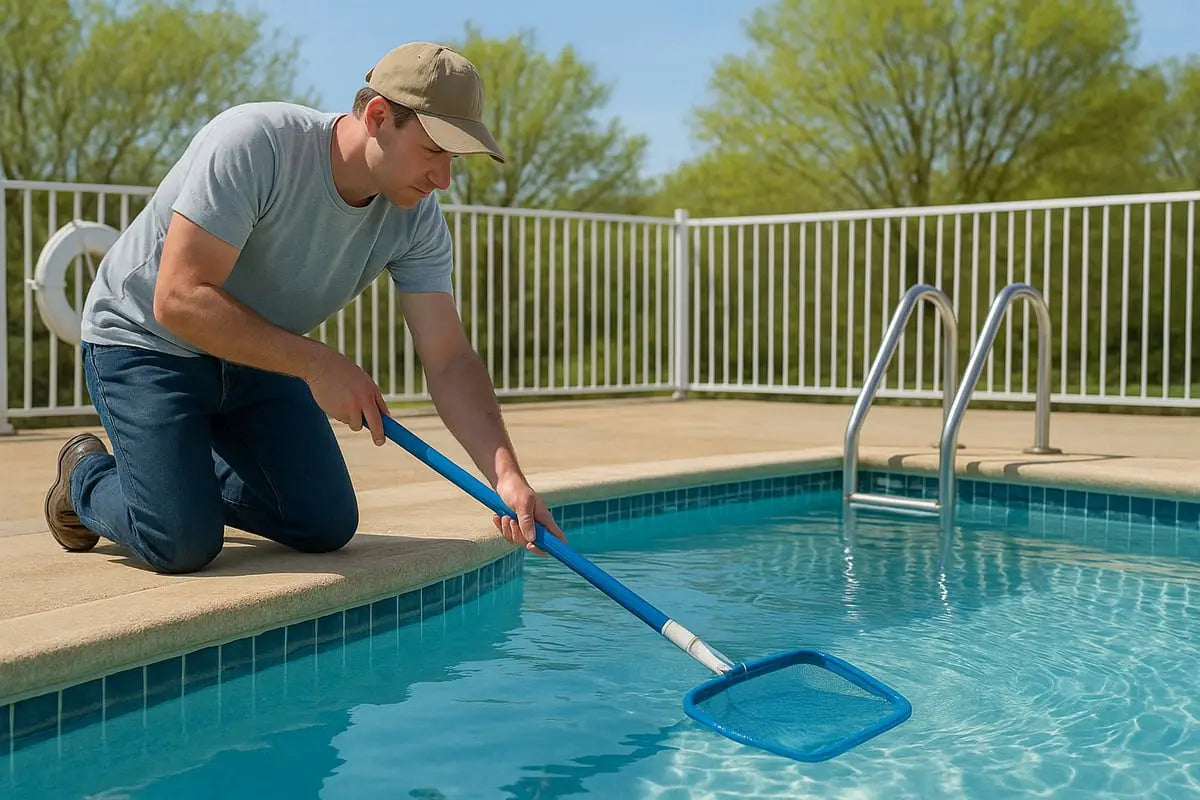
Check the condition of the pool after winter
After winter, the first step for pool start is to carefully inspect the pool. Check the pool liner, joints, and liner and look for cracks or damage that may have occurred during the cold period.
Inspect the walls and bottom for discoloration or algae growth. Check the pool enclosure, covers, and protective covers for tears or broken parts, and inspect the skimmer, inlet, and piping system for leaks. Many pool owners discover minor damage at the start of the season. Addressing these issues immediately helps prevent bigger problems later.
If you want to learn more about construction and proper pool startup, you can read more in Build and start a pool.
Careful inspection is the foundation for a smooth and safe pool start.
Reinstall removed parts and accessories
An important part of pool start is to reinstall all equipment that was removed for winter. Put back ladders, lights, skimmers, and any water toys. Install filters, pumps, and UV lights in their places.
Close all drain valves and reinstall drain plugs on the sand filter, pump, and chlorinator. Check O-rings, gaskets, and seals for wear and replace them if necessary. Proper reassembly reduces the risk of leaks and downtime during pool start season.
By carefully following these steps, you increase operational reliability throughout the season.
Cleaning the pool and equipment
Cleaning is essential for a successful pool start. Start by thoroughly brushing the pool walls and floor to remove dirt and algae. Clean the overflow outlet, basket strainers, and filter baskets of leaves and debris.
Wash pool covers and tarps thoroughly before storing them. Don't forget the quartz glass in the UV light and check the timer on the unit. Dirt and algae left behind can quickly worsen water quality at pool start.
A clean pool gives better water from the start and reduces the need for chemicals.
Safety check of the pool area
Safety is a natural part of pool start. Make sure the pool fence, gates, and pool alarm are working properly. Ensure that anti-slip surfaces and handrails are intact and firmly in place.
Keep chemicals and tools out of reach of children. Statistics show that most pool accidents occur at the start of the season due to poor safety routines. A thorough safety check at pool start creates a safe environment for everyone using the pool.
By prioritizing safety, you increase security and reduce the risk of accidents.
Filling and starting the pool system
Starting the pool system correctly before the season begins is crucial for both water quality and the equipment's lifespan. A careful pool start reduces the risk of downtime and gives you a safe and trouble-free swimming experience all summer long.
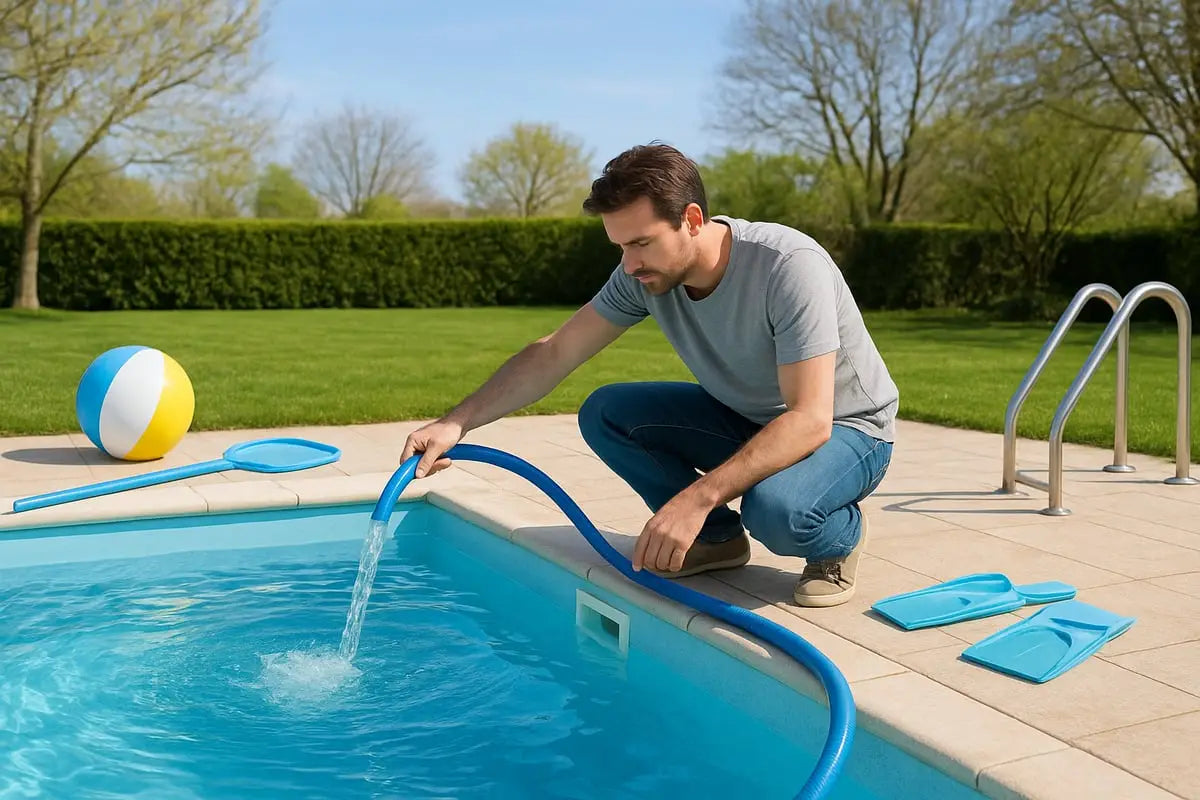
Fill the water to the correct level
At pool start, it is important to fill the pool to the correct level to ensure optimal function of all systems. The water level should be about two-thirds up the opening of the overflow outlet. Preferably use municipal water, as this usually maintains high quality and reduces the risk of unwanted substances.
Avoid using lake or well water without advanced filtration, as these can add particles and minerals that affect water balance. A water level that is too low can cause the pump to suck in air, quickly leading to damage and downtime. A level that is too high limits the skimmer's ability to remove dirt from the surface.
Also be aware of environmental impact when filling the pool. Responsible water use is important, especially in areas at risk of water shortages. Read more about how water shortages can occur when filling a pool, and plan your pool start wisely.
Prepare and start the pump and filter
When the pool is filled, the next step in pool start begins. Fill the pump basket with water – this is crucial to avoid dry running at startup. Check that all suction, return, and drain valves are open. In this way, you ensure that the water can circulate properly through the entire system.
Start the pump only when the system is completely filled with water. If the pump runs dry, you risk shaft damage and overheating, which can lead to costly repairs. Listen for normal sounds and check immediately that water starts moving in the pool.
Many people forget to carefully check valves and tightness at pool start, which can cause unnecessary operational problems. Make it a habit to always double-check all connections before starting the system.
Backwash and rinse the filter
After the pump and filter are running, it is time for backwashing, an important step at pool start. Set the sand filter's multiport valve to BACKWASH before starting the process. Let the water run until it is clear in the sight glass, which usually takes between one and two minutes.
When backwashing is complete, stop the pump and turn the valve to RINSE. Run for 15 to 30 seconds to flush out remaining particles. Finish by setting the filter to FILTER, so normal cleaning resumes.
Regular backwashing at every pool start improves filter performance and extends its lifespan. Statistics show that filters maintained in this way can last up to 30 percent longer. This contributes to both better water quality and lower maintenance costs.
Check circulation and tightness
A proper pool start also means checking that circulation is working optimally. Make sure the return water is clearly visible in the pool and that there are no air bubbles in the system. Go through all hoses and connections to ensure there are no leaks.
Listen to the pump and filter. Unusual sounds can be signs of air in the system or mechanical faults. A small leak can quickly develop into bigger problems, resulting in water loss and damage to equipment.
At the slightest suspicion of drips or moisture, tighten connections and replace gaskets if necessary. A thorough inspection at this stage of pool start can save both time and money later in the season.
Adjust and monitor the pressure in the filter system
The final step in pool start is to check and adjust the pressure in the filter system. The pressure gauge on the filter shows the current pressure. Normal pressure varies depending on the model, but elevated pressure usually signals that the filter is clogged and needs backwashing.
If the pressure is unusually low, there may be air in the system, or it may be a sign that something is blocking the water flow. Bleed the system if necessary and make sure all valves are set correctly.
Correct pressure is crucial for water treatment to function efficiently and to minimise energy consumption. By closely monitoring the pressure after pool start, you reduce the risk of surprises and ensure smooth operation throughout the season.
Water balance and chemicals – the first treatment
Ensuring the correct water balance and chemical treatment at pool start is crucial for a successful season. From the very beginning, you must create optimal conditions for swimming, hygiene, and the pool's lifespan. Here, we go through the most important steps to get control of water values and chemicals right at pool start in 2025.
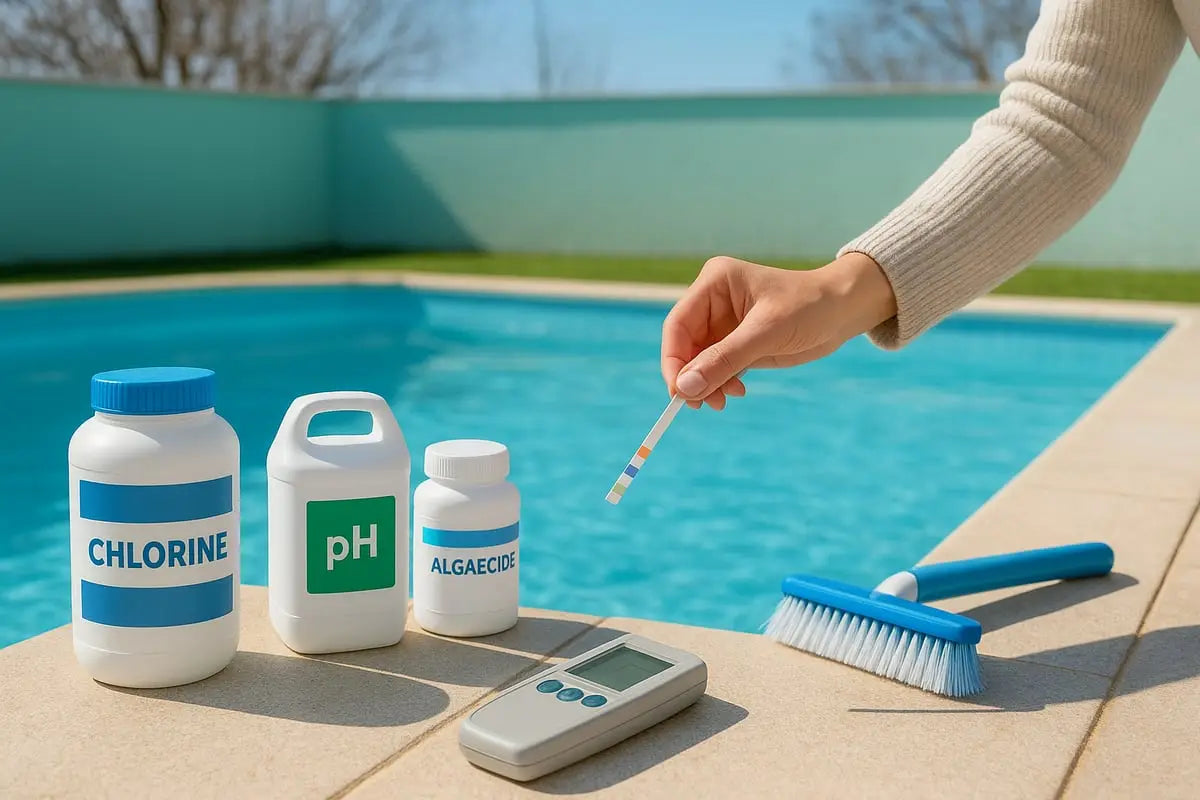
Test and adjust the pH value
At pool start, the first step is to carefully measure the water's pH value. A correct pH between 7,2 and 7,6 is essential for both swimming comfort and chemical effectiveness. Use test strips or a digital meter for accurate results.
- Ideal pH: 7,2–7,6
- Adjust with pH+ or pH- products
- Check the value several times during the first week
If the pH value is too low, it can cause corrosion on pool equipment and irritate the skin. A pH that is too high leads to cloudy water and reduces chlorine's disinfection effect. Correcting the pH at pool start extends both the pool's and the liner's lifespan.
Shock chlorinate the pool
The next important step at pool start is shock chlorination. This means adding a higher dose of chlorine than usual to quickly eliminate bacteria, viruses, and organic contaminants that may have accumulated during winter.
- Add shock chlorine via the overflow outlet
- Aim for a chlorine level of approx. 2 ppm
- Avoid swimming during shock chlorination
Wait at least three hours between doses so the chlorine can dissolve properly. By shock chlorinating at pool start, you reduce the risk of algae bloom and get a fresh start to the season. This step is especially important if the pool has been closed for a long time.
Adjust alkalinity and hardness
After pH and chlorine, it is time to check and adjust alkalinity and calcium hardness at pool start. Total alkalinity (TA) stabilizes pH and protects against rapid fluctuations in water balance.
| Value | Recommended range |
|---|---|
| Alkalinity (TA) | 80–120 ppm |
| Calcium hardness | 150–250 ppm |
Adjust TA with an alkalinity-regulating product. If you fill the pool with well water, also check the hardness carefully. Low alkalinity can make pH unstable and cause damage to pool surfaces. By securing these values already at pool start, you prevent future problems.
Dose algaecide and flocculant
At pool start, it is recommended to add algaecide to prevent algae growth and flocculant for clearer water. Always follow the manufacturer's dosing instructions.
- Algaecide prevents green deposits
- Flocculant gathers small particles into filterable clumps
- Important if the water is cloudy after winter storage
By using these products right at pool start, the water becomes crystal clear and the pool is ready for swimming faster. Remember to keep filtering the water continuously after adding them.
Check and adjust cyanuric acid (stabilizer)
Cyanuric acid acts as a stabilizer for chlorine and is especially important at pool start during sunny periods. Too much or too little cyanuric acid affects chlorine's disinfecting effect.
- Ideal value: 30–50 ppm
- Too high a level reduces chlorine's effectiveness
- Too low a level causes chlorine to be broken down by the sun
Measure the level with test strips and adjust if needed. Proper stabilization during pool start saves unnecessary chemical costs and gives you more even water quality throughout the season.
Brush and vacuum the pool
At every pool start, physical cleaning is just as important as chemical treatment. Brush the pool walls and floor daily during the first week to loosen dirt and algae.
- Use a pool brush for walls and floor
- Vacuum the pool after 24 hours
- Repeat until the water is clear
Thorough cleaning at pool start prevents bacterial growth and reduces the need for extra chemicals. For more advice on ongoing maintenance and service, please visit Pool service and maintenance tips.
Step-by-step guide: How to get your pool up and running in 2025
Following a structured pool start is crucial to ensure both safety and swimming enjoyment throughout the season. Each step in this guide is designed to give you full control over the process and minimise the risk of problems. By working methodically, you avoid common pitfalls and get a pool that is clean, well-balanced, and ready for many enjoyable swims.
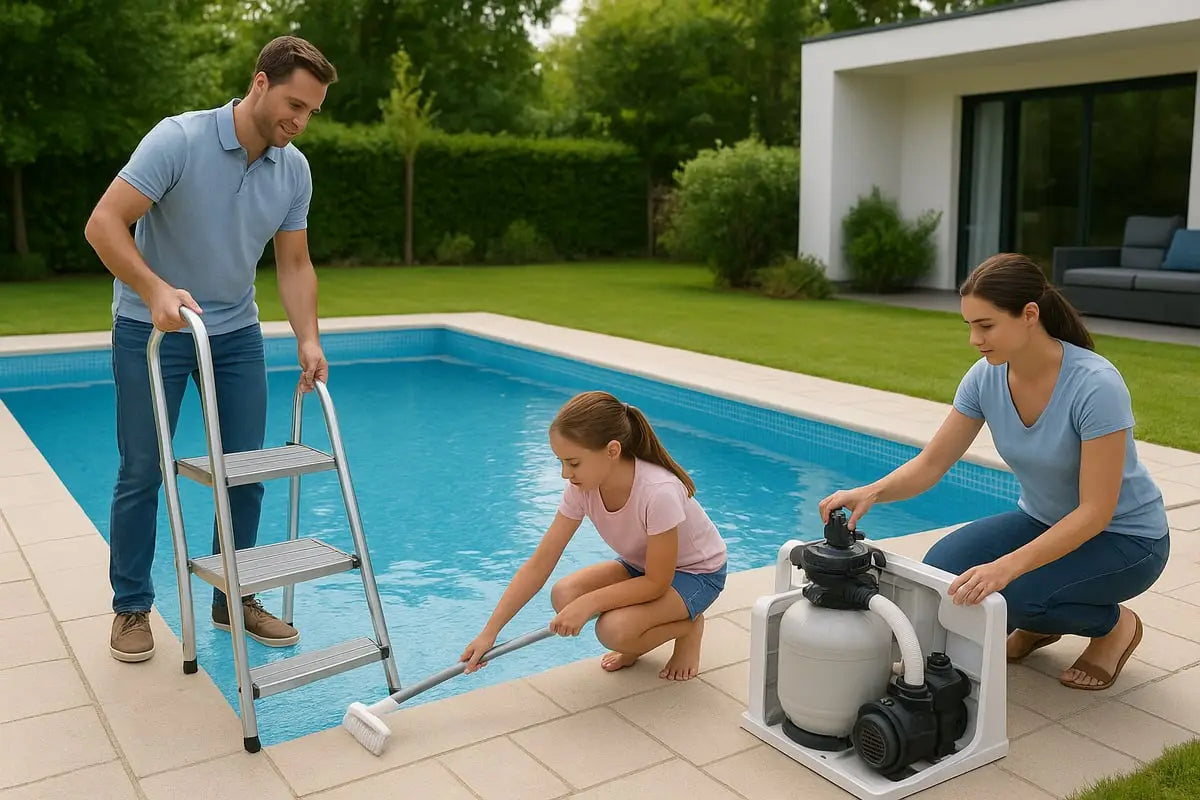
1. Reinstall all pool parts
Start your pool start by putting back all parts and accessories that were removed for winter. Reinstall ladders, pool lights, skimmers, and any UV lights in their places. Check that each part is securely fastened and that no screws or seals are missing.
Don't forget to reinstall pool toys and other small items that can add to the fun. A thorough pool start reduces the risk of accidents, for example if a ladder is loose or lights are not properly connected. Go through all components and make sure they are intact and clean before moving on.
2. Close valves and reinstall plugs
The next step in pool start is to make sure all valves are closed and that drain plugs are in place. Check the drain valves on the filter, pump, and any chlorinator, and reinstall them carefully. Lubricate gaskets and O-rings to prevent leaks.
A properly executed pool start also means checking for leaks immediately after reassembly. Statistics show that a significant share of pool leaks occur precisely when valves are installed incorrectly. Therefore, double-check everything before adding water so you avoid unexpected problems later.
3. Fill the pool to the correct level
When everything is assembled, fill the pool with clean water to about two-thirds up the opening of the overflow outlet. A successful pool start requires the correct water level for circulation to function optimally. Preferably use municipal water for the best quality and avoid lake or well water without additional filtration.
Fill slowly and monitor the process so that no leaks have occurred. The correct water level at pool start is crucial for the skimmer to work and to avoid unnecessary strain on the pump. Check that the surface is level and that no bubbles form.
4. Start the pump and filter according to instructions
Continue your pool start by filling the pump basket with water before starting the system. Make sure all suction, return, and drain valves are open so the water can circulate freely. Start the pump only when you are sure the entire system is filled with water.
Pay attention to sounds and vibrations when the pump starts. A proper pool start means you quickly detect any problems with air pockets or poor circulation. If everything works as it should, you can move on to maintaining the filter.
5. Backwash and rinse the filter
Now it is time to backwash the sand filter in your pool start. Set the multiport valve to BACKWASH and run until the water in the sight glass is clear, usually 1–2 minutes. Stop the pump, switch to RINSE, and run for 15–30 seconds before returning to normal mode (FILTER).
Regular backwashing at pool start increases filter lifespan and gives cleaner water throughout the season. Statistics show that filters that are properly maintained can improve water quality by up to 30 percent. Check the pressure gauge to make sure everything is working.
6. Adjust water values and add chemicals
At this stage of pool start, it is important to measure and adjust water values such as pH, alkalinity, cyanuric acid, and chlorine. Use test strips or digital meters to get accurate values. Follow the manufacturer's dosing instructions for algaecide and flocculant.
Avoid overdosing chemicals, as this can cause skin irritation or affect the pool's materials. If you want the latest products and equipment for an optimal pool start, can provide valuable tips and inspiration. Make sure the pool is not used until all values are stable.
7. Clean and vacuum the pool
Finish your pool start by thoroughly brushing the walls and floor. Use a bottom vacuum to remove dirt and particles that have accumulated over winter. A clean pool at startup reduces the need for chemicals and improves water quality.
Repeat brushing and vacuuming daily during the first week to really remove any algae or buildup. A thorough pool start with a focus on cleaning lets you enjoy crystal-clear water and a trouble-free start to the swimming season.
Tips for a trouble-free pool season and maintenance
Succeeding with a pool start is not just about getting the pool running, but also about creating the conditions for a long, trouble-free season. Here you will get expert tips on how to avoid common pitfalls and optimise the pool's function, energy use, and comfort all summer long.
Prevent common pool problems
A successful pool start is built on preventive measures. Check water values at least once a week and always keep the pool covered when not in use. A good pool cover reduces dirt and evaporation, making maintenance easier.
- Clean filters and basket strainers regularly.
- Fix small problems immediately.
- Follow a checklist for weekly inspections.
Many pool owners forget to cover the pool, which leads to a higher risk of algae bloom and cloudy water. Please read Guide to pool covers and winter covers to ensure complete protection at pool start.
Optimise energy consumption
When starting your pool, it is important to consider energy consumption. Use a pool enclosure or cover to reduce heat loss and save energy. Invest in energy-efficient pool pumps and run the filtration at night when electricity prices are lower.
- Pool enclosures can reduce heating costs by up to 50%.
- Choose a heat pump suited to the pool's size.
- Check the insulation around the pool system.
For tips on the right swimming temperature and efficient heating, see Tips on swimming temperature and heating. This gives you a sustainable and comfortable pool start.
Maintain pool equipment and technology
Regular maintenance is crucial for a successful pool start. Service the pump, filter, and heater according to the manufacturer's recommendations. Replace lights and UV lights in good time and check hoses and connections for wear.
- Lubricate gaskets and check O-rings.
- Clean the quartz glass in UV lights.
- Keep spare parts on hand for quick action.
A broken pump can quickly worsen water quality. By including these routines in your pool start, you reduce the risk of downtime and costly repairs.
Create a pleasant pool environment
A pool start gives you the opportunity to create a pleasant and safe environment around the pool. Invest in pool toys, lighting, and comfortable furniture to increase use and enjoyment.
- Install anti-slip surfaces at the pool edge.
- Check that fences and gates are stable.
- Plant plants that do not shed many leaves.
A pleasant environment at pool start encourages more swimming and increases the family's safety and enjoyment.
Handle unexpected problems quickly
At pool start, unexpected problems may arise, such as cloudy water, algae bloom, or technical faults. Address these immediately to avoid bigger concerns later in the season.
- Test and adjust water values immediately if there is a deviation.
- Contact pool professionals in case of major problems or uncertainty.
- Document actions and learn from experience.
Quick action at pool start reduces the risk of prolonged downtime and ensures a continued trouble-free pool season.
Premium solutions and expert help for pool startup
Succeeding with pool start is not just about technology and chemicals, but also about knowing when it is time to call in the experts. With the right support, you can avoid common pitfalls and ensure your pool is ready for the season, whether you are a beginner or an experienced pool owner.
When is it time to contact an expert?
When starting your pool, some issues may require professional help. If you discover major leaks, electrical faults, or difficulties with water values, it is wise to hire an expert right away. Damage to the liner, pool enclosure, or technical equipment can quickly worsen if not addressed properly.
If you need advanced water analysis or are unsure about system updates, you should not wait. Statistics show that professional service at pool start extends the pool's lifespan and reduces the total cost over time.
Asking for help is a sign of responsibility, not failure.
Pooltime® – Your partner for pool startup and premium solutions
When it comes to pool start-up, Pooltime® offers peace of mind and quality. As one of Sweden's largest suppliers of premium pools and pool enclosures, Pooltime® has solutions tailored to our climate.
You get access to exclusive PP pools, energy-efficient systems, and full contracting for the entire project. Pooltime® is known for long-term warranties, first-class customer service, and a complete range of accessories.
With Pooltime®, you can feel confident that your pool start is carried out correctly, efficiently, and with the best possible result. Read more about Pooltime® and their services
Benefits of professional pool maintenance
Choosing professional maintenance at pool start offers several advantages:
- Correct water balance from the start
- Minimal risk of damage to equipment
- Lower energy consumption and operating costs
- Access to the latest technology and best products
Many pool owners save both time and money by hiring expert help. A carefully executed pool start also provides a better and more worry-free season.
Examples of advanced pool products and accessories
At pool start, the right equipment can make a big difference. Here are some premium products that make maintenance easier:
| Product | Function |
|---|---|
| Automatic dosing | Controls chlorine and pH |
| UV and salt chlorinator | Efficient water treatment |
| Pool robot | Automatic cleaning |
| Energy-efficient heat pump | Keeps the heat efficiently |
| Smart pool enclosures | Protects and saves energy |
With modern accessories, your pool start becomes easier, more enjoyable, and more sustainable.
Frequently asked questions about pool startup and maintenance
At pool start, questions often arise about water quality, safety, and chemicals. How often should water values be tested? What do you do if the water becomes cloudy? Can you start the pool yourself or should you get help? Which chemicals are necessary at startup?
Safety is also central. If you are wondering about child safety at pool start, it may be worthwhile to read about swimming instruction in Swedish primary school, where the importance of swimming skills and preventive measures is discussed.
Having answers to these questions provides peace of mind and ensures a successful pool season.
Find the right water treatment
Explore filtration and water treatment equipment that suits your pool.
See water treatment products


