


Dreaming of enjoying a clean, safe, and durable pool all season long? Without the right protection, dirt builds up, heat is lost, and the risk of accidents increases. A pool cover is the solution that gives you control and peace of mind.
In this guide, you will learn how to choose and use the right pool cover to protect your pool from debris, heat loss, and unexpected incidents. We cover the different types of protection, installation, maintenance, safety requirements, and the latest innovations.
Want a simpler, safer, and more energy-efficient pool season? Keep reading for practical advice and smart tips.
Why is pool protection important?
Investing in the right pool cover is essential for keeping the pool clean, safe, and durable. Without reliable protection, the pool is exposed to a range of problems such as increased dirt, higher energy consumption, safety risks, and wear. Here we explain why a pool cover is a must for every pool owner in 2025.

Protection against dirt and debris
Without a pool cover, leaves, insects, and other debris quickly collect in the water. This leads to greater strain on the filter, more chemicals, and frequent cleaning. Statistics show that the right pool cover can reduce cleaning needs by up to 80 percent. That means fewer hours with a net and vacuum, as well as significantly lower chemical costs. In addition, the risk of algae growth decreases when dirt is kept out. With a pool cover, you get a pool that is inviting and ready to use whenever you want.
Reduce heat loss and save energy
A pool cover is one of the most effective ways to reduce heat loss from the water. Up to 70 percent of heat can be lost overnight without protection. With an insulating cover, you retain heat longer, which leads to lower heating costs and a longer swimming season. Suppliers report significant energy savings with modern covers. Investing in a pool cover helps both your wallet and the environment, especially when energy prices fluctuate sharply.
Prevent accidents and increase safety
Safety is central for all pool owners. Without a pool cover, the risk of accidents increases, especially for children and pets. A safety-rated cover in accordance with Swedish standards can prevent serious incidents. Statistics from Statistics on drowning accidents in Sweden show that pool covers are an important measure for reducing the number of accidents. With a pool cover, you can feel secure even when the pool is unattended.
Extend the pool's lifespan
A pool cover protects against the sun's UV radiation, weather changes, and frost. It reduces wear on the liner, joints, and equipment. By reducing exposure to the elements, you extend the lifespan of the entire pool installation. Less wear means fewer repairs and lower maintenance costs over time. With the right pool cover, you can enjoy a fresh and functional pool for many seasons.
Simplify maintenance and save time
With a pool cover, the need for daily cleaning and vacuuming decreases. Less debris in the pool means filters and pumps work more efficiently and require less servicing. The time savings are real – many pool owners save several hours a week on maintenance. This lets you focus on swimming and relaxation instead of cleaning. A pool cover makes life easier and increases enjoyment of the pool.
Different types of pool covers in 2025
Choosing the right pool cover means understanding the different protections available on the market. Each type has its own unique advantages, from advanced slatted covers to simpler thermal film. Below, we guide you through the options so you can find the best protection for your pool, regardless of size, shape, or budget.

Slatted cover and rib cover
Slatted covers and rib covers are two of the most popular options when it comes to pool covers. Both are based on interconnected slats or ribs that float on the water and form a strong, insulating layer. The difference usually lies in the choice of materials and design, where slatted covers are often fully automatic and rib covers can be manual or automatic.
The advantages are many: excellent insulation, long lifespan, and high safety. The slats significantly reduce heat loss and prevent dirt from reaching the water. Many models are adapted to Swedish standards and can be equipped with locking systems for extra peace of mind. Popular examples include Capella, Castor, Sigma, and Walu Pool Evolution. If you want to explore the benefits in more depth, read more about benefits of slatted covers.
A pool cover of this type makes a big difference to both comfort and maintenance.
Pool enclosures and sliding solutions
Pool enclosures and sliding cover pool solutions have become increasingly sought-after. They are available in both high and low versions, where a high enclosure allows swimming even in poorer weather. A low enclosure is discreet while still providing effective protection against dirt and heat loss.
The advantages of a pool enclosure are many. You extend the swimming season, protect against rain and wind, and reduce the need for cleaning. Sliding solutions make it easy to open and close the pool as needed. Modern pool enclosures are often made of impact-resistant polycarbonate and aluminum, providing both durability and style.
Investing in a pool enclosure such as cover pool also means energy savings and easier maintenance.
Thermal film and solar cover
Thermal film is an affordable option for those who want a simple pool cover solution. It consists of bubble wrap or similar material and is placed directly on the water surface. Thermal film protects against dirt, reduces evaporation, and helps retain heat in the pool.
Solar cover film is particularly suitable for seasonal pools or smaller pools where the need for advanced protection is not as great. These films are easy to put on and take off, and simple to store during the winter. Although they do not offer the same security as slatted covers, they still provide basic protection and save cleaning time.
A thermal film as a pool cover is therefore a smart solution for smaller or temporary pools.
Coverseal and automatic pool covers
For those seeking maximum convenience, there are fully automatic pool cover systems such as Coverseal. These covers roll out and retract at the push of a button or via an app, saving both time and effort. Automatic pool covers are often made from durable materials and can be adapted to most pool shapes.
Control is smooth via remote control or mobile phone, making operation easy even when you are not at home. The high safety level is a major advantage, especially for families with children. Many automatic systems are also compatible with smart home solutions for greater ease of use.
Choosing an automatic pool cover is an investment in both safety and comfort.
Custom-made covers for different pool types
Not all pools are the same, and that is why there are pool covers specially adapted for different shapes and placements. Whether you have a round, oval, or rectangular pool, suitable cover solutions are available.
For above-ground pools, simpler and lighter materials are often required, while integrated pools can benefit from custom-made covers that blend into the surroundings. Customizing the cover ensures it functions optimally and provides the best possible protection against dirt, weather, and accidents.
Choosing the right pool cover for your specific pool type is crucial for long-term function and aesthetics.
Price comparison and cost efficiency
The price of a pool cover varies depending on type, material, and functionality. Below is an overview of common price ranges for different types of covers:
| Cover type | Price range | Example model |
|---|---|---|
| Slatted cover/rib cover | 11 830–50 000 kr | Capella, Sigma |
| pool enclosure | 30 000–150 000 kr | Vega, Orion |
| Thermal film/solar cover | 800–5 000 kr | Standard thermal film |
| Automatic covers | 40 000–120 000 kr | Coverseal, Evolution |
Although the investment may seem large, a quality pool cover delivers long-term savings on energy, chemicals, and maintenance. In addition, safety and the pool's lifespan improve, making it a wise investment.
How to choose the right pool cover – step by step
Choosing the right pool cover is essential for maximizing safety, comfort, and energy savings. Here we guide you step by step so you can find the best protection for your pool and your needs. By following these guidelines, you can make an informed choice that will last for many years.

Step 1: Analyze the pool's conditions
Start by evaluating the pool's basic characteristics. The size and shape of the pool determine which types of pool covers are suitable. A rectangular pool often has more options than a round or oval one. The pool's location also plays a major role – if it is near trees or shrubs, the need for a cover that effectively keeps dirt and leaves out increases.
The climate in the area is also important. In windy or cold regions, you should prioritize an insulating pool cover, while a simple thermal film may be sufficient in warmer climates. Consider whether the pool is in-ground or above ground, as some covers are specifically adapted for each type. By carefully analyzing these factors, you create the right conditions for long-term protection.
- Measure the pool's exact dimensions.
- Note the pool's shape and depth.
- Map surrounding vegetation and weather conditions.
Step 2: Safety requirements and legislation
Safety is always a priority when choosing a pool cover. For the cover to be approved, it must meet Swedish safety standards, such as SS EN 16582-1. Pool owners have a clear responsibility to prevent accidents, especially when it comes to children and animals. Check that the chosen cover is safety-rated and meets the load requirements under the law.
Many insurance companies require proof that the pool has an approved cover. Therefore, you should read up on Safety requirements for pools under Swedish law to ensure your pool cover meets all requirements. This reduces the risk of accidents and can positively affect your insurance.
- Find out which standards apply to your pool type.
- Check whether the cover has certificates and test results.
- Document the installation for future needs.
Step 3: Function and comfort
How often do you use the pool? If you swim daily in summer, an automatic pool cover can save both time and effort. For less frequent use, a manual cover is often sufficient. Also consider how easy the cover is to open and close – some models require more physical effort than others.
Automated systems offer remote control and app functions, providing maximum convenience. This can also be crucial for older people or those with limited mobility. Consider whether you want to be able to swim even when the cover is partially on, something that some pool enclosures make possible.
- Choose between a manual or automatic system.
- Check the opening and closing mechanism.
- Assess whether you want extra features such as remote control.
Step 4: Design and aesthetics
Your pool cover should not only be functional, but also blend into the overall garden setting. Colour choice and materials affect both appearance and durability. Many suppliers offer discreet covers that blend into the patio or pool deck, while more exclusive solutions can become a clear design feature.
Material choice matters for both aesthetics and lifespan. Aluminum, PVC, and specialty plastics are common options. The colour palette is often adapted to the style of the pool and garden, from classic blue to modern gray tones.
- Compare different materials and colours.
- Consider how the cover integrates with the pool environment.
- Choose between visible and concealed installations.
Step 5: Budget and long-term investment
Investing in a pool cover involves an initial cost, but the long-term gains can be significant. Compare purchase price, ongoing operating costs, and potential energy savings. More advanced covers cost more, but can save thousands on heating and chemicals.
For a quick overview, see the table below:
| Type of pool cover | Purchase price (approx.) | Operating cost/year | Lifespan (years) |
|---|---|---|---|
| Thermal film | 2 000 – 5 000 kr | 200 kr | 2–5 |
| Slatted cover | 20 000 – 70 000 kr | 300 kr | 10–15 |
| pool enclosure | 40 000 – 150 000 kr | 500 kr | 15–25 |
Also consider warranties, service agreements, and the possibility of upgrading in the future. A quality pool cover is an investment that pays off over time.
Step 6: Compare suppliers and warranties
The pool cover market has grown rapidly and there are many players to choose from. Find out which suppliers offer the type of cover you are looking for. Pay special attention to warranties, customer support, and access to spare parts.
Popular brands such as Albixon and Nivovas have different warranty terms and service levels. Read reviews, ask for references, and compare delivery times. A reputable supplier offers clear installation instructions and quick support if problems arise.
- Check the warranty period and what is included.
- Compare customer experiences and reviews.
- Make sure the supplier can provide service even after purchase.
Following these steps makes choosing a pool cover both secure and sustainable in the long term. Take the time to analyze your needs, and you will get a cover that suits your pool and lifestyle.
Installation and maintenance of pool covers
Installing and maintaining a pool cover requires both care and the right knowledge. By following clear steps, you can ensure that your cover works optimally, lasts a long time, and provides maximum safety and comfort. Below, we guide you through each phase, from pre-installation preparations to troubleshooting common problems.
Preparations before installation
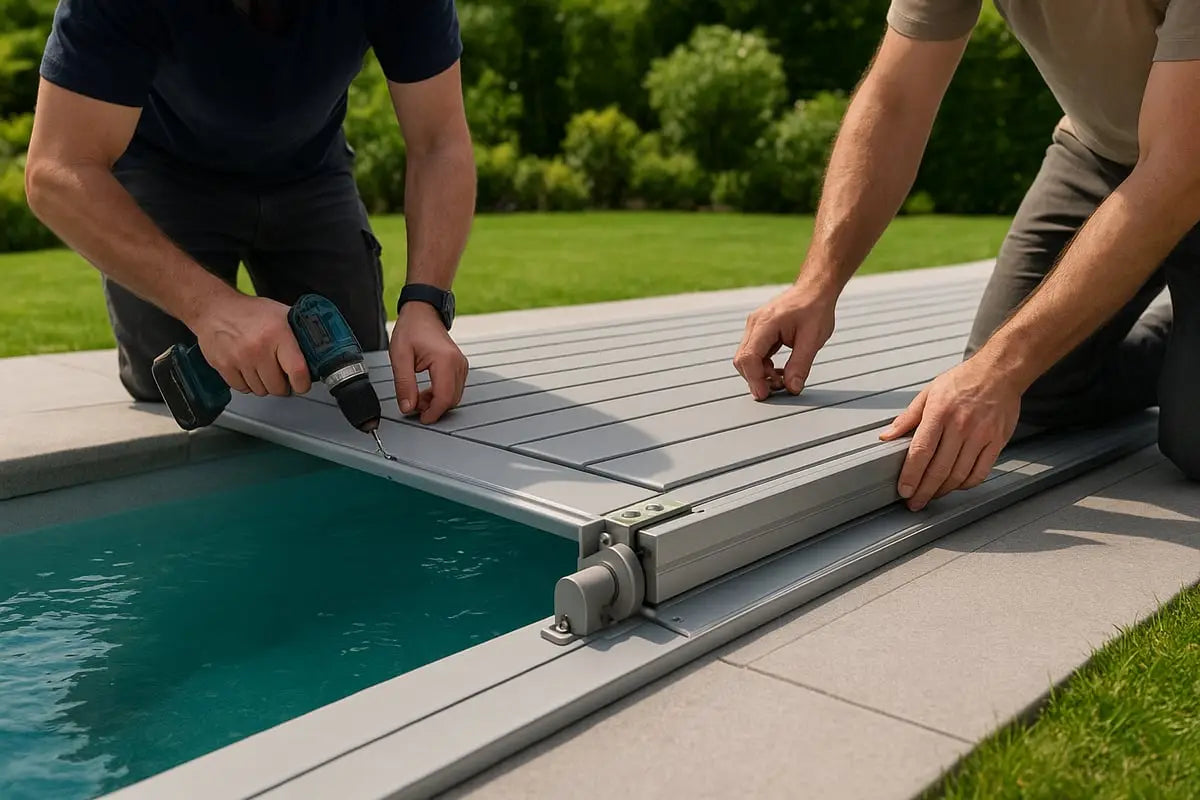
Before installing a pool cover, it is crucial to begin with careful measurements. Check the pool's exact dimensions and take shape and any obstacles such as ladders or lights into account. A correctly measured cover provides a better fit and increases safety.
Inspect the surface around the pool. The area should be level and free of obstacles. Also check that anchoring points are stable and adapted to the type of pool cover you have chosen. By preparing carefully, you minimise the risk of future problems and simplify installation.
Installation – do it yourself or hire professionals?
When it is time to install your pool cover, you can choose between doing it yourself or getting help from professional installers. A do-it-yourself installation suits you if you are handy and have access to the right tools, such as:
- Drill
- Tape measure
- Screwdriver
- Spirit level
Hiring professionals provides peace of mind, especially for more advanced covers or larger pools. Professional installation ensures that the pool cover is fitted correctly, which often results in a longer lifespan and better performance. Whatever you choose, always follow the manufacturer's instructions carefully.
Maintenance routines for long life
Regular maintenance is the key to ensuring your pool cover lasts for many years. Clean the cover from dirt and algae with mild cleaning agents and a soft brush. Check mechanical parts such as slats or rollers a few times per season.
Lubricate moving parts as needed and inspect locking mechanisms to ensure they function optimally. By following these routines, you reduce the risk of wear and keep the pool cover both attractive and safe.
Winter storage and seasonal tips
When the swimming season is over, it is important to protect your pool cover from frost and winter stress. Clean the cover thoroughly before removing it and store it dry and frost-free if possible.
For fixed covers, remove snow and ice regularly to avoid damage. If you want to read more about how to best protect the pool during the winter months, please visit Winter covers and seasonal protection for detailed tips and advice. Proper winter storage extends the cover's lifespan and ensures the pool cover is ready when spring arrives.
Common problems and troubleshooting
Even though a pool cover is robust, problems can occur. Common faults include:
- Stuck slats
- Water pooling on top of the cover
- Wear on locking mechanisms
Often these can be resolved through simple cleaning or mechanical adjustment. If you discover major damage or if the cover does not work as it should, always contact the supplier for professional help. Regular checks and quick action on minor faults ensure your pool cover continues to protect the pool effectively.
Safety and insurance aspects
Investing in a quality pool cover is not just about convenience and cleanliness, but also about security. The safety aspect is central for all pool owners and affects both liability and insurance coverage. Here you will learn what is required for the pool to be safe by law and what insurance companies require.
Protection against accidents and liability
A pool cover plays a crucial role in reducing the risk of accidents at the pool. Without protection, the risk of drowning increases, especially for small children and pets. Under Swedish law, you as the pool owner are responsible for preventing accidents and ensuring that unauthorized people cannot access the water.
Many pool covers are safety-rated according to standards and can bear the weight of a child or pet. They act as a physical barrier and make daily life feel safer. Choosing the right pool cover is therefore an important step toward a safer pool environment.
Insurance requirements and terms
For your insurance to apply in the event of an incident, most companies require that you have an approved pool cover installed. Terms may vary, but it is common to require safety certification and proper use of the cover when the pool is not in use.
If an accident were to happen anyway, it is important that you can show you did everything possible to reduce the risk. According to Costs of drowning accidents and preventive work preventive measures such as pool covers can save both lives and large sums in damage costs. Always check your insurance terms and document the installation of your pool cover.
Documentation and inspection
When installing a pool cover, it is important to keep all documentation, such as receipts, certificates, and installation proof. Many insurance companies require this in the event of a claim. Regular inspection of the pool cover is also recommended to ensure the cover maintains the correct standard.
It is wise to keep a log of service and checks. This gives you good documentation if you need to show that your pool cover has been properly maintained and has always been fit to perform its safety function.
Tips for filing a claim
If damage or an accident occurs, it is important to act quickly and systematically. Document the damage to your pool cover with photos and write down what happened. Contact your insurance company as soon as possible and have all documentation ready.
A clear and orderly claim increases the chances of quick handling. By showing that you have followed all requirements regarding your pool cover, you make the process easier and safer for both you and the insurance company.
Innovations and trends for pool covers in 2025
The pace of innovation for pool covers is higher than ever. Smart features, energy efficiency, and design play leading roles in 2025 development. Here you get an overview of the hottest trends and technical advances that will shape the pool cover market this year.
Smart and automated pool covers
Pool cover technology is taking big steps forward in 2025. More pool covers are now integrated with apps and remote controls, giving you the ability to open and close the cover at the push of a button. Integration with smart home systems is becoming increasingly common, allowing you to control lighting, temperature, and the pool cover from the same platform.
Sensors that detect movement or water level increase safety and reduce the risk of accidents. Smart algorithms can even analyze weather data and automatically adjust the pool cover to optimise energy use.
This development makes pool covers more convenient and safer than ever before.
Sustainable and energy-smart materials
Environmental awareness is growing rapidly. That is why we now see more pool covers made from recycled and sustainable materials. New insulation technologies reduce heat loss and save energy, extending the swimming season and lowering operating costs.
Solar-powered pool covers are another innovation rapidly gaining ground. These systems use solar energy to run motors and electronics, further reducing climate impact. If you want to read more about energy-efficient solutions for pool covers, please visit the page on energy-smart pool products.
With the right pool cover, you can both protect your pool and contribute to a greener future.
Design trends and customization
The design of pool covers is evolving alongside garden trends. In 2025, we see more colour options, slimmer profiles, and discreet installations that blend into modern outdoor settings. Exclusive solutions for the premium segment offer elegant material choices, integrated LED lighting, and custom shapes to fit every pool.
This means that a pool cover is not only a technical protection, but also an aesthetic investment that increases the value of your property.
Safety innovations
Safety is always in focus when it comes to pool covers. New locking systems with codes or biometric identification increase security. Sensors and alarms that warn of unauthorized access are now standard in many models.
The development of certifications and standards, such as SS EN 16582-1, ensures that pool covers meet high requirements for safety and durability. This means you can feel confident in your choice of pool protection.
Customer service and support of the future
Digitalization is changing how you get help with your pool cover. More suppliers now offer support via app, chat, and video calls. Installation and troubleshooting can sometimes be carried out with the help of AR or VR, making the process both faster and smoother.
Extended warranties and tailor-made service agreements are becoming more common. This reduces the risk of downtime and ensures that your pool cover works optimally year after year.
Examples of leading products and suppliers
Among the most popular covers in 2025 are automated pool covers from well-known brands such as Nivovas. These systems combine advanced technology with reliable performance and sleek design.
New products are launched continuously, often with improved insulation values, smart features, and user-friendly interfaces. User reviews show that investing in a modern pool cover provides both greater safety and less manual work.


