Buying a high-quality pool enclosure pays off over time through savings on heating and maintenance, as well as the convenience of having the pool ready to use quickly. We offer a wide choice of roller systems and colours. If you are unsure what to choose, we provide personal guidance to help you find the right pool cover for your needs and pool. Our aim is to make buying an enclosure straightforward and ensure you get the most from your investment.
What types of pool cover are available?
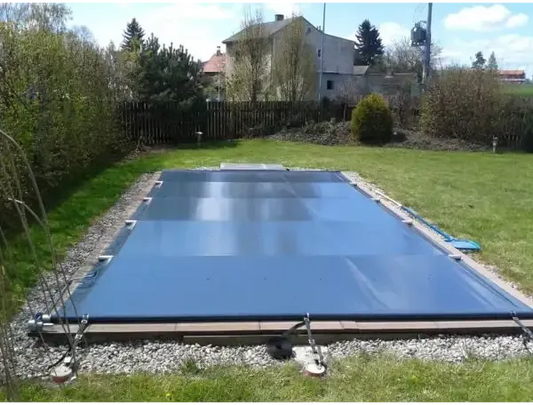
One popular option is a roll-top safety cover, with a tarpaulin supported by aluminium bars over the pool. Turning a crank along the long side rolls the cover up. Rolltop is a safe pool cover.
A slatted cover is an automatic pool cover made from air-filled PVC or PC slats. A motor rolls them out onto the water, where buoyancy supports them. The slats come in different colours, and the roller can be installed above ground or submerged in the pool. Read more about slats.
Winter covers made from hot-dip galvanised steel sheets withstand the weather. A safe way to cover the pool for winter!
What is a pool cover?
For safe pool ownership, the law requires a fence or enclosure around the pool, or an approved pool cover. A cover protects the pool from rain and contaminants and prevents children, animals and unauthorised people from falling into the water.
Why do you need a pool cover?
A pool is a lovely place to spend time with family and friends, but without proper protection it can become a death trap. All our pool covers are approved as safety covers. They are also approved to the French standard NFP90-309, which states that the cover protects a child weighing up to 20 kg while allowing an 80 kg adult to walk across it to rescue the child.
How much does a pool cover cost?
Prices range from SEK 16 000 for a basic roll-top cover to SEK 270 000 for an enclosure that opens and closes by motor and remote control.
What is the best way to protect my pool in winter?
Winter steel covers used to be a popular way to protect pools during winter, but storing them in summer was a problem. Today, 95% of our customers choose enclosures that also serve as winter covers. Snow must, however, be removed from low enclosures.


 13% off


